




 Inglês (pdf)
 Artigo em XML
 Referências do artigo

 Tradução automática
 Enviar este artigo por email
 Citado por SciELO
 Similares em
SciELO

 Permalink


Introduction
Anxiety disorders are among the most prevalent mental health conditions worldwide and represent a significant burden on individuals and healthcare systems 1. University students are particularly vulnerable to anxiety symptoms, especially those enrolled in healthcare-related programs 2,3.
Students in health sciences programs experience intense workloads, competitive academic settings, and early exposure to human suffering 3,4. These factors contribute to increased psychological distress and may negatively impact academic performance, interpersonal relationships, and overall well-being 5-10. Anxiety symptoms, when persistent, can interfere with cognitive functioning and increase the risk of burnout and substance use 11-17.
Generalized Anxiety Disorder (GAD) is characterized by excessive and uncontrollable worry, often accompanied by symptoms such as fatigue, irritability, sleep disturbances, and difficulty concentrating 7,8. In academic settings, these manifestations may significantly impair both academic and social functioning 2.
Previous studies report a high prevalence of anxiety among healthcare students, frequently exceeding that observed in the general population 1,6. Factors associated with increased anxiety include female sex, academic pressure, lack of social support, and maladaptive coping strategies 2,10. Additionally, anxiety commonly coexists with other mental health conditions such as depression and is associated with behavioral factors including impulsivity and alcohol use 11,16-18.
Despite growing recognition of this issue, there is still a lack of institution-specific data in Brazilian universities, which limits the development of targeted and evidence-based interventions 10,11. The use of validated instruments such as the Generalized Anxiety Disorder-7 (GAD-7) allows for standardized assessment and comparison across different populations 12-14.
Understanding the prevalence and predictors of anxiety among healthcare students is essential for identifying vulnerable groups and guiding mental health strategies within academic institutions 1,6. Therefore, the objective of this study is to evaluate the prevalence and severity of anxiety symptoms and to identify associated factors among healthcare university students using the GAD-7 scale.
Methodology
This was a cross-sectional, observational, and quantitative study conducted at a Brazilian university between September 2025 and January 2026.
The study population consisted of undergraduate students enrolled in healthcare-related programs. A census sampling strategy was adopted, aiming to include students from all academic years.
Inclusion criteria were: age ≥ 18 years, regular enrollment in a healthcare undergraduate program, and agreement to participate through electronic informed consent. Exclusion criteria included age < 18 years and incomplete or inconsistent questionnaire responses.
Data were collected through an anonymous, self-administered online questionnaire distributed via institutional communication channels. Participation was voluntary, and no financial or academic incentives were offered.
Sociodemographic and Academic Variables: Age (continuous), sex (male/female), course type (Medicine vs. other healthcare programs), and academic year were collected.
Primary Outcome (Anxiety): Anxiety severity was assessed using the Generalized Anxiety Disorder-7 (GAD-7) 12-14. Scores ranged from 0 to 21 and were categorized as minimal (0 to 4), mild (5 to 9), moderate (10 to 14), and severe (15 to 21). A cutoff ≥10 was used to define clinically significant anxiety.
Depressive Symptoms: Evaluated using the Patient Health Questionnaire-9 (PHQ-9), with scores ≥10 indicating moderate to severe depressive symptoms 19.
Impulsivity: Measured using the Barratt Impulsiveness Scale (BIS-11), which assesses attentional, motor, and non-planning impulsivity 20-23.
Alcohol Use: Assessed using the Alcohol Use Disorders Identification Test (AUDIT), with higher scores indicating hazardous alcohol consumption 24.
Descriptive statistics were used to summarize the data. Continuous variables were expressed as means and standard deviations, and categorical variables as absolute and relative frequencies.
Bivariate analyses were conducted using chi-square tests for categorical variables and Student’s t-test or Mann-Whitney test for continuous variables, as appropriate.
Variables with p < 0.20 in bivariate analyses were included in the multivariate model. Ordinal logistic regression was performed to evaluate the association between independent variables and anxiety severity categories.
Odds ratios (ORs) with 95% confidence intervals (95% CI) were calculated. A p-value < 0.05 was considered statistically significant.
All statistical analyses were performed using Python.
This study adhered to the ethical principles of respect for persons, beneficence, and justice. The research protocol was approved by the Research Ethics Committee (CAAE 71173223.4.0000.0082) and followed the principles of the Declaration of Helsinki and CIOMS guidelines.
All participants provided electronic informed consent prior to participation. Data were collected anonymously, and no identifiable information was recorded. The data were stored in a secure and restricted digital environment accessible only to the research team.
Results
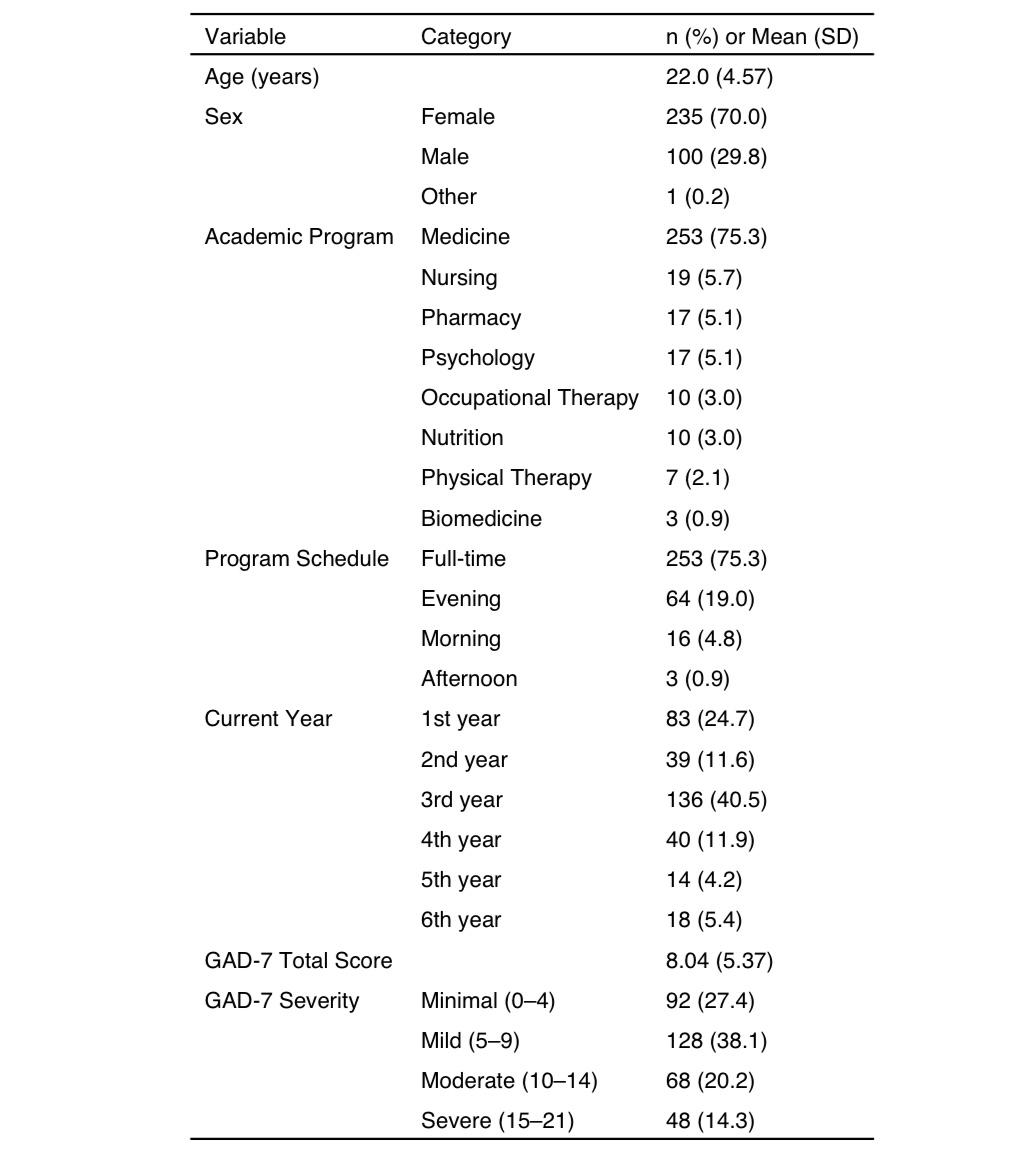
A total of 336 university students were included in the analysis. The mean age was 22.0 years (SD = 4.57), and most participants were female (70.0%). The majority were enrolled in Medicine (75.3%), followed by smaller proportions from other healthcare programs.
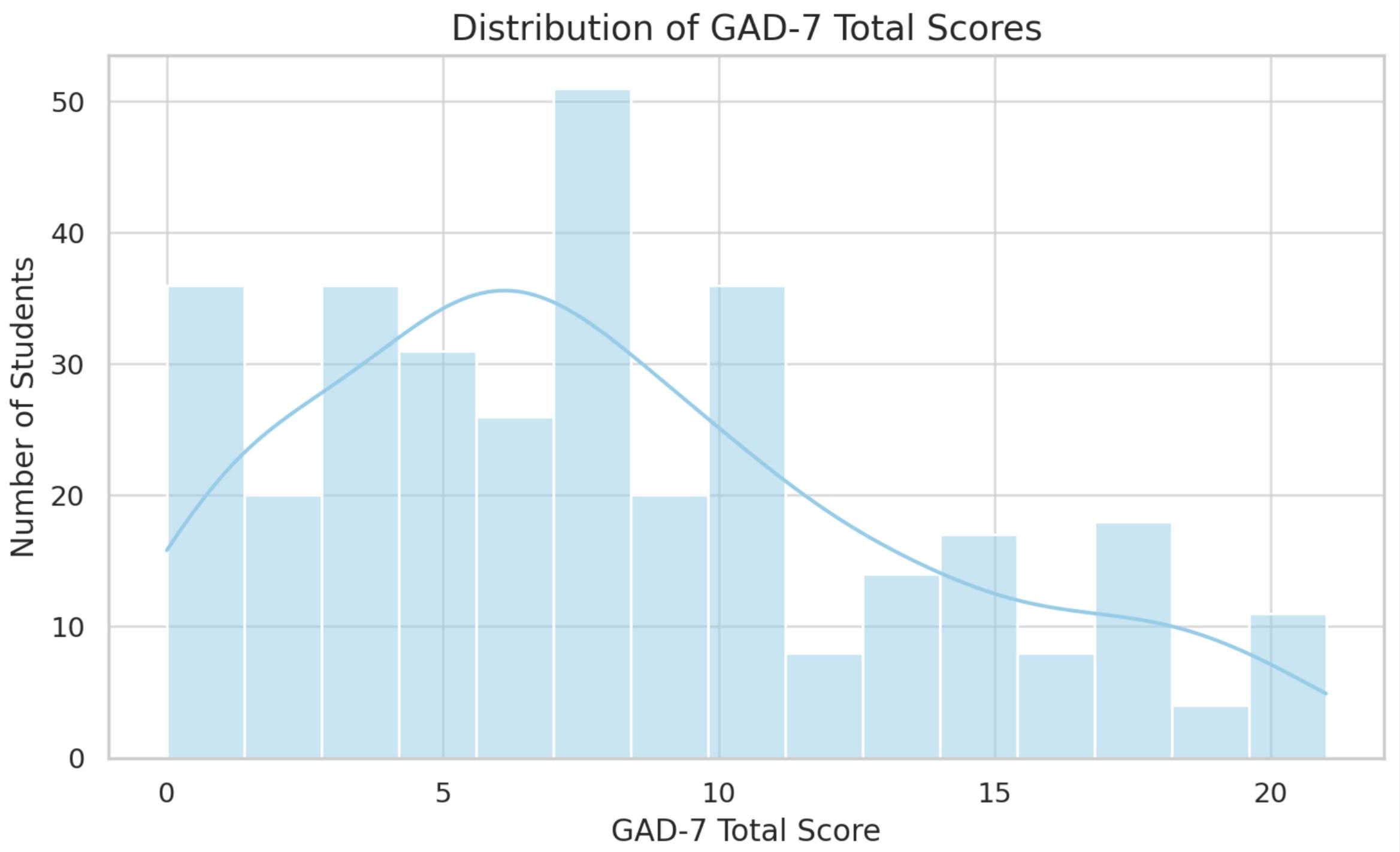
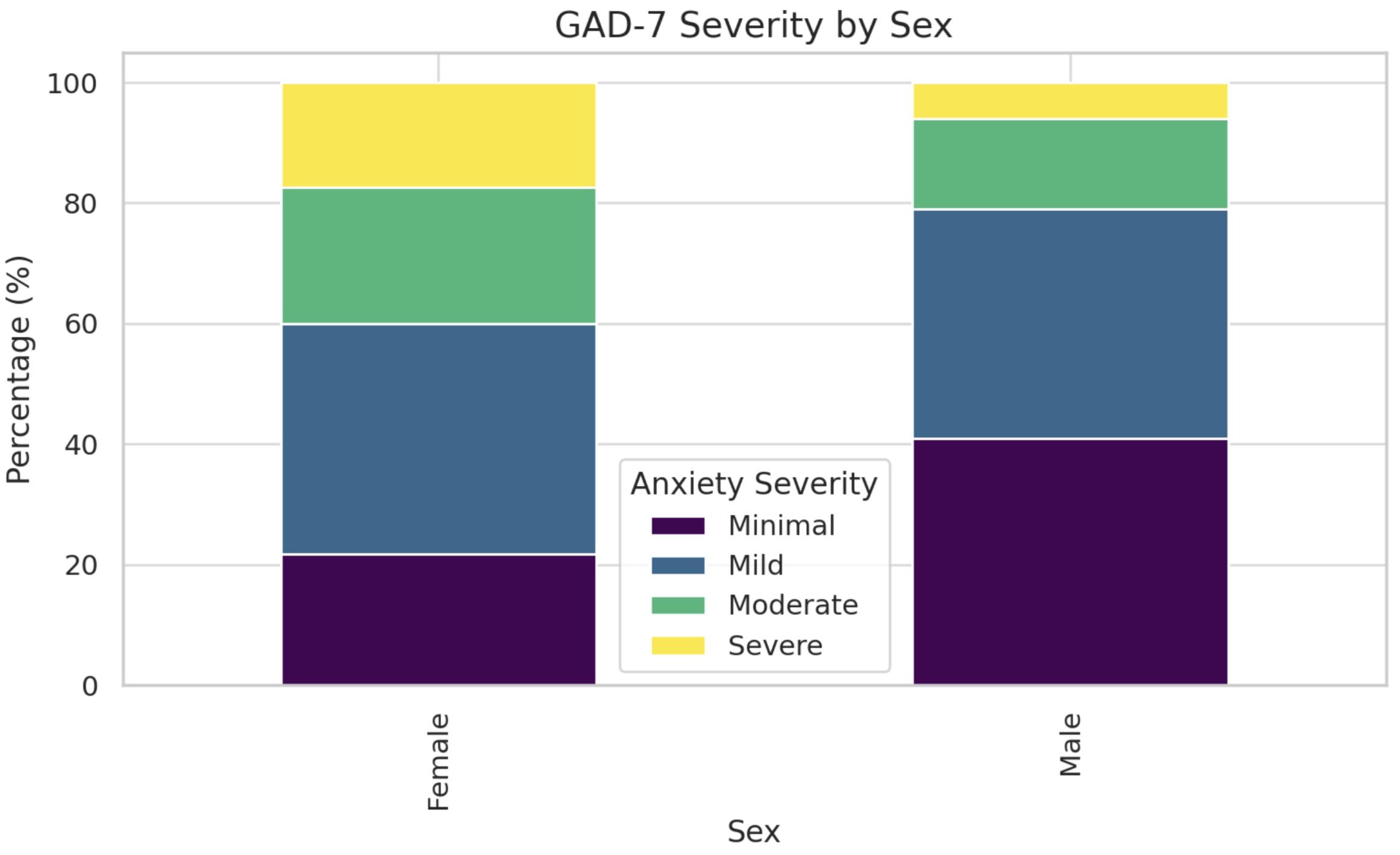
The mean GAD-7 total score was 8.04 (SD = 5.37). Regarding anxiety severity, 27.4% of participants were classified as minimal, 38.1% as mild, 20.2% as moderate, and 14.3% as severe. Overall, 34.5% of students presented moderate to severe anxiety symptoms (GAD-7 ≥ 10).
The distribution of GAD-7 scores demonstrated a slightly right-skewed pattern, with a concentration of students in the mild to moderate range (Figure 1).
When stratified by sex, female students showed a higher proportion of moderate and severe anxiety levels compared to males, while males presented a higher proportion of minimal anxiety (Figure 2).
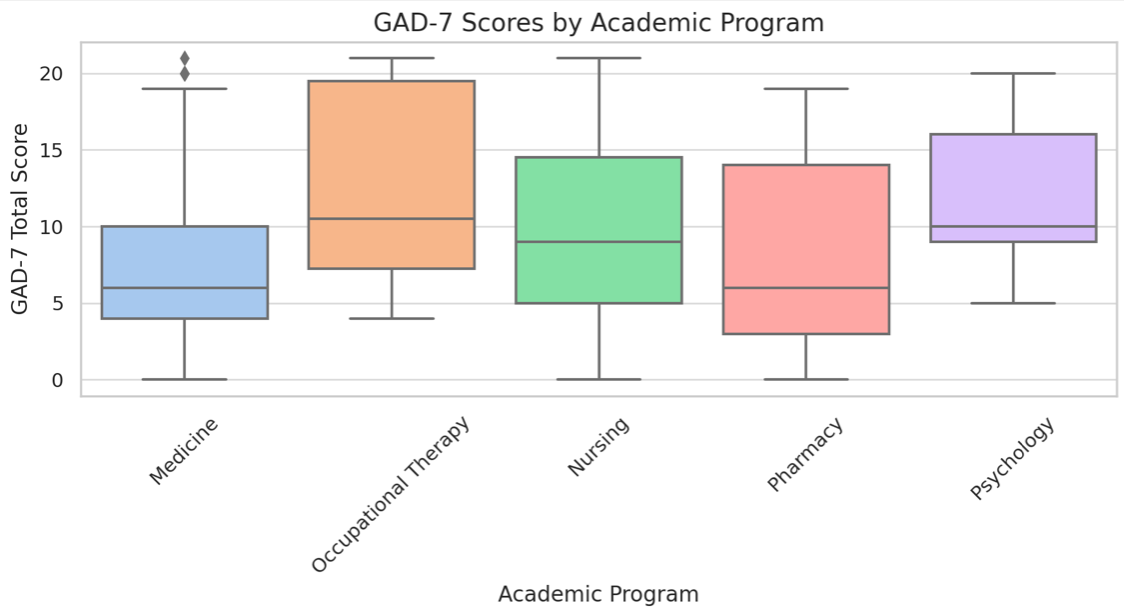
Across academic programs, variability in GAD-7 scores was observed. Students from non-medical programs, particularly Occupational Therapy and Psychology, tended to present higher median scores and greater dispersion, whereas medical students showed comparatively lower median scores (Figure 3).
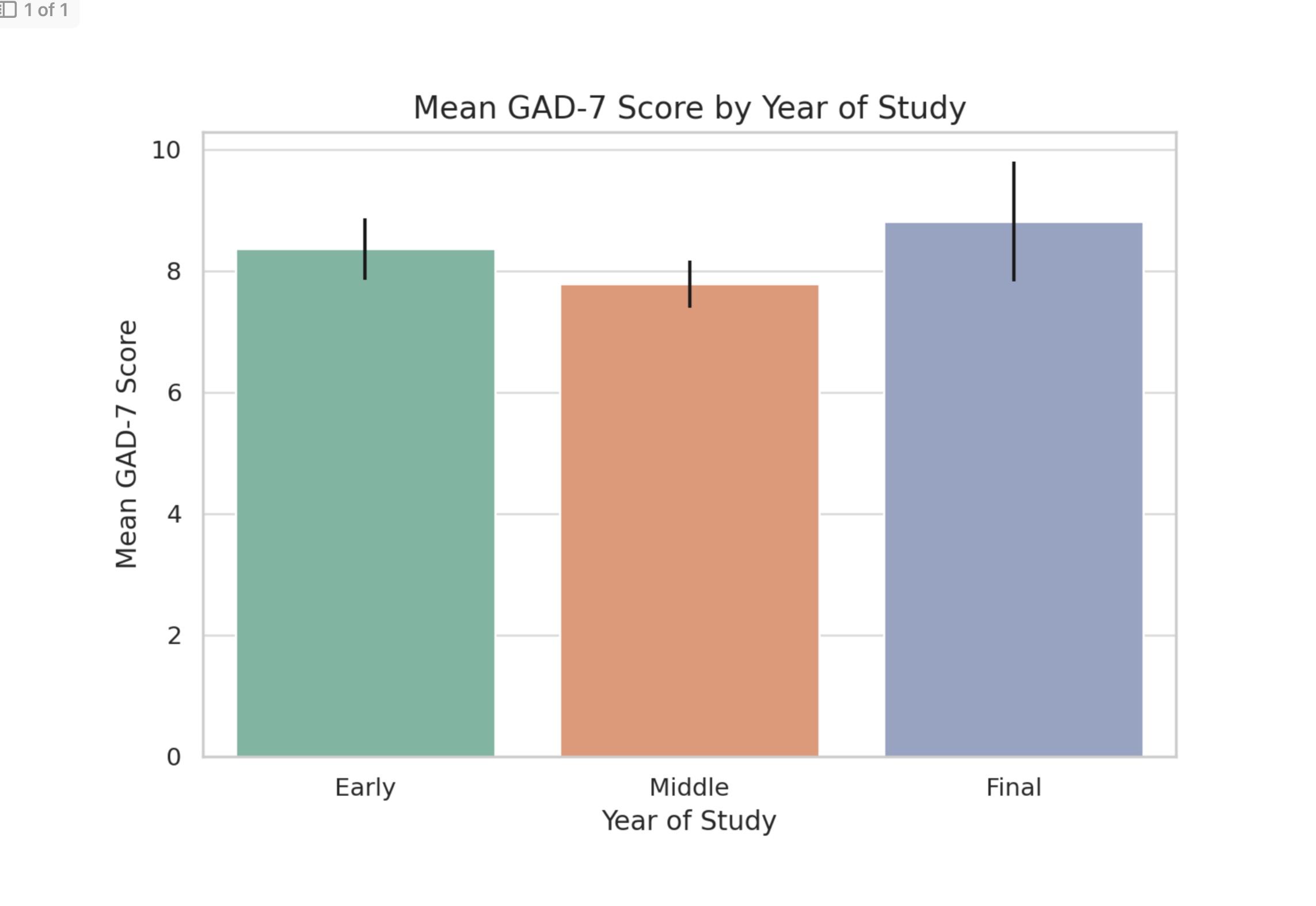
Regarding academic progression, mean GAD-7 scores were relatively similar across different years of study, with slightly higher values observed in final-year students. However, no statistically significant association was identified between year of study and anxiety severity (Figure 4).
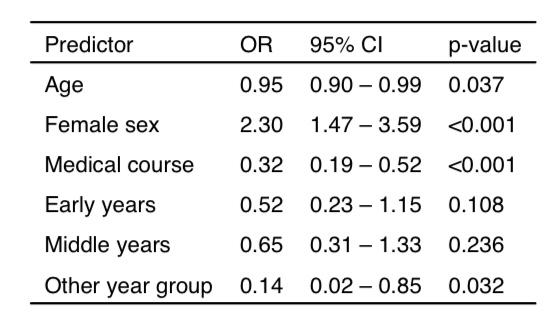
In the ordinal logistic regression analysis, female sex was significantly associated with higher anxiety severity (OR = 2.30; 95% CI: 1.47-3.59; p < 0.001). Enrollment in medical programs was associated with lower anxiety severity (OR = 0.32; 95% CI: 0.19-0.52; p < 0.001), indicating that students from non-medical programs had higher odds of more severe anxiety.
Age was inversely associated with anxiety severity (OR = 0.95; 95% CI: 0.90-0.99; p = 0.037). No statistically significant associations were observed for early or middle years of study. However, the category labeled as “other year group” showed a significant association with lower anxiety severity (OR = 0.14; 95% CI: 0.02-0.85; p = 0.032).
Detailed descriptive and regression results are presented in Table 1 and Table 2.
Discussion
This study demonstrates a high prevalence of anxiety symptoms among healthcare university students, with more than one-third presenting moderate to severe levels. These findings are consistent with previous studies and reinforce the vulnerability of this population 1,3,6.
The association between female sex and increased anxiety severity is well established in the literature. Biological and psychosocial mechanisms may explain this finding, including hormonal factors and gender-related stressors.
An important finding of this study is the higher anxiety severity observed among students enrolled in non-medical programs. This may reflect differences in academic structure, professional identity, and perceived career stability. Medical programs often provide clearer professional pathways, whereas other healthcare programs may involve greater uncertainty and variability in career trajectories.
The inverse association between age and anxiety suggests that older students may have developed more effective coping strategies and emotional regulation skills over time.
The relationship between anxiety, depressive symptoms, impulsivity, and alcohol use highlights the multifactorial nature of mental health in university settings 16,17,25. These findings suggest that anxiety should be addressed within a broader framework of psychological well-being.
This study has limitations. Its cross-sectional design prevents causal inference. The use of self-reported data may introduce reporting bias, and the single-institution setting may limit generalizability.
However, the study also has strengths. It includes a relatively large sample size, incorporates multiple healthcare programs, and uses validated instruments. The use of ordinal logistic regression strengthens the robustness of the findings.
Anxiety symptoms are highly prevalent among healthcare university students. Female sex and enrollment in non-medical programs are significant predictors of increased anxiety severity, while older age is associated with lower levels.
These findings directly address the study objective and highlight the need for targeted mental health strategies in academic settings, including early screening and structured psychological support programs.

