




Services on Demand
Journal

Article
 text in
 English (pdf)
 Article in xml format
 Article references

 Automatic translation
 Send this article by e-mail
Indicators
-
 Cited by SciELO
Related links
-
 Similars in
SciELO
Share

 Permalink

Investigación Agraria
On-line version ISSN 2305-0683
Investig. Agrar. vol.27 no.2 San Lorenzo 2025 Epub Dec 12, 2025
https://doi.org/10.18004/investig.agrar.2025.e270282
Scientific article
Inhibitors of mycotoxigenic fungi in corn grains stored under different humidity levels and time periods
1
 http://orcid.org/0000-0002-1578-7454
2
http://orcid.org/0000-0002-8889-0970
3
http://orcid.org/0000-0003-2832-5934
4
http://orcid.org/0000-0001-6610-5217
1 Universidad Autónoma Chapingo. Chapingo, Texcoco, México.
2Universidad Nacional de Itapúa. Encarnación, Paraguay
3Universidad Católica “Nuestra Señora de la Asunción” Unidad Pedagógica Hohenau, Paraguay.
4Centro de Investigación y de Estudios Avanzados, Instituto Politécnico Nacional. Santiago de Querétaro, México.
5 Centro de Desarrollo e Innovación Tecnológica. Hohenau, Paraguay.
Corn production is compromised by mycotoxigenic fungi such as Fusarium, Aspergillus, and Penicillium, which reduce yield and quality from field to commercialization, causing gastrointestinal and carcinogenic risks in humans and animals. The objective of this work was to evaluate the efficacy of four fungal inhibitors in corn grains stored under different humidity and time conditions. Larrea tridentata extract (10 mL L⁻¹), azadirachtin (20 mL L⁻¹), aluminum phosphide (3 mg L⁻¹), and organic acid mixture (ascorbic 1%, citric 0.25%, lactic 0.25%) were evaluated against Aspergillus flavus, Aspergillus fumigatus, and Fusarium verticillioides in grains stored at 12, 15, and 18% humidity for 120 days. A factorial design (three fungi × three humidities × five treatments) in a completely randomized arrangement was used. The inhibitors showed residual activity of less than ten days. In humid chamber, fungal incidence increased from 8-19% at ten days of incubation to over 96% at thirty days. After ninety days of storage, A. flavus showed the lowest incidence (9.5%) in grains with 12% humidity, while A. fumigatus and F. verticillioides reached 42.0% and 15.0%, respectively. Aflatoxins were detected only in grains with 18% humidity, reaching maximum concentrations of 6.5 mg kg⁻¹ (A. flavus) and 11.0 mg kg⁻¹ (A. fumigatus). The results underscore the need to maintain humidity below 12% and apply early fungal inhibitors to prevent mycotoxin production during corn storage.
Keywords: aflatoxins; Aspergillus; Fusarium; mycotoxins
La producción de maíz se ve comprometida por hongos micotoxigénicos como Fusarium, Aspergillus y Penicillium, que reducen el rendimiento y la calidad desde el campo hasta la comercialización, causando riesgos gastrointestinales y carcinogénicos en humanos y animales. El objetivo de este trabajo fue evaluar la eficacia de cuatro inhibidores fúngicos en granos de maíz almacenados bajo diferentes condiciones de humedad y tiempo. Se evaluaron extracto de Larrea tridentata (10 mL L⁻¹), azadiractina (20 mL L⁻¹), fosfuro de aluminio (3 mg L⁻¹) y mezcla de ácidos orgánicos (ascórbico 1%, cítrico 0,25%, láctico 0,25%) contra A. flavus, A. fumigatus y F. verticillioides en granos almacenados a 12, 15 y 18% de humedad durante 120 días. Se utilizó un diseño factorial (tres hongos × tres humedades × cinco tratamientos) en arreglo completamente al azar. Los inhibidores mostraron residualidad menor a diez días. En cámara húmeda, la incidencia fúngica aumentó de 8-19% a diez días de incubación hasta superar 96% a treinta días. Tras noventa días de almacenamiento, A. flavus presentó la menor incidencia (9,5%) en granos con 12% de humedad, mientras que A. fumigatus y F. verticillioides alcanzaron 42,0% y 15,0%, respectivamente. Las aflatoxinas se detectaron únicamente en granos con 18% de humedad, alcanzando concentraciones máximas de 6,5 mg kg⁻¹ (A. flavus) y 11,0 mg kg⁻¹ (A. fumigatus). Los resultados subrayan la necesidad de mantener la humedad por debajo del 12% y aplicar inhibidores fúngicos tempranos para prevenir la producción de micotoxinas durante el almacenamiento del maíz.
Palabras clave: aflatoxinas; Aspergillus; Fusarium; micotoxinas
INTRODUCTION
Mexico is the sixth largest corn producer worldwide, with a production of 27 million tons in 2022 (OECD/FAO, 2023), and constitutes a pillar of the rural economy with nearly three million producers dedicated to its cultivation (Zuki-Orozco, Batres-Esquivel, Ortiz-Pérez, Juárez-Flores & Díaz-Barriga, 2018). However, colonization by mycotoxigenic fungi (Fusarium, Aspergillus, Penicillium) significantly reduces grain yield and quality, causing ear rot and seed deterioration (Glenn, 2007).
These fungi synthesize mycotoxins, such as aflatoxins, fumonisins, and ochratoxins, which can cause gastrointestinal disorders, immunosuppression, and carcinogenic effects in humans and animals (Liew & Mohd Redzwan, 2018; Gong, Watson & Routledge, 2016). Various species, especially from the Aspergillus and Fusarium genera, have been associated with the synthesis of these toxins, which affect corn quality and safety and represent a serious challenge for global food security (Bryla et al., 2022; Chilaka, Obidiegwu, Chilaka, Atanda & Mally, 2021; Soares, Calado & Venancio, 2013).
In response to these risks, strict regulations have been established, such as Regulation (EC) No. 1881/2006, which sets maximum limits of 2 μg kg⁻¹ for AFB₁ (aflatoxin B1) and 4 μg kg⁻¹ for total aflatoxins in cereals (European Commission, 2006), while NOM-187-SSA1/SCFI-2002 in Mexico establishes a maximum of 20 μg kg⁻¹ of AFB₁ in tortillas and derivatives (Zuki-Orozco, Batres-Esquivel, Ortiz-Pérez, Juárez-Flores & Díaz-Barriga, 2018).
Fungal growth and consequent mycotoxin production are determined by critical factors such as humidity, temperature, postharvest management, and storage time (Magan & Aldred, 2007; Zain, 2011).
Traditionally, aluminum phosphide (AlP) has been widely used for its efficacy, but it releases phosphine gas (PH₃) with a mortality rate exceeding 50% in cases of human and animal exposure, posing serious toxicological and handling risks (Peña Pérez, Pérez Zaldivar & Serranio Oduardo, 2019; Yadav, Bhattacharyya & Banerjee, 2021). Given this problem, more ecological strategies for controlling mycotoxigenic fungi have emerged in the last decade, such as the use of essential oils and plant-derived biopesticides, which are less toxic, biodegradable, and do not generate harmful residues (Li, Qiao & Zhang, 2025; EFSA Panel on Plant Health (P.L.H.) et al., 2022; Nešić, Habschied & Mastanjević, 2021).
Among the promising alternatives are ethanolic extracts of Coriandrum sativum, Mentha piperita, and Trigonella foenum-graecum, which showed significant inhibition of Aspergillus niger and Fusarium oxysporum growth in in vitro assays (Prathibha, Vanekar & Banu, 2023). Phenolic compounds from medicinal plants have demonstrated the ability to alter fungal membranes and reduce Aspergillus fumigatus spore viability (Zhou et al., 2023). Azadirachtin, extracted from the neem tree, degrades completely in less than one hundred hours under light and water conditions and shows low toxicity toward mammals (LD₅₀ > 3,540 mg kg⁻¹), making it a safe option (Kilani-Morakchi, Morakchi-Goudjil & Sifi, 2021; Hassan, Sand & El-Kadi et al., 2012). Meanwhile, organic acid mixtures reduce the surface pH of grains to values close to four, creating an inhospitable environment for mycotoxigenic fungi without leaving harmful residues (Alcalde, 2025; Hassan et al., 2012).
The efficacy of these inhibitors depends on factors such as formulation, residual activity, and compatibility with storage conditions, aspects that require specific evaluation under different humidity and time conditions (Magan & Olsen, 2004). Considering the urgency of finding safe alternatives due to increasing Fusarium resistance to conventional fungicides (Li, Qiao & Zhang, 2025), the objective of this work was to evaluate the efficacy of four fungal inhibitors in corn grains stored under different humidity levels and storage periods. The research focused on the incidence of mycotoxigenic fungi Fusarium verticillioides, Aspergillus flavus, and A. fumigatus, and aflatoxin production, with the aim of generating practical recommendations that contribute to ensuring the quality and safety of corn grains intended for human and animal consumption.
MATERIALS AND METHODS
Location and research period
This study was conducted between July 2014 and September 2015 at the Plant Pathology Laboratory of the Universidad Autónoma de Chapingo, located in Texcoco, Chapingo, State of Mexico, and at the Organic Materials Laboratory of the Centro de Investigación y de Estudios Avanzados del Instituto Politécnico Nacional, in Querétaro, State of Querétaro, Mexico.
Experimental design
A completely randomized design with a 3 × 3 × 5 factorial arrangement and three replications was used. The factors included the fungal species A. flavus, A. fumigatus, and F. verticillioides, which were provided by the Plant Pathology Laboratory of the Plant Protection Department of the Universidad Autónoma de Chapingo; the second factor was grain moisture content: 12, 15, and 18%; and the third, fungal treatments: L. tridentata extract (10 mL L⁻¹), azadirachtin (20 mL L⁻¹), aluminum phosphide (3 mg L⁻¹), acid mixture (ascorbic 1%, citric 0.25%, and lactic 0.25%), and a control without inhibitor application.
The experimental units consisted of 600 mL plastic bottles with 350 g of Criolla variety corn grains, previously disinfected using a broad-spectrum organic disinfectant (Virkon®), at a dose of 0.5 g L⁻¹.
Fungal inoculation and inhibitor incorporation
The inoculation of A. flavus, A. fumigatus, and F. verticillioides was performed by adding three milliliters of a 500,000 conidia mL⁻¹ suspension to each experimental unit. Twenty-four hours after this inoculation, three milliliters of each treatment were applied per experimental unit. Subsequently, the samples were maintained for twenty hours at 4°C to favor moisture homogenization.
The final moisture adjustment to 12, 15, and 18% was carried out using the formula described by Pixton and Griffith (1971), according to which the amount of water to add was determined based on grain mass and initial moisture content (percentage on wet basis). The amount of water necessary for the final moisture to be as desired was calculated, carefully adding the resulting volume and distributing it homogeneously through manual agitation, performing gentle circular movements for approximately two minutes. Finally, the experimental units were incubated at 27°C (± 2°C), sealed with polyethylene film to prevent moisture loss.
Variables evaluated
Fungal incidence in humid chamber was determined at 10, 20, and thirty days after inoculation (DAI). For this, twenty-five grains from each experimental unit were selected and placed in humid chamber with four replications per treatment. The humid chamber consisted of hermetic plastic containers of 15 × 10 × 5 cm, with a base of filter paper moistened with sterile distilled water and a plastic grid to avoid direct contact of grains with water. The chambers were maintained at 25 ± 2°C and relative humidity close to 95%, conditions that favor fungal development. After seven days of incubation, the percentage of fungal growth was quantified.
Additionally, fungal incidence in stored grains was determined at 30, 60, and ninety DAI, taking one hundred grains from each experimental unit. At ninety days of storage, aflatoxin concentration (B1, B2, G1, and G2) from A. flavus and A. fumigatus was evaluated. Twenty grams of grains were taken, which were ground and weighed, and then mixed with a methanol:water solvent (1:1, v/v) to extract aflatoxins. The suspension was mechanically agitated in an orbital shaker (IKA® KS 130 basic, Germany) at 150 rpm for five minutes and subsequently filtered to remove solid particles. The filtrate was passed through an immunoaffinity column with specific monoclonal antibodies for aflatoxins (Aflatest®, VICAM, United States). The column was washed with distilled water to remove impurities and aflatoxins were eluted with 1.0 mL of HPLC-grade methanol. The eluate was analyzed by high-performance liquid chromatography (HPLC) in an Agilent 1260 Infinity II equipment (Agilent Technologies, United States) equipped with fluorescence detector, using a C18 column (4.6 × 150 mm, 5 μm) and mobile phase water:methanol (60:40, v/v) at a flow of 1.0 mL min⁻¹.
Data analysis
An analysis of variance (ANOVA) was performed and, when significant differences between treatments were detected, Tukey's multiple mean comparison test (α = 0.05) was applied. In cases of significant interaction between factors, the interaction was decomposed to facilitate interpretation of results. Statistical analysis was performed using SAS® software version 9.3.
RESULTS AND DISCUSSION
Fungal incidence in humid chamber
The ANOVA indicated that the interaction between the three evaluated factors was not significant for fungal incidence in grains subjected to humid chamber. However, the double interactions inhibitor × fungus (Table 1) and humidity × fungus (Table 2) were significant, so the interactions were decomposed for better interpretation of results.
Table 1 Incidence (%) of mycotoxigenic fungi in corn grains treated with fungal inhibitors, subjected to humid chamber. Texcoco de Mora, State of Mexico, Mexico, 2015.
| Inhibitors | Fungal species | Incidence (%)* | |||||||
|---|---|---|---|---|---|---|---|---|---|
| 10 DAI | 20 DAI | 30 DAI | |||||||
| Ascorbic acid 1% + Citric acid 0.25% + Lactic acid 0.25% | A. flavus | 5,4 | a | 29,3 | a | 91,1 | a | ||
| A. fumigatus | 89,7 | d | 94,9 | b | 99,7 | bc | |||
| F. verticillioides | 87,3 | d | 99,0 | b | 99,3 | bc | |||
| Azadirachtin 85% | A. flavus | 19,6 | b | 30,8 | a | 96,9 | bc | ||
| A. fumigatus | 88,3 | d | 91,5 | b | 99,0 | bc | |||
| F. verticillioides | 85,8 | d | 98,0 | b | 98,0 | bc | |||
| L. tridentata extract 95% | A. flavus | 9,1 | ab | 32,6 | a | 97,0 | bc | ||
| A. fumigatus | 89,3 | d | 97,0 | b | 99,0 | bc | |||
| F. verticillioides | 90,8 | d | 96,2 | b | 99,7 | bc | |||
| Aluminum phosphide | A. flavus | 8,4 | a | 26,1 | a | 95,2 | ab | ||
| A. fumigatus | 89,4 | d | 93,9 | b | 97,7 | bc | |||
| F. verticillioides | 73,7 | c | 98,7 | b | 99,7 | bc | |||
| Control (without inhibitor) | A. flavus | 16,0 | ab | 20, 7 | a | 100,0 | c | ||
| A. fumigatus | 89,7 | d | 98,3 | b | 98,0 | bc | |||
| F. verticillioides | 92,8 | d | 99,3 | b | 99,3 | bc | |||
| CV (%)** | 14,0 | 14,4 | 3,4 | ||||||
*Means with a common letter are not significantly different by Tukey's test (p>0.05).
**Coefficient of variation of the data, in percentage.
The humid chamber evaluation showed that, during the first ten days after inoculation (DAI), the applied inhibitors managed to partially reduce fungal incidence, particularly in A. flavus, while A. fumigatus and F. verticillioides showed high colonization capacity even under antifungal treatments. This agrees with reports by Magan and Aldred (2007) and Bryła et al. (2022), who indicate that the germination and growth rate of Fusarium and Aspergillus spp. depends on both water availability and the intrinsic tolerance of each species to inhibitory compounds.
In this study, the organic acid mixture and aluminum phosphide showed the lowest incidence values in A. flavus at ten DAI, but without significant differences compared to the control at twenty and thirty DAI. This loss of efficacy is associated with the low residual activity of the products, which according to Hassan et al. (2012) and Rivera-Escareño et al. (2025), can be less than ten days under favorable conditions for fungal development. The rapid increase in incidence in subsequent evaluations reflects that the humid chamber favors an environment close to humidity saturation (near 95% RH), an optimal condition for sporulation of these fungi (Milani, 2013; Suleiman, Rosentrater & Bern, 2013).
Likewise, A. flavus consistently presented lower incidence values than the other species, which coincides with previous observations by Mureithi (2010), who documented that this species presents slower growth in whole grain than A. fumigatus or F. verticillioides under high humidity. However, its capacity to produce aflatoxins even at low colonization rates highlights the importance of its early control (Gong et al., 2016).
Table 2 Incidence (%) of mycotoxigenic fungi in corn grains under different moisture contents (%) subjected to humid chamber. Texcoco de Mora, State of Mexico, Mexico, 2015.
| Moisture (%) | Fungal species | Incidence (%)* | ||||||
|---|---|---|---|---|---|---|---|---|
| 10 DAI | 20 DAI | 30 DAI | ||||||
| 12 | A. flavus | 11,0 | a | 36,9 | b | 96,1 | ab | |
| A. fumigatus | 86,0 | c | 94,5 | c | 99,0 | bc | ||
| F. verticillioides | 70,7 | b | 96,1 | c | 98,4 | abc | ||
| 15 | A. flavus | 8,4 | a | 21,2 | a | 95,7 | a | |
| A. fumigatus | 89,7 | cd | 98,2 | c | 98,4 | abc | ||
| F. verticillioides | 90,3 | cd | 98,6 | c | 99,2 | bc | ||
| 18 | A. flavus | 15,8 | a | 25,6 | a | 96,3 | ab | |
| A. fumigatus | 92,2 | cd | 92,7 | c | 98,6 | abc | ||
| F. verticillioides | 97,3 | d | 100,0 | c | 100,0 | c | ||
| CV (%)** | 14,0 | 14,4 | 3,4 | |||||
*Means with a common letter are not significantly different by Tukey's test (p>0.05).
**Coefficient of variation of the data, in percentage.
In the moisture × fungus interaction (Table 2), it was observed that the effect of grain moisture content on F. verticillioides incidence was significant, where the incidence value was reduced by 7.2% when moisture decreased from 18% to 15%, and by 21.7% when moisture decreased from 15% to 12% at ten DAI. The incidence of A. flavus and A. fumigatus was not significantly reduced with the reduction of grain moisture.
At twenty DAI, the ANOVA detected that only the moisture × fungus interaction was significant, so no significant differences were observed between products; significant differences were still observed between the inhibitor × fungus interaction, but this was due to a greater influence of the fungus factor. This can be clearly observed in the groups formed in the multiple mean comparison (Table 1), where, for all inhibitors, A. flavus presented the lowest incidence values compared to the other species.
At thirty DAI, similar results were evident, but with less clear trends, because all recorded incidence values were equal to or close to 100%. It is important to emphasize that the residual activity of these products decreases over time. When the moisture × fungus interaction was analyzed, the trend was similar to what occurred with the inhibitor × fungus interaction. The statistical differences observed were mainly due to the inoculated fungi, with very low incidence values in A. flavus, while between A. fumigatus and F. verticillioides no significant differences were present.
In the first ten DAI there was a greater influence of the applied inhibitors, which was not evident in subsequent evaluations. This is because the products limit fungal growth but do not eliminate the inoculum, so when placed in humid chamber, mycelial development continues and can be detected rapidly. The differences detected between fungi are due to the fact that, during storage, A. flavus presented much slower growth than A. fumigatus and F. verticillioides, both in culture medium and during development in inoculated grains.
These results confirm that, although the evaluated inhibitors can delay the onset of growth, effective control under high humidity conditions requires complementary strategies, such as rapid grain drying, use of hermetic containers, and application of inhibitors with greater persistence, in line with recommendations by Magan and Olsen (2004) and EFSA Panel on Plant Health et al. (2022).
Fungal incidence in storage
The ANOVA detected significant statistical differences between factors, in the triple interaction inhibitor × fungus × moisture, and in the double interaction inhibitor × fungus. Considering the inhibitor × fungus interaction, the greatest influence was due to the fungus factor. The slowest growth was recorded in A. flavus in storage, consistent with what was observed under humid chamber conditions (Table 3). The applied inhibitors had no effect on the development of inoculated fungi; in fact, their effect showed no differences from the control without inhibitor application. Among the inoculated fungi, the lowest incidence was observed in A. flavus, followed by A. fumigatus and F. verticillioides, since these last two presented statistically similar incidence averages (Figure 1a).
Table 3 Incidence (%) of mycotoxigenic fungi in stored corn grains treated with fungal inhibitors under different moisture contents (%). Texcoco de Mora, State of Mexico, Mexico, 2015.
| Inhibitor | Moisture (%) | Incidence (%) * 90 DDI | |||||
|---|---|---|---|---|---|---|---|
| A. flavus | A. fumigatus | F. verticillioides | |||||
| L. tridentata extract 95% | 12 | 9,5 | a | 13,0 | a | 15,0 | ab |
| 15 | 11,0 | a | 38,0 | abcd | 21,0 | abc | |
| 18 | 9,0 | a | 35,5 | abcd | 52,5 | cd | |
| Azadirachtin 85% | 12 | 19,5 | abc | 19,0 | abc | 13,5 | a |
| 15 | 27,5 | abcd | 11,5 | a | 40,0 | abcd | |
| 18 | 39,0 | abcd | 43,5 | abcd | 49,0 | bcd | |
| Aluminum phosphide | 12 | 11,0 | a | 12,0 | a | 11,5 | a |
| 15 | 14,0 | a | 21,5 | abc | 24,0 | abc | |
| 18 | 29,5 | abcd | 31,0 | abcd | 25,0 | abcd | |
| Ascorbic acid 1% + Citric acid 0.25% + Lactic acid 0.25% | 12 | 13,5 | a | 12,0 | a | 11,0 | a |
| 15 | 13,0 | a | 18,0 | abc | 22,0 | abc | |
| 18 | 27,0 | abcd | 35,5 | abcd | 59,5 | d | |
| Control (without application) | 12 | 10,5 | a | 10,0 | a | 14,0 | a |
| 15 | 17,0 | ab | 24,0 | abc | 21,0 | abc | |
| 18 | 35,0 | abcd | 42,0 | abcd | 35,0 | abcd | |
| CV (%)** | 34,6 | ||||||
*Means with a common letter are not significantly different by Tukey's test (p>0.05).
**Coefficient of variation of the data, in percentage.
Additionally, no significant differences were observed in mycelial growth at thirty or sixty DAI. However, at ninety DAI significant differences were detected in growth and sporulation under all treatments (Table 3). Recent studies support these latency times under similar conditions. For example, Shi et al. (2023) reported changes in fungal community and mycotoxin production in stored corn in temperature ranges of 20-30°C, confirming the late development of A. flavus during prolonged storage. Likewise, Muga, Marenya and Workneh (2019) demonstrated that aflatoxin contamination increases considerably when grain moisture exceeds 18%, especially if storage is prolonged, consistent with observations of higher incidence and sporulation at ninety DAI.
Although A. flavus presented slower growth, this fungus can develop from 13% moisture, like other Aspergillus species. However, the optimal moisture content for its development is 18% (Mureithi, 2010), while Fusarium species require higher moisture levels. According to Birzele and Prange (2003), the development of Fusarium species in grains with 15% moisture content depends on storage time, but develops rapidly from 18% moisture content.
Statistical differences were highly significant between the different grain moisture percentages studied in storage (Figure 1b). Incidence averages decreased to lower values with lower grain moisture content, confirming that this is one of the most important factors for fungal development in storage (Milani, 2013; Suleiman et al., 2013).
As recorded in the inhibitor × fungus interaction, the effect of inhibitors does not present a defined trend, but is strongly influenced by other factors, such as fungal species, moisture, or storage time. In evaluations performed in humid chamber, from twenty DAI onward, inhibitors already presented unstable behavior.
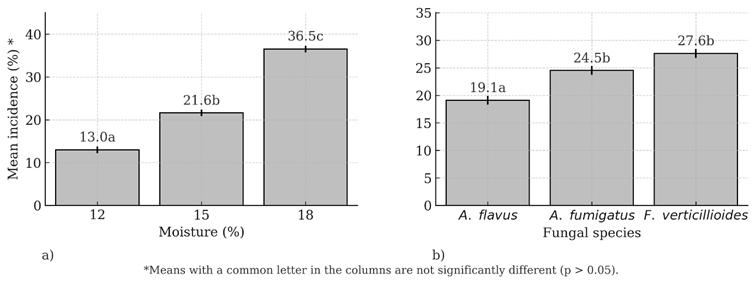
Figure 1 Average incidence (%) of mycotoxigenic fungi in stored corn grains, according to a) moisture contents (%), and b) fungal species. Texcoco de Mora, State of Mexico, Mexico, 2015.
To achieve effective inhibition of fungi in stored grains, recent studies have demonstrated that acetic acid is effective at lower concentrations than previously reported. For example, Haggag et al. (2024) showed that both acetic acid and thyme have strong bioactive effect in vapor phase and can notably inhibit the accumulation of aflatoxins B1 and B2 produced by Aspergillus flavus, with EC₅₀ values for acetic acid of only 0.0013 mg mL⁻¹ in volatile contact (approximately 1.3 mg kg⁻¹). Additionally, Sorathiya, Melo, Hogg and Pintado (2025) reviewed sustainable applications of organic acids in food preservation and highlighted that acetic acid can contribute to prolonging shelf life and preventing fungal deterioration in grains without leaving toxic residues.
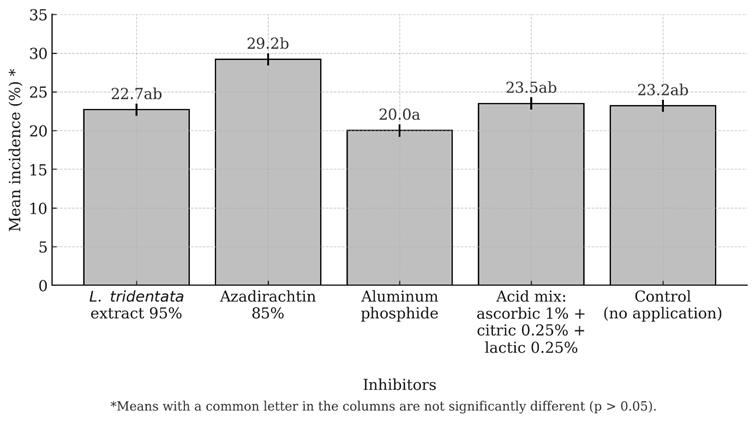
Figure 2 Average incidence (%) of mycotoxigenic fungi in stored corn grains, according to treatment with fungal inhibitors. Texcoco de Mora, State of Mexico, Mexico, 2015.
Regarding the evaluated treatments, Larrea tridentata extract showed relatively low incidences in A. flavus and F. verticillioides at 12% moisture (Figure 2), which coincides with reports by Rivera-Escareño et al. (2025), who document that its phenolic compounds possess antifungal action through cell membrane alteration and inhibition of key enzymes in fungal metabolism. However, its efficacy decreased with increased moisture and storage time, suggesting the need for repeated applications or controlled-release formulations.
Azadirachtin, a limonoid extracted from neem (Azadirachta indica), presented variable behavior. Although in some cases it reduced A. fumigatus incidence at 15% moisture, its effect was limited against higher moistures. This agrees with findings by Kilani-Morakchi et al. (2021), who highlight that azadirachtin is photo- and thermosensitive, with rapid degradation under environmental conditions, which shortens its residual activity in storage.
The acid mixture (ascorbic, citric, and lactic) showed moderate initial control, attributable to the reduction of grain surface pH and disruption of fungal homeostasis (Hassan et al., 2012). However, its effectiveness declined as moisture and exposure time increased, which agrees with reports by Alcalde (2025) about the need to maintain low water activity conditions to enhance organic acid action.
Regarding aluminum phosphide, while it is widely used in postharvest management for its efficacy against pests, its role in fungal control is limited and its use is declining due to its high toxicity, acute poisoning risks, and regulatory restrictions in several countries (Yadav et al., 2021; Saldivia-Tejeda, 2018). Additionally, certain fungi such as Aspergillus spp. and Penicillium spp. can tolerate phosphine or even solubilize phosphide, reducing its fungicidal effectiveness (Mendes et al., 2013; Rinu, Malviya, Sati, Tiwari & Pandey, 2013). The transition toward safer alternatives, such as essential oils, plant extracts, and organic acids, responds to both food safety demands and the need to reduce environmental impact.
Collectively, these results suggest that none of the evaluated options provides prolonged control alone under elevated moisture conditions and extended storage (Figure 2). This reinforces the recommendation to integrate inhibitors with other practices, such as rapid drying and use of hermetic systems, to maximize protection against mycotoxigenic fungi and minimize risks to human health and the environment.
Aflatoxin concentration
Table 4 presents the results corresponding to aflatoxin accumulation in corn grains inoculated with A. flavus and A. fumigatus under different grain moisture contents, treated with fungal inhibitors and stored for ninety DAI.
Table 4 Aflatoxin concentration (mg kg⁻¹) by A. flavus and A. fumigatus in stored corn grains, treated with fungal inhibitors under different moisture contents (%). Texcoco de Mora, State of Mexico, Mexico, 2015.
| Inhibitor | Moisture (%) | Concentration (mg kg⁻¹) | ||||
|---|---|---|---|---|---|---|
| A. flavus | A. fumigatus | |||||
| L. tridentata extract 95% | 12 | 0,0 | a | 0,0 | a | |
| 15 | 0,5 | ab | 0,0 | a | ||
| 18 | 6,5 | abc | 4,0 | abc | ||
| Azadirachtin 85% | 12 | 0,0 | a | 0,0 | a | |
| 15 | 0,0 | a | 0,0 | a | ||
| 18 | 5,5 | abc | 6,5 | abc | ||
| Aluminum phosphide | 12 | 0,0 | a | 0,0 | a | |
| 15 | 1,0 | ab | 0,0 | a | ||
| 18 | 5,0 | abc | 2,5 | ab | ||
| Ascorbic acid 1% + Citric acid 0.25% + Lactic acid 0.25% | 12 | 0,0 | a | 0,0 | a | |
| 15 | 0,0 | a | 0,0 | a | ||
| 18 | 0,5 | a | 5,5 | abc | ||
| Control (without application) | 12 | 0,0 | a | 9,0 | bc | |
| 15 | 1,0 | ab | 9,0 | bc | ||
| 18 | 2,5 | ab | 11,0 | c | ||
| CV (%)** | 82,0 | |||||
*Means with a common letter are not significantly different by Tukey's test (p>0.05).
**Coefficient of variation of the data, in percentage.
In the evaluation performed at ninety DAI, there were no significant differences in fungal incidence according to applied inhibitors and in the inhibitor × fungus and moisture × fungus interactions. Only significant differences were observed between grain moisture percentages during storage. However, Ghorbanian, Razzaghi-Abyaneh, Allameh, Shams-Ghahfarokhi and Qorbani (2008) observed that, although mycelial growth reduction from azadirachtin 85% treatment is limited, it does reduce aflatoxin production by Aspergillus parasiticus.
It can be observed that after ninety DAI, aflatoxin production occurred only in grains with 18% moisture, with only traces accumulated at 15% moisture, and no mycotoxins were found when storage moisture was 12%. The detected mycelial growth was low at ninety DAI, evidencing that until sixty DAI, fungal development was scarce, and therefore, mycotoxin production was also low.
The observation of significant aflatoxin production only in grains with 18% moisture after ninety DAI is consistent with recent studies that indicate the critical influence of moisture and temperature on the synthesis of these toxins. Muga et al. (2019) reported that, although grain moisture content alone was not significant, the combination of high temperature (30°C) and high relative humidity (90%) produced elevated aflatoxin levels in corn, reaching up to 11,179 mg kg⁻¹ (≈ 11 mg kg⁻¹) at 18% moisture. This supports the findings obtained in this work in prolonged storage contexts. Likewise, Villers (2014) highlights that, during postharvest storage in warm and humid environments, aflatoxin production can increase exponentially, being practically nonexistent when moisture is maintained below 12%. The low levels or absence of mycotoxins at 12% conditions precisely reflect this critical barrier.
The probable causes of this dynamic include higher water activity that facilitates A. flavus germination and promotes its secondary metabolism (toxin synthesis), in addition to possible late release of spores or fungal metabolites under persistent moisture conditions. In contrast, lower moistures significantly delayed mycelial development and toxin production. Additionally, storage time is one of the factors that also strongly influences interaction with other factors, such as moisture and temperature (Suleiman et al., 2013; Cassini et al., 2005), which can be reflected in the results obtained in the present study.
CONCLUSIONS
The results confirm that moisture content is the main factor determining the development of mycotoxigenic fungi and aflatoxin synthesis in stored corn. Maintaining moisture at 12% allowed keeping reduced incidence of A. flavus, A. fumigatus, and F. verticillioides and avoiding aflatoxin detection for ninety days, while at 18% a significant increase in mycelial growth and toxin production was recorded.
The evaluated inhibitors, Larrea tridentata, azadirachtin, aluminum phosphide, and acid mixture, presented initial efficacy, but their effect was reduced over time, influenced by moisture and storage duration, without significant differences compared to the control after the first thirty days. These findings underscore the need to explore more persistent formulations and combined control strategies, as well as expand evaluation to other natural compounds and conservation technologies, in order to optimize corn safety during storage.
REFERENCES
Alcalde, E. (2025). Harnessing organic acids to combat moulds and preserve grain quality. Feed & Additive Magazine. https://www.feedandadditive.com/harnessing-organic-acids-to-combat-moulds-and-preserve-grain-quality/ [ Links ]
Birzele, B., & Prange, A. (2003). Fusarium spp. and storage fungi in suboptimally stored wheat: mycotoxins and influence on wheat gluten proteins. Mycotoxin Research, 19 (2), 162-170. https://doi.org/10.1007/BF02942958 [ Links ]
Bryła, M., Pierzgalski, A., Zapaśnik, A., Uwineza, P. A., Ksieniewicz-Woźniak, E., Modrzewska, M., & Waśkiewicz, A. (2022). Recent research on Fusarium mycotoxins in maize-A review. Foods, 11(21), 3465. https://doi.org/10.3390/foods11213465 [ Links ]
Cassini, C., Rodríguez, R., Bartosik, R., Peiretti, J., y Cabral, G. (2005). Post cosecha de trigo: secado y almacenaje. En D. Cassini y M. Bragachini (Eds.), Trigo: eficiencia de cosecha y post cosecha. Buenos Aires: Instituto Nacional de Tecnología Agropecuaria, 115 p. [ Links ]
Chilaka, C. A., Obidiegwu, J. E., Chilaka, A. C., Atanda, O. O., & Mally, A. (2022). Mycotoxin regulatory status in Africa: A decade of weak institutional efforts. Toxins, 14(7), 442. https://doi.org/10.3390/toxins14070442 [ Links ]
EFSA Panel on Plant Health (P.L.H.), Bragard, C., Baptista, P., Chatzivassiliou, E., Di Serio, F., Gonthier, P., … MacLeod, A. (2022). Pest categorisation of Arboridia kakogawana. EFSA Journal, 20(1), e07023. https://doi.org/10.2903/j.efsa.2022.7023 [ Links ]
European Commission. (2006). Commission Regulation (EC) No 1881/2006 of 19 December 2006 setting maximum levels for certain contaminants in foodstuffs (Consolidated version as of 28 July 2017). Official Journal of the European Union, L 364, 5-24. https://eur-lex.europa.eu/legal-content/EN/TXT/?uri=CELEX%3A02006R1881-20170728 [ Links ]
Ghorbanian, M., Razzaghi-Abyaneh, M., Allameh, A., Shams-Ghahfarokhi, M., & Qorbani, M. (2008). Study on the effect of neem (Azadirachta indica A. Juss) leaf extract on the growth of Aspergillus parasiticus and production of aflatoxin by it at different incubation times. Mycoses, 51(1), 35-39. https://doi.org/ 10.1111/j.1439-0507.2007.01440.x [ Links ]
Glenn, A. E. (2007). Mycotoxigenic Fusarium species in animal feed. Animal Feed Science and Technology, 137(3-4), 213-240. https://doi.org/10.1016/j.anifeedsci.2007.06.003 [ Links ]
Gong, Y. Y., Watson, S., & Routledge, M. N. (2016). Aflatoxin exposure and associated human health effects: A review of epidemiological studies. Food Safety (Tokyo), 4(1), 14-27. https://doi.org/10.14252/foodsafetyfscj.2015026 [ Links ]
Haggag, W. M., Diab, M. M., Al-Ansary, N. A., Ibrahim, M. I., Khattab, A. E. N. A., Abdel-Wahhab, M. A., & Ali, M. K. (2024). Molecular identification and management of mycotoxigenic fungi in stored corn Grains.Cereal Research Communications,52(4), 1631-1644. https://doi.org/10.1007/s42976-024-00502-w [ Links ]
Hassan, R. A., Sand, M. I., & El-Kadi, S. M. (2012). Effect of some organic acids on fungal growth and their toxins production. Journal of Agricultural Chemistry and Biotechnology, 3(9), 391-397. https://doi.org/10.21608/jacb.2012.55011 [ Links ]
Kilani-Morakchi, S., Morakchi-Goudjil, H., & Sifi, K. (2021). Azadirachtin-based insecticide: Overview, risk assessments, and future directions. Frontiers in Agronomy, 3, 676208. https://doi.org/10.3389/fagro.2021.676208 [ Links ]
Li, H., Qiao, S., & Zhang, S. (2025). Essential oils in grain storage: A comprehensive review of insecticidal and antimicrobial constituents, mechanisms, and applications for grain security. Journal of Stored Products Research, 111, 102537. https://doi.org/10.1016/j.jspr.2024.102537 [ Links ]
Liew, W.-P. P., & Mohd-Redzwan, S. (2018). Mycotoxin: Its impact on gut health and microbiota. Frontiers in Cellular and Infection Microbiology, 8, 60. https://doi.org/10.3389/fcimb.2018.00060 [ Links ]
Magan, N., & Aldred, D. (2007). Post-harvest control strategies: Minimizing mycotoxins in the food chain. International Journal of Food Microbiology, 119(1-2), 131-139. https://doi.org/10.1016/j.ijfoodmicro.2007.07.034 [ Links ]
Magan, N., & Olsen, M. (Eds.). (2004). Mycotoxins in food: Detection and control. Cambridge, UK: Woodhead Publishing. https://api.pageplace.de/preview/DT0400.9781855739086_A24188972/preview-9781855739086_A24188972.pdf [ Links ]
Mendes, G. O., Vassilev, N. B., Bonduki, V. H. A., Da Silva, I. R., Ribeiro, J. I., & Costa, M. D. (2013). Inhibition of Aspergillus niger phosphate solubilization by fluoride released from rock phosphate. Applied and Environmental Microbiology, 79(16), 4906-4913. https://doi.org/10.1128/AEM.01487-13 [ Links ]
Milani, J. M. (2013). Ecological conditions affecting mycotoxin production in cereals: A review. Veterinary Medicine, 58(8), 405-411. https://doi.org/ 10.17221/6979-VETMED [ Links ]
Muga, F. C., Marenya, M. O., & Workneh, T. S. (2019). Effect of temperature, relative humidity and moisture on aflatoxin contamination of stored maize kernels.Bulgarian Journal of Agricultural Science,25(2), 271-277. https://www.agrojournal.org/25/02-07.pdf [ Links ]
Mureithi, B. K. (2010). Effect of production practices, storage materials and moisture content on fungal and aflatoxin contamination of maize and maize products (Tesis de maestría). Nairobi, KE: Faculty of Agriculture, University of Nairobi. https://erepository.uonbi.ac.ke/handle/11295/25372 [ Links ]
Nešić, K., Habschied, K., & Mastanjević, K. (2021). Possibilities for the biological control of mycotoxins in food and feed. Toxins , 13(3), 198. https://doi.org/10.3390/toxins13030198 [ Links ]
OECD/FAO (2023).OECD-FAO Agricultural Outlook 2023-2032. Paris: OECD Publishing. https://doi.org/10.1787/08801ab7-en [ Links ]
Prathibha, K. Y., Vanekar, A., & Banu, M. (2023). Comparative analysis of antifungal activity of different plant extracts. Journal of Medicinal Plants Studies, 11(2),16-20. https://www.plantsjournal.com/archives/2023/vol11issue2/PartA/11-2-2-287.pdf [ Links ]
Peña Pérez, M., Pérez Zaldivar, J. C., y Serranio Oduardo, D. (2019). Manejo integrado de plagas de almacén en Jesús Menéndez. Ojeando la Agenda (60 ), 3. https://ojeandolaagenda.com/2019/07/31/manejo-integrado-de-plagas-de-almacen-en-jesus-menendez/ [ Links ]
Pixton, S. W., & Griffith, H. J. (1971). Diffusion of moisture through grain. Journal of Stored Products Research , 28(3), 221-235. [ Links ]
Rinu, K., Malviya, M. K., Sati, P., Tiwari, S. C., & Pandey, A. (2013). Response of cold-tolerant Aspergillus spp. to solubilization of Fe and Al phosphate in presence of different nutritional sources. Soil Science, 13, 1-10. https://doi.org/10.1155/2013/598541 [ Links ]
Rivera-Escareño, D., Cadena-Iñiguez, J., García-Flores, D. A., Loera-Alvarado, G., Aguilar-Galaviz, L., & Ortega-Amaro, M. A. (2025). Microbicidal activity of extract Larrea tridentata (Sessé and Moc. ex DC.) Coville on Pseudomonas syringae Van Hall and Botrytis cinerea Pers. Microorganisms, 13(5), 1055. https://doi.org/10.3390/microorganisms13051055 [ Links ]
Saldivia-Tejeda, A. (2018). La problemática del fosfuro de aluminio como fumigante y las alternativas para el almacenamiento de grano en sistemas de autoconsumo. CIMMYT - IDP. https://idp.cimmyt.org/la-problematica-del-fosfuro-de-aluminio-como-fumigante-y-las-alternativas-para-el-almacenamiento-de-grano-en-sistemas-de-autoconsumo/ [ Links ]
Shi, H., Li, J., Zhao, Y., Mao, J., Wang, H., & Zhu, J. (2023). Effect of Aspergillus flavus contamination on the fungal community succession, mycotoxin production and storage quality of maize kernels at various temperatures.Food Research International,174, 113662. https://doi.org/10.1016/j.foodres.2023.113662 [ Links ]
Soares, C., Calado, T., & Venancio, A. (2013). Mycotoxin production by Aspergillus niger aggregate strains isolated from harvested maize in three Portuguese regions. Revista Iberoamericana de Micología, 30(1), 9-13. https://doi.org/10.1016/j.riam.2012.05.002 [ Links ]
Sorathiya, K. B., Melo, A., Hogg, M. C., & Pintado, M. (2025). Organic acids in food preservation: Exploring synergies, molecular insights, and sustainable applications.Sustainability,17(8), 3434. https://doi.org/10.3390/su17083434 [ Links ]
Suleiman, R. A., Rosentrater, K. A., & Bern, C. J. (2013). Effects of deterioration parameters on storage of maize: A review. Journal of Natural Sciences Research, 3(9), 146-165. https:doi.org/10.13031/aim.20131593351 [ Links ]
Villers, P. (2014). Aflatoxins and safe storage.Frontiers in microbiology, 5, 158. https://doi.org/10.3389/fmicb.2014.00158 [ Links ]
Yadav, D., Bhattacharyya, R., & Banerjee, D. (2021). Acute aluminum phosphide poisoning: The menace of phosphine exposure. Clinica Chimica Acta, 520, 34-42. https://doi.org/10.1016/j.cca.2021.05.026 [ Links ]
Zain, M. E. (2011). Impact of mycotoxins on humans and animals. Journal of Saudi Chemical Society, 15(2), 129-144. https://doi.org/10.1016/j.jscs.2010.06.006 [ Links ]
Zhou, X., Zeng, M., Huang, F., Qin, G., Song, Z., & Liu, F. (2023). The potential role of plant secondary metabolites on antifungal and immunomodulatory effect. Applied Microbiology and Biotechnology, 107, 4471-4492. doi:10.1007/s00253-023-12601-5. [ Links ]
Zuki-Orozco, B. A., Batres-Esquivel, L. E., Ortiz-Pérez, M. D., Juárez-Flores, B. I., & Díaz-Barriga, F. (2018). Aflatoxins contamination in maize products from rural communities in San Luis Potosi, Mexico. Annals of Global Health, 84(2), 300-305. https://doi.org/10.29024/aogh.918 [ Links ]
Data availability: The complete dataset supporting the results of this study is published and openly accessible on Figshare: DOI 10.6084/m9.figshare.30265084
Responsible Editor: Arnaldo Esquivel-Fariña (https://orcid.org/0000-0002-7727-5243). Universidad Nacional de Asunción, Facultad de Ciencias Agrarias, San Lorenzo, Paraguay.
Received: January 09, 2025; Accepted: September 30, 2025; Published: December 12, 2025
 Este es un artículo publicado en acceso abierto bajo una licencia Creative Commons
