




Services on Demand
Journal

Article
 text in
 English (pdf)
 Article in xml format
 Article references

 Automatic translation
 Send this article by e-mail
Indicators
-
 Cited by SciELO
Related links
-
 Similars in
SciELO
Share

 Permalink

Investigación Agraria
On-line version ISSN 2305-0683
Investig. Agrar. vol.27 no.1 San Lorenzo 2025 Epub June 13, 2025
https://doi.org/10.18004/investig.agrar.2025.e2701801
Research note
Functionality of Community Seed Banks. Case Study: APA Azuay

1 Instituto Nacional de Investigaciones Agropecuarias. Gualaceo, Ecuador.
2 Universidad del Azuay, Ciencias Tecnológicas. Cuenca, Ecuador.
3 Universidad Internacional de Andalucía. Pt. Sta. Cruz, Baeza, España.
ABSTRACT The agricultural, ecological, and social importance of seeds as genetic material allows them to be preserved in seed banks (SB), which must have adequate infrastructure, techniques, and methodologies to prevent the loss of seed viability. However, different communities play an important role in maintaining local seeds in community seed banks (CSB). This case study was conducted at the CSB of the Association of Agroecological Producers (APA) Azuay, located in the city of Cuenca, Ecuador, and aimed to determine the functionality of the APA Azuay CSB based on the current state of biodiversity and its influence on its members. A database was generated through information collected from the CSB and surveys conducted with CSB member-participants. The results showed that in the CSB, richness and Alpha biodiversity are limited, as both the Shannon-Weaver and Simpson indices showed medium-low range values; furthermore, APA Azuay members were already conserving seeds before becoming part of the CSB; however, the increased demand for popular crops such as corn and beans has led to genetic erosion. This study concludes that the CSB does not fully fulfill the functions for which it was created, either due to the low biodiversity of seeds or the little relevance it has had for its members; likewise, it is necessary to improve the infrastructure and appropriate techniques for the maintenance and conservation of genetic material.
Keywords: Agrobiodiversity; agroecology; germplasm; native seed
La importancia agrícola, ecológica y social que tiene la semilla como material genético permite que sea conservada en bancos de semillas (BS), estos deben contar con infraestructura, técnicas y metodologías adecuadas que eviten la pérdida de viabilidad de la semilla. No obstante, distintas comunidades cumplen un rol importante al mantener semilla local en bancos comunitarios de semillas (BCS). Es así como este estudio de caso se llevó a cabo en el BCS de la Asociación de Productores Agroecológicos (APA) Azuay, ubicado en la ciudad de Cuenca, Ecuador, y tuvo como finalidad determinar la funcionalidad del BCS APA Azuay a partir del estado actual de biodiversidad y de la influencia que ha tenido en sus integrantes. Se generó una base de datos a través de información levantada en el BCS y de encuestas realizadas a miembros-participantes del BCS. Los resultados demostraron que en el BCS la riqueza y biodiversidad Alfa son limitadas, puesto que el índice de Shannon-Weaver y el de Simpson mostraron valores de rango medio-bajo; además, los miembros de APA Azuay ya conservaban semillas antes de ser parte del BCS, sin embargo, el aumento en la demanda de cultivos populares como maíz y frijol ha dado paso a la erosión genética. Con este estudio se concluye que el BCS no cumple por completo las funciones para las que fue creado, ya sea por la baja biodiversidad de semillas o por la poca relevancia que ha tenido para sus integrantes; asimismo, es necesario mejorar la infraestructura y las técnicas adecuadas para el mantenimiento y conservación del material genético.
Palabras clave: Agrobiodiversidad; agroecología; germoplasma; semilla criolla
INTRODUCTION
Plant germplasm is conserved in different banks, with seed banks (SB) being among the most important (Li et al., 2017; Camadro & Rimieri, 2021), as they maintain the purity and viability of the conserved seeds (Khoury et al., 2022). These sites are considered sources of agricultural diversity due to the quantity of species and seed varieties they contain, and because the seeds preserved here have agricultural, ecological, social, and economic importance (Nankya et al., 2022; Quazi, Golani & Martino Capuzzo, 2021). However, SBs must meet certain conditions for adequate storage that allows for the slowing of seed metabolism and, therefore, greater longevity (Latifah et al., 2019; Haj Sghaier et al., 2022).
There are records of 1,750 SBs globally, where hundreds of thousands of seeds from different species are conserved (Walters & Pence, 2021). Similarly, non-governmental organizations have funded their construction in rural areas and communities (Vernooy, Rana, Otieno, Mbozi & Shrestha, 2022). These latter ones, called community seed banks (CSB), have the capacity to manage genetic resources; additionally, they integrate knowledge and practices of conservation and use (García Arenas & Barrera Montealegre, 2013; Vernooy, Shrestha & Sthapit, 2015; Gallardo, 2019). CSBs avoid dependence on external seed sources, thus allowing the conservation of genetic resources of crops threatened by the introduction of external seeds (Maharjan, Gurung & Sthapit, 2013). These banks promote the collection of native and indigenous seeds, which have been selected, improved, and adapted by farmers. Furthermore, they increase productivity, which influences self-sufficiency through the opportunity to share and exchange material with other localities (Rivas Platero, Rodríguez Cortés, Castillo, Hernández Hernández & Suchini Ramírez, 2013).
The implementation of a CSB within a framework of agricultural biodiversity and food security at the community level is functional (Ramírez García, Camiro Pérez, Ramírez Miranda & Espejel García, 2017), because associations of small farmers conserve, exchange, and allow the circulation not only of genetic material but also of knowledge (Trusiak, Plitta-Michalak & Michalak, 2023; Arenas Calle, Cardozo Conde & Baena, 2015). The Center for Education and Technology (CET) has established several CSBs in Latin American countries, which validate the first guide developed by the International Foundation for Rural Advancement (García Arenas & Barrera Montealegre, 2013). In Brazil, CSBs proved to be effective during times of drought, leading to the creation of the Seed Network that connects 230 SBs in 61 municipalities. Similarly, Biodiversity International promoted the creation of CSBs in Bolivia, where, apart from sharing knowledge about seed conservation and health, they also share information regarding soil fertility (Pañitrur-De la Fuente, Ibáñez, León, Martínez-Tilleria & Sandoval, 2020).
Meanwhile, in Ecuador, the Organic Law of Agrobiodiversity, Seeds, and Promotion of Agriculture mentions that its purpose is the protection, conservation, management, and use of agrobiodiversity, the strengthening of the National Germplasm Bank and the bioknowledge centers of plant genetic resources, as well as strengthening the use, conservation, and free exchange of native and traditional seeds (FAO, 2017). Aligned with this law, the National Institute of Agricultural Research (INIAP) has created the largest germplasm bank in the country, which is responsible for the conservation and use of Ecuadorian agrobiodiversity (Monteros et al., 2018). It maintains around 30 thousand accessions of 290 genera and more than 500 species of cultivated plants and their wild relatives (Zambrano, 2020). Similarly, other institutions, mainly academic ones, house approximately 6,719 species and varieties of seeds (INIAP/FAO, 2017).
The APA Azuay CSB was inaugurated in 2020 by the Association of Agroecological Producers of Azuay (APA), who manage the seed bank, with the support of the Ministry of Agriculture and Livestock (MAG) and the Heifer Foundation, in order to have a SB of local species of agricultural importance as a reserve of genetic diversity. Additionally, producers and the general public can access it through seed exchange and multiplication. Understanding the importance of a SB within a community and its work in conserving, restoring, and maintaining agricultural biodiversity will allow for expanding the number of species and varieties of seeds in these spaces (Hossain & Begum, 2015). Therefore, the objective of this case study was to determine the functionality of the APA Azuay community seed bank based on the current state of: (1) the biodiversity of seeds of local agricultural importance and (2) the influence it has had on its members since its foundation.
MATERIALS AND METHODS
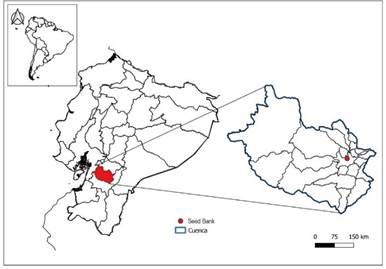
This study was conducted at the APA Azuay CSB, which is located within the urban periphery of the city of Cuenca, Azuay province, Ecuador (Figure 1). The city is situated at 2,560 meters above sea level, has a humid mountain climate, with an annual average temperature of 16°C, annual precipitation of 900 mm, and relative humidity of 84%. The collection of information was carried out during the first semester of 2023 from APA Azuay members who sell their products in public markets of the city of Cuenca and have also made some contribution to the CSB under study.
A database of all seed samples preserved on the shelves of the CSB was developed. The information was obtained by recording the data present on the labels of each sample (jar). It should be noted that the seeds are kept in glass jars of different designs and sizes, with their respective identification label that includes family, genus/species, common name, organization/producer/donor, collection location, collection date, and storage code. These jars are organized by taxonomic families on wooden shelves, in a cool place at room temperature. For the second part, surveys were conducted only with members of the APA Azuay association who sell their products in different markets of the city and who have made some seed contribution to the CSB (n= 60). The questions posed were:
For what purpose would you exchange seeds?
What do you do with the conserved seeds?
What seeds have you conserved?
What seeds have been lost over time?
Why do you think seeds have been lost?
Did the creation of the SB motivate you to conserve seeds?
The research was descriptive with quantitative and ordinal qualitative variables. To meet the stated objective, biodiversity and richness indices of the seed species that exist in the CSB were calculated. The calculated indices were: Richness (r), Simpson (D), and Shannon-Weaver (H′). Subsequently, the quality, health, and quantity of seeds were analyzed. Physical quality was classified as: good condition (clean and intact seeds), fair (presence of impurities, moisture), and poor condition (shows rot). A count was also made of seed samples that presented fungi or pests (contaminated). For the quantity of seeds, 4 ranges were established: very low (1-50 seeds), low (51-100 seeds), medium (101-500 seeds), and high (more than 500 seeds). Additionally, the condition of the seed container jars was recorded. Finally, the six questions posed in the survey to participating members of the CSB were analyzed descriptively.
For the analysis of the results, biodiversity indices of the CSB were calculated following the methodology of Guo et al. (2022), and bar graphs were created representing in percentages the current state of the seed bank. Additionally, the survey results were visualized using radar graphs to facilitate their interpretation. All statistical analyses and graphical representations were performed using the RStudio integrated development environment (IDE), with the support of the BiodiversityR library (R Core Team, 2023).
RESULTS AND DISCUSSION
The APA Azuay CSB is relatively young but has not evolved since it was inaugurated. The seeds collected upon its opening have registration from June 2020, no more samples have been added, and those found in this bank come from few localities; furthermore, it was verified that the quantity is reduced, despite the fact that this CSB's mission is to store vegetable seeds and agricultural varieties that come from Azuay. It should be noted that a CSB needs to have a physical space with infrastructure and adaptations that allow for controlling temperature and environmental humidity conditions (Bhusal et al., 2020).
Table 1 reflects the origin and quantity of seeds. A total of 174 seed samples have been recorded, whose origin corresponds to eight cantons of Azuay. Among these, Cuenca is the canton with the highest quantity of seeds; 21 different localities were counted in the CSB, from which there are 10 different species. Likewise, the Nabón canton registered 22 seed samples in the CSB with three different species, followed closely by Santa Isabel with two localities and 17 samples of 5 species. In contrast, the least seed origin was from Gualaceo, Paute, Sígsig, San Fernando, and Pucará with only one locality each. It should be noted that all samples were registered in the CSB in June 2020.
Table 1 Number of samples and seed species by canton and collection sites in the province of Azuay present in the CSB.
| Canton | Sites | No. Samples | No. Species |
| Cuenca | 21 | 121 | 10 |
| Gualaceo | 1 | 8 | 2 |
| Nabón | 1 | 22 | 3 |
| Paute | 1 | 4 | 2 |
| San Fernando | 1 | 1 | 1 |
| Santa Isabel | 2 | 17 | 5 |
| Sígsig | 2 | 2 | 2 |
| Pucará | 1 | 1 | 1 |
The indices of richness and Alpha biodiversity by species obtained for the CSB generally indicate that there is not a varied amount of taxonomic families. The first richness index (r) was 15, which means that there is not a large number of species; this is reflected by the Simpson index (D), whose value of 0.72 demonstrates that its dominance is medium. Similarly, the Shannon-Weaver index (H′) revealed that biodiversity in this CSB is medium-low, since its value was 2.49 (Table 2). These results demonstrate that there are not abundant species and the diversity is not sufficiently conducive to fulfill its purpose, considering that what was mentioned previously is one of the functions of any SB and much more when it depends on the care of native, indigenous seeds adapted to the conditions of a specific locality (O'Donnell & Sharrock, 2018; Latifah et al., 2019; Renard, Mahaut & Noack, 2023).
Table 2 Biodiversity indices and their values recorded in the APA Azuay Community Seed Bank.
| Indices | Represents | Value | Source |
|---|---|---|---|
| Richness (r) | Species richness | 15 | (Chao, 1987) |
| Simpson (D) | Dominance | 0.72 | (Simpson, 1949) |
| Shannon-Weaver (H′) | Biodiversity | 2.49 | (Shannon y Weaver, 1949) |
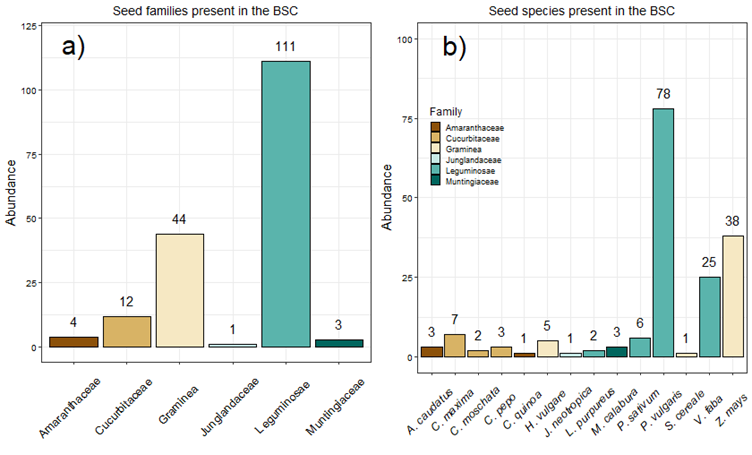
Figure 2a of abundance by family reflects that seven botanical families were recorded in the CSB. Of these, Leguminosae (Fabaceae) was the family with the highest quantity of conserved seeds, exceeding 100 seeds, followed by Gramineae (Poaceae), which reached 44 seed samples deposited in the CSB. These families are found in high numbers compared to the rest, as they are the basis of the diet in the Andean zone of Ecuador (INIAP, 2018). The Cucurbitaceae show a low quantity of stored seeds with 12 samples in the CSB. In contrast, the families Amaranthaceae, Muntingiaceae, and Juglandaceae have 4, 3, and 1 sample respectively in the CSB. Likewise, in abundance by species, Phaseolus vulgaris (bean) was the seed with the highest number of samples in the CSB, followed by Zea mays (corn); each of these presented different varieties. Vicia faba is also one of the species with a moderate number of samples. Cucurbita maxima (pumpkin) and Pisum sativum (pea) were other species with few samples recorded. Others such as Chenopodium quinoa (quinoa), Juglans neotropica (walnut), and Secale cereale (rye) barely have one seed sample in the CSB (Figure 2b). This is an indicator that the CSB possibly cannot meet the needs when there are adverse conditions to the current ones; therefore, an optimal CSB can help apply resilient measures in a community, country, or region in the face of food shortages caused by droughts (Renard, et al., 2023).
According to the state of the seed, it can be mentioned that, of the total seed samples, 89.7% of these are in good condition, 7.4% in poor condition, and 2.9% in fair condition (Figure 3a). The quantity of seeds in each of the samples was counted; only 1.1% has a high quantity of seeds (more than 500 seeds). In contrast, a very low quantity (1-50 seeds) represented 36.6%, followed by low (51-100 seeds) with a percentage of 33.1% and medium (101-500 seeds) with 29.1% of the total samples (Figure 3b). The APA Azuay CSB to date shows poor quantities of seeds, unlike CSBs in Africa, where there are generous quantities of seeds, especially of indigenous varieties and adapted ones (Adokorach, Otieno & Subedi, 2021). However, these CSBs were created with a clear objective and with the contribution of the entire community since their operation (Sthapit, 2016), which has allowed conserving this genetic material, improving its access and availability for local crops (Nankya et al., 2022).
Additionally, the phytosanitary condition of the seeds was evaluated; of the total samples, only 8% presented pests or fungi (Figure 3c); on the contrary, 92% are free of contamination. Similarly, in other CSBs it has been reported that storage conditions are not correct, seeds are vulnerable to fungi development or become insect hosts (Latifah et al., 2019). Finally, it was counted that the containers used are made of glass; likewise, a small percentage, 1.14%, are in poor condition (Figure 3d). The aforementioned allows that within these, the stored seed samples become contaminated, this is due to the deficiency of conservation techniques which guarantee the quality of the seed (Vernooy et al., 2015). Similarly, a room is recommended where the temperature is between 5ºC - 20ºC and environmental humidity not greater than 25% (FAO, 2014), not at ambient conditions as is the case here.
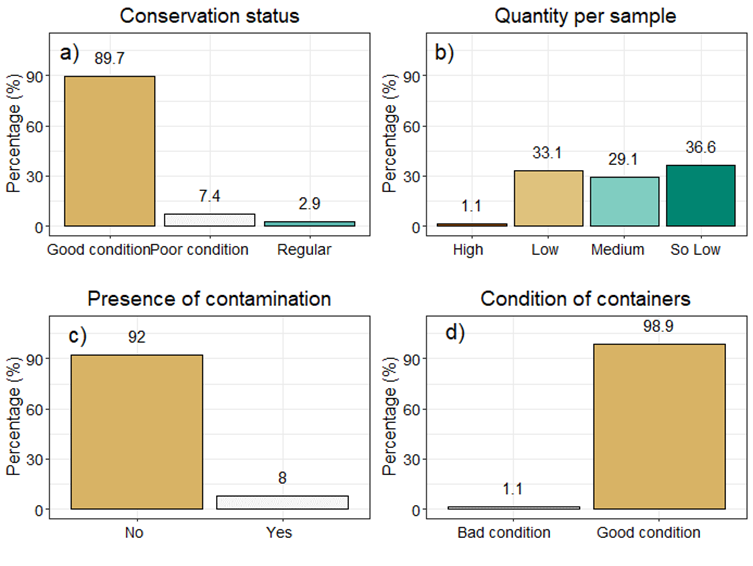
Figure 3 State of seeds within the CSB. a) Conservation status, b) Quantity per sample, c) Presence of contamination, d) Condition of containers.
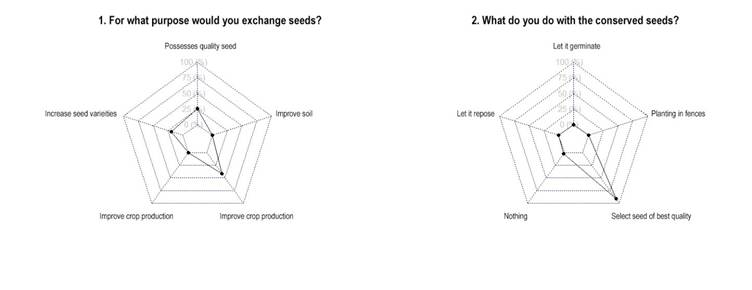
It should be mentioned that the surveyed people respond according to their agricultural experiences and knowledge. In the first question, the surveyed people mentioned that they would exchange seeds to improve the production of their crops, although they also respond that they already have good seed. For the second question, nearly 100% of respondents indicated that they select the best seed for the next growing season (Figure 4). In the APA Azuay CSB, samples are preserved in environmental conditions and their treatment is empirical; possibly due to these shortcomings, contaminated samples were observed and others were removed.
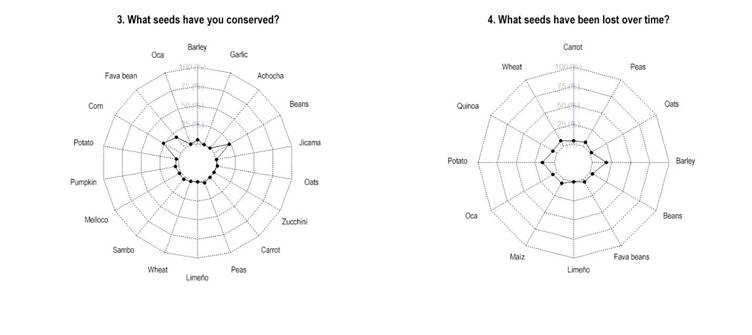
While in the third question, corn (Zea mays) was mentioned most often, also legumes such as beans (Phaseolus vulgaris), fava beans (Vicia faba), and peas (Pisum sativum), with less frequency barley (Hordeum vulgare) and cucurbits. Question 4 refers to seeds that have been lost over time; in this one, it is observed that barley (Hordeum vulgare) is the seed that was mentioned the most, then there is potato (Solanum tuberosum) and seeds of Andean species such as quinoa (Chenopodium quinoa) and oca (Oxalis tuberosa) as indicated in Figure 5.
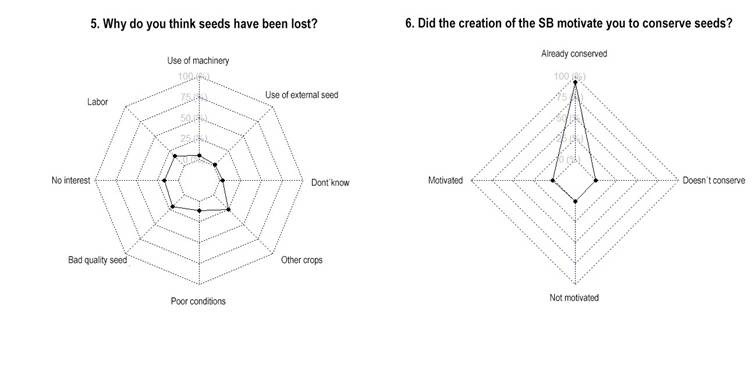
For question five, regarding why seed has been lost, it is indicated that there is no demand for the seed; they also indicated that it is due to poor seed quality, with less frequency disinterest in propagating the seed and scarce labor. Finally, the last question which asks if the creation of the CSB motivated them to conserve seeds, nearly all indicated that they were already conserving seeds and only one person was motivated to conserve (Figure 6). These results may possibly be due to the absence of technification, as well as economic reasons, the lack of laws that guarantee the conservation of seeds and varieties (Ruiz, 2016; Pazmiño, Solórzano & Pazmiño, 2021) and substitution by other crops as indicated in question 5. Likewise, there is not a wide number of species and varieties of conserved seeds; among these, corn stands out, this crop is predominant because Azuay is one of the main corn-producing provinces in the highlands (Velásquez et al., 2021). Additionally, this crop in Ecuador has varieties adapted to different climatic conditions (Caviedes, Carvajal-Larenas & Zambrano, 2020). Another seed that was also mentioned multiple times was beans; from years back, this has increased its consumption, demand, and cultivation area (Garcés-Fiallos, Olmedo-Zamora, Garcés-Estrella & Díaz-Coronel, 2015), which has made it the most produced legume in Ecuador (Peralta, Mazon, Minchala & Guamán, 2016). On the contrary, in other regions of the world, rural areas, the variety of conserved genetic material and germplasm in the form of seed is extensive (FAO, 2019), which in addition to this action have developed techniques to keep them viable and immediately available (Guzzon, Bello, Bradford, Mérida Guzman & Costich, 2020), which is lacking in the CSB under study.
CONCLUSIONS
The APA Azuay CSB, due to its deficiencies in infrastructure, inadequate conservation techniques, and low quantity of species and variety seeds, can be determined as non-functional. Additionally, the scarce richness and biodiversity do not allow it to meet the objectives for which it was created. Similarly, it was found that the CSB did not cause changes in the conservation habits of its founding members, mainly because they were already conserving seeds; however, currently mainly commercial seeds are conserved, which has led to the loss of genetic material of cultural importance. With this study, it is expected that the members of the CSB will agree to modify conservation techniques, as well as partner with authorities that invest in its improvement, which has agricultural, economic, and social importance.
ACKNOWLEDGEMENTS
The authors express their gratitude to the Association of Agroecologists of Azuay (APA)
REFERENCES
Adokorach, J., Otieno, G., & Subedi, A. (2021). Strengthening community seed banks in East and Southern Africa in times of Covid-19. https://doi.org/10.13140/RG.2.2.29979.18722 [ Links ]
Arenas Calle, W. C., Cardozo Conde, C. I., y Baena, M. (2015). Análisis de los sistemas de semillas en países de América Latina. Acta Agronomica, 64(3), 239-245. https://doi.org/10.15446/acag.v64n3.43985 [ Links ]
Bhusal, A., Khatri, L., Gc, S., Mandal, I., Bhatt, B. P., Pudasaini, N., Katuwal, Y., Mishra, S., Gautam, A., Shiwakoti, T., & Dhakal, B. P. (2020). Scope of the Community Seed Bank as a Climate Smart Technology. Compendium of Climate-Smart Agriculture Technologies and Practices. https://www.semanticscholar.org/paper/Compendium-of-Climate-smart-Agriculture-and-Bhusal-Khatri/37821792932346e49ca5db85f5ea59484e895ef1#related-papers [ Links ]
Camadro, E. L., & Rimieri, P. (2021). Ex situ plant germplasm conservation revised at the light of mechanisms and methods of genetics. Journal of Basic and Applied Genetics, 32(1), 11-24. https://doi.org/10.35407/bag.2020.32.01.02 [ Links ]
Caviedes, M., Carvajal-Larenas, F. E., & Zambrano, J. L. (2020). Tecnologías parael cultivo de maíz (Zea mays. L) en el Ecuador. ACI Avances En Ciencias e Ingenierías, 12(2). https://doi.org/10.18272/aci.v14i1.2588 [ Links ]
Chao, A. (1987). Estimating the Population Size for Capture-Recapture Data with Unequal Catchability. Biometrics, 43(4), 783. https://doi.org/10.2307/2531532 [ Links ]
FAO. (2014). Normas para bancos de germoplasma de recursos fitogenéticos para la alimentación y la agricultura. In Comisión de Recursos genéticos para la Alimentación y la Agricultura. https://www.fao.org/3/i3704s/i3704s.pdf [ Links ]
FAO. (2019). The State of the World’s Biodiversity for Food and Agriculture. In The State of the World’s Biodiversity for Food and Agriculture. https://doi.org/10.4060/ca3129en [ Links ]
Rivas Platero, G. G., Rodríguez Cortés, A. M., Castillo, D. P., Hernández Hernández, L. y Suchini Ramírez, J. G. (2013). Bancos Comunitarios de Semillas Criollas : Bancos Comunitarios de Semillas Criollas : una opción para la conservación. Serie divulgativa N° 17. Turrialba: Repositorio CATIE (Centro Agronómico Tropical de Investigación y Enseñanza (CATIE). Disponible en: http://semillasdeidentidad.blogspot.com.co/2014/07/semillas-nativas-y-criollas-libres-de.html [ Links ]
Gallardo, A. (2019). Casa De Semillas De Uso Comunitario. Experiencia Del Grupo De Semillas De Zapala. Presencia, 30 (72), 8-12. https://repositorio.inta.gob.ar/handle/20.500.12123/6659 [ Links ]
Garcés-Fiallos, F. R., Olmedo-Zamora, I. M., Garcés-Estrella, R. E., y Díaz-Coronel, T. G. (2015). Potencial agronómico de 18 líneas de fréjol F6 en Ecuador. IDESIA, 33(2), 107-118. https://doi.org/10.4067/S0718-34292015000200013 [ Links ]
Guo, Y., Li, Y., Li, J., Li, J., Wen, S., Huang, F., He, W., Wang, B., Lu, S., Li, D., Xiang, W., & Li, X. (2022). Comparison of Aboveground Vegetation and Soil Seed Bank Composition among Three Typical Vegetation Types in the Karst Regions of Southwest China. Agronomy, 12(8). https://doi.org/10.3390/agronomy12081871 [ Links ]
Guzzon, F., Bello, P., Bradford, K. J., Mérida Guzman, M. de los A., & Costich, D. E. (2020). Enhancing seed conservation in rural communities of Guatemala by implementing the dry chain concept. Biodiversity and Conservation, 29(14), 3997-4017. https://doi.org/10.1007/s10531-020-02059-6 [ Links ]
Haj Sghaier, A., Tarnawa, Á., Khaeim, H., Kovács, G. P., Gyuricza, C., & Kende, Z. (2022). The Effects of Temperature and Water on the Seed Germination and Seedling Development of Rapeseed (Brassica napus L.). Plants, 11(21). https://doi.org/10.3390/plants11212819 [ Links ]
Hossain, M., & Begum, M. (2015). Soil weed seed bank: Importance and management for sustainable crop production- A Review. Journal of Gender, Agriculture and Food Security, 1(3), 1-22. https://www.banglajol.info/index.php/JBAU/article/view/28783 [ Links ]
INIAP (Instituto Nacional de Investigaciones Agropecuarias de Ecuador). (2018). Guía para el manejo y conservación de recursos fitogenéticos en Ecuador. Publicación miscelánea N° 432. Mejía, Ecuador: Estación Experimental Santa Catalina. Departamento Nacional de Recursos Fitogenéticos (DENAREF). Disponible en: http://181.112.143.123/bitstream/41000/2827/1/iniapsc322est.pdf [ Links ]
INIAP/FAO. (2017). La Biodiversidad para la agricultura y la alimentación en Ecuador. Quito: INIAP/FAO. https://repositorio.iniap.gob.ec/handle/41000/4772 [ Links ]
Khoury, C. K., Brush, S., Costich, D. E., Curry, H. A., de Haan, S., Engels, J. M. M., Guarino, L., Hoban, S., Mercer, K. L., Miller, A. J., Nabhan, G. P., Perales, H. R., Richards, C., Riggins, C. & Thormann, I. (2022). Crop genetic erosion: understanding and responding to loss of crop diversity. New Phytologist, 233(1), 84-118. https://doi.org/10.1111/nph.17733 [ Links ]
Latifah, D., Widyatmoko, D., Rakhmawati, S. U., Zuhri, M., Hardwick, K., Darmayanti, A. S., & Wardhani, P. K. (2019). The Role of Seed Banking Technology in the Management of Biodiversity in Indonesia. IOP Conference Series: Earth and Environmental Science, 298(1). https://doi.org/10.1088/1755-1315/298/1/012006 [ Links ]
Li, C., Xiao, B., Wang, Q., Zheng, R., & Wu, J. (2017). Responses of soil seed bank and vegetation to the increasing intensity of human disturbance in a semi-arid region of northern China. Sustainability, 9(10). https://doi.org/10.3390/su9101837 [ Links ]
FAO (2017). Ley orgánica de agrobiodiversidad, semillas y fomento de agricultura. Asamblea del Ecuador 22. Del Reglamento a la Ley de Semillas. Texto unificado de legislacion secundaria del mag, libro i (2017). FAOLEX Database. Disponible en: https://faolex.fao.org/docs/pdf/ecu165505.pdf [ Links ]
Maharjan, S. K., Gurung, A. R., & Sthapit, B. (2013). Enhancing On-Farm Conservation Of Agro-Biodiversity Through Community Seed Bank: An Experience Of Western Nepal. Journal of Agriculture and Environment, 12, 132-139. https://doi.org/10.3126/aej.v12i0.7573 [ Links ]
García Arenas, A. M. y Barrera Montealegre, J. S. (2013). Casa de Semillas Taapay Mikuy Estrategia de la Universidad Tecnológica de Pereira. Pereira, Colombia (eds.): Universidad Tecnológica de Pereira & Instituto de Investigaciones Ambientales. https://repositorio.utp.edu.co/items/ec407eea-3e4f-4966-b6d9-a3009f9bde76 [ Links ]
Monteros, A., Tacán, M., Peña Monserrate, G. R., Tapia B., C., Paredes Andrade, N., y Lima, L. (2018). Guía para el manejo y conservación de recursos fitogenéticos en Ecuador. In Instituto Nacional de Investigaciones Agropecuarias INIAP. https://repositorio.iniap.gob.ec/handle/41000/4889 [ Links ]
Nankya, R., Jika, A. K. N., De Santis, P., Lwandasa, H., Jarvis, D. I., & Mulumba, J. W. (2022). Community Seedbanks in Uganda: Fostering Access to Genetic Diversity and Its Conservation. Resources, 11(6), 1-11. https://doi.org/10.3390/resources11060058 [ Links ]
O’Donnell, K., & Sharrock, S. (2018). Botanic gardens complement agricultural gene bank in collecting and conserving plant genetic diversity. Biopreservation and Biobanking, 16(5), 384-390. https://doi.org/10.1089/bio.2018.0028 [ Links ]
Pañitrur-De la Fuente, C., Ibáñez, S. T., León, M. F., Martínez-Tilleria, K., & Sandoval, A. (2020). Conservation of native plants in the seed base Bank of Chile. Conservation Science and Practice, 2(11). https://doi.org/10.1111/csp2.292 [ Links ]
Pazmiño, A. A., Solórzano, M. M., & Pazmiño, V. A. (2021). El Banco de Germoplasma como instrumento. Revista de Investigación Talentos, 8(1), 112-121. https://doi.org/10.33789/talentos.8.1.148 [ Links ]
Peralta, E., Mazon, N., Minchala, L., y Guamán, M. (2016). Fréjol arbustivo (Phaseoulus vulgatis L.) y arveja (Pisum sativum L) en las provincias de Cañar, Azuay y Loja. Publicación Miscelánea N° 413. Quito. Programa Nacional de Leguminosas y Granos Andinos. Estación Experimental Santa Catalina. INIAP, 72 p. https://doi.org/10.13140/RG.2.2.30280.11524 [ Links ]
Quazi, S., Golani, T., & Martino Capuzzo, A. (2021). Germplasm Conservation. Endangered Plants, April. https://doi.org/10.5772/intechopen.96184 [ Links ]
R Core Team. (2022). R: A language and environment for statistical computing. R Foundation for Statistical Computing. https://www.r-project.org/ [ Links ]
Ramírez García, A., Camiro Pérez, M., Ramírez Miranda, C., y Espejel García, A. (2017). La soberanía alimentaria. El enfoque desde los territorios y las redes agroalimentarias. Sapientiae. Ciências Sociais, Humanas e Engenharias, 2(2), 127-147. https://www.redalyc.org/journal/5727/572761144004/572761144004.pdf [ Links ]
Renard, D., Mahaut, L., & Noack, F. (2023). Crop diversity buffers the impact of droughts and high temperatures on food production. Environmental Research 0Letters, 18(4). https://doi.org/10.1088/1748-9326/acc2d6 [ Links ]
Ruiz, C. C. (2016). Food Sovereignty and Territory: The Domestic Production Unit as a Basic Premise. Procedia - Social and Behavioral Sciences, 223, 313-320. https://doi.org/10.1016/j.sbspro.2016.05.376 [ Links ]
Shannon, C. E., & Weaver, W. (1949). The Theory of Mathematical Communication. International Business, 131. https://pure.mpg.de/rest/items/item_2383164_3/component/file_2383163/content [ Links ]
Simpson, E. (1949). Measurment of Diversity. Nature, 163(1943), 688. https://doi.org/10.1038/163688a0 [ Links ]
Sthapit, B. R. (2016). Community Seed Banking : Appropriate Practices and Solutions for Food Security Bhuwon Sthapit 6-9 October 2015 , Chiang Mai , Thailand. https://www.bioversityinternational.org/fileadmin/user_upload/Community_Seed_Banks.pdf [ Links ]
Trusiak, M., Plitta-Michalak, B. P., & Michalak, M. (2023). Choosing the Right Path for the Successful Storage of Seeds. Plants, 12(1), 1-20. https://doi.org/10.3390/plants12010072 [ Links ]
Velásquez, J., Zambrano, J., Peñaherrera, D., Sangoquiza, C., Cartagena, Y., Villacrés, E., Garcés, S., Ortíz, R., León, J., Campaña, D., López, V., Asaquibay, C., Nieto, M., Pintado, P., Yánez, C., Racines, M., & Sanmartín, G. (2021). Guía para la producción sustentable de maíz en la Sierra ecuatoriana. https://repositorio.iniap.gob.ec/handle/41000/5796 [ Links ]
Vernooy, R., Rana, J., Otieno, G., Mbozi, H., & Shrestha, P. (2022). Farmer-Led Seed Production: Community Seed Banks Enter the National Seed Market. Seeds, 1(3), 164-180. https://doi.org/10.3390/seeds1030015 [ Links ]
Vernooy, R., Shrestha, P., & Sthapit, B. (2015). Community Seed Banks. In Community Seed Banks. Biodiversity International. https://doi.org/10.4324/9781315886329 [ Links ]
Walters, C., & Pence, V. C. (2021). The unique role of seed banking and cryobiotechnologies in plant conservation. Plants People Planet, 3(1), 83-91. https://doi.org/10.1002/ppp3.10121 [ Links ]
Zambrano, J. (2020). Conservación y mejoramiento genético de plantas en el INIAP. In USFQ PRESS (Ed.), Memorias del primer Simposio de Genética y Genómica en el Ecuador Editores: USFQ PRESS. https://repositorio.iniap.gob.ec/handle/41000/5482 [ Links ]
Data availability: The complete dataset supporting the results of this study is available upon request to the corresponding author. The dataset is not publicly available because it contains personal information of participants.
Responsible Editor: Arnaldo Esquivel-Fariña https://orcid.org/0000-0002-7727-5243. Universidad Nacional de Asunción, Facultad de Ciencias Agrarias. San Lorenzo, Paraguay.
Received: December 12, 2024; Accepted: March 04, 2025; Published: June 13, 2025
 Este es un artículo publicado en acceso abierto bajo una licencia Creative Commons
