




Services on Demand
Journal

Article
 text in
 English (pdf)
 Article in xml format
 Article references

 Automatic translation
 Send this article by e-mail
Indicators
-
 Cited by SciELO
Related links
-
 Similars in
SciELO
Share

 Permalink

Investigación Agraria
On-line version ISSN 2305-0683
Investig. Agrar. vol.27 no.1 San Lorenzo 2025 Epub June 20, 2025
https://doi.org/10.18004/investig.agrar.2025.2701809
Scientific article
Productive performance, carcass and meat quality, and profitability of growing and finishing intact and castrated male cattle in feedlot

1 Fundación IDEAGRO. Loma Plata, Paraguay.
2 Cooperativa Neuland Ltda. Neuland, Paraguay.
3 Cooperativa Chortitzer Ltda. Loma Plata, Paraguay.
With the objective of comparing the productive performance, carcass quality, meat quality, and profitability of growing and finishing intact male (IM) and castrated male (CM) cattle in feedlot, a study was conducted where, from a total of 242 recently weaned calves from the same production system, two groups were randomly formed: 128 castrated animals (T1) and 114 intact animals (T2). Both groups were housed in different pens for growing and finishing, treated under the same environmental conditions, health management, and nutrition. The productive variables evaluated were: weaning weight, weight at 138 days, and weight at the end of confinement, weight gain (WG), and average daily gain (ADG). Carcass and meat quality variables included: hot carcass weight (HCW), classification according to dentition and sex, grading according to fat coverage, conformation and bruising, compactness index (CI), ribeye area (REA), backfat thickness (BFT), and marbling score (MS). Finally, an economic analysis of the treatments was performed. The results show that IM cattle presented higher ADG (difference of 130 g/d), higher HCW (4.47 kg), and higher CI (0.07 points). Economically, the IM generated a net income of 31.4 USD higher. However, CM was superior in BFT (22.11%) and commercial quality, being mostly graded (88.89%) with the Premium grade, a category in which IM were not included.
Keywords: productivity; weight gain; yield; grading; net income
Con el objetivo de comparar el comportamiento productivo, calidad de la canal, de la carne y la rentabilidad de la recría y terminación de bovinos machos enteros (ME) y castrados (MC) en confinamiento, se desarrolló un estudio donde, de un total de 242 terneros recién destetados provenientes de un mismo sistema productivo, se formaron al azar dos lotes: 128 animales castrados (T1) y 114 animales enteros (T2). Ambos lotes fueron alojados en corrales diferentes para la recría y terminación, tratados bajo las mismas condiciones de ambiente, manejo sanitario y nutrición. Las variables productivas evaluadas fueron: peso al destete, a los 138 días y al finalizar el confinamiento, ganancia de peso (GP) y ganancia diaria de peso (GDP). Las variables de calidad de canal y de carne incluyeron: peso de la canal caliente (PCC), clasificación según dentición y sexo, tipificación según cobertura de grasa, conformación y contusiones, índice de compacidad (ICC), área de ojo de bife (AOB), espesor de grasa dorsal (EGD) y grado de marmoleo (GM). Finalmente, se realizó un análisis económico de los tratamientos. Los resultados muestran que los ME presentaron mayor GDP (diferencia de 130 g/d), mayor PCC (4,47 kg) y mayor ICC (0,07 puntos). En lo económico, el ME generó un ingreso neto superior en 31,4 USD. Sin embargo, el MC fue superior en EGD (22,11%) y calidad comercial, siendo tipificados mayoritariamente (88,89%) con el grado Premium, categoría en la que los ME no fueron incluidos.
Palabras clave: productividad; ganancia de peso; rendimiento; tipificación; ingreso neto
INTRODUCTION
Paraguay is a landlocked country where the agricultural-livestock sector plays an important role in the economy, involving 150,000 livestock producers, with an existing population of 13,470,055 head of cattle, generating more than 350,000 direct jobs (SENACSA, 2024). The livestock industry produces goods for 50 different markets, representing 11% of the country's GDP (production, industry, and services) (MPCS, 2024).
Due to the differentiation of markets for meat products from Paraguay, the meat produced has been categorized according to destination, where the following categorizations are found: EU steer (European Union), Chile steer, and domestic market steer, where the latter achieve lower carcass prices (ODEPA, 2018).
Market demands and the superior value of the product compel producers to develop production systems with the purpose of providing a product with the best possible competitive conditions and, above all, that meet market demands. In addition to seeking to increase the profitability of the activity by reducing costs and production time.
The production of meat from male cattle is currently in a stage of discussion, as there is the possibility of finishing them as intact or castrated. In general, in many countries, meat from intact males is not desirable, mainly because they come from animals of advanced age (cull breeding bulls); however, current production systems allow obtaining meat from young intact male cattle that meet the requirements of the final consumer.
Castrated males generally present a lower growth rate and feed efficiency; however, they exhibit less aggressive behavior, better carcass quality, increased fat deposition and marbling compared to intact males (Schoomaker et al., 2002). Regarding the color, juiciness, and flavor of the meat, the effect of castration and the age of treatment are still debated. Nutritional requirements vary, and the process of formation and development of different tissues (muscle and fat) have different chronology between categories, according to Enrique (2002).
In Paraguay, the slaughtering of intact males is higher than castrated ones, this occurs mainly due to the greater weight gain and carcass yield they provide, which translates into greater profitability of the activity, directly benefiting the producer.
In slaughter plants, several criteria are taken into account to classify and grade the quality of a carcass, which can vary between a castrated male or an intact one. However, the purpose is to obtain high-quality meat for commercialization in the best markets, which requires carcasses from young animals finished with good weight and good fat coverage.
Based on the aforementioned, the objective of this study was to compare the productive performance, carcass quality, meat quality, and economic return of growing and finishing intact and castrated male cattle in a feedlot system.
MATERIALS AND METHODS
The study was developed in two distinct phases. The first phase, corresponding to the growing and finishing of the animals, was carried out at "Estancia Potsdam" (property of Neuland Cooperative Ltd.), located 45 km west of Neu-Halbstad (Latitude: 22°46'39.2"S and Longitude: 60°26'18.8"W) in the Department of Boquerón. This stage covered the period between May and October 2022, with a total duration of 173 days of confinement. The second phase of the study, which included slaughter, classification, and grading of carcasses, was executed on October 27, 2022, at the facilities of "Frigorífico Neuland," located in the city of Villa Hayes, Department of Presidente Hayes.
The region where "Estancia Potsdam" is located is characterized by being a large plain with natural subtropical forest vegetation and clay loam soils. Precipitation averages around 800 mm annually, distributed between a rainy season and a dry season, challenging the production and conservation of forage for livestock activity. During summer periods, high rainfall and high temperatures favor the good development of pastures and megathermic crops, widely used for the production of stored feed for livestock.
The study used 242 crossbred male calves (crosses of Brahman, Santa Gertrudis, Brangus, and Braford) recently weaned, with 9±1 months of age, all born and raised at Estancia Potsdam. This group of animals was randomly divided into two lots: Lot A with 128 animals and Lot B with 114 animals, assigning each group a specific pen within the feedlot.
Subsequently, all animals were individually weighed without prior fasting. The calves in Lot A were castrated using the "Burdizzo clamp" method and formed treatment 1 (T1), while the intact males of Lot B constituted treatment 2 (T2).
Management, diet, and environment were similar for both study groups.
The growing diet consisted of 71.5% roughage made up of whole-plant corn silage, 22.1% ground corn, and 6.5% Neuland Confina (50% CP protein nucleus, minerals, and sodium monensin), providing a TDN concentration of 76.25% and crude protein of 13.5%.
The finishing diet consisted of 68.1% whole-plant corn silage, 27.3% ground corn, and 4.6% Neuland Confina (50% CP protein nucleus, minerals, and sodium monensin), providing a TDN concentration of 76.98% and crude protein of 12.0%. Both diets were supplied to the animals twice a day (8:00 and 16:00 h).
After 173 days of confinement, 45 castrated animals (T1) and 37 non-castrated animals (T2) were selected, using a minimum live weight of 430 kg as a criterion for transfer to the Neuland slaughterhouse, where the slaughter and collection of carcass and meat data were carried out.
The variables measured in the first stage were: (1) weaning weight, recorded for each animal upon entry to the feedlot; (2) weight at 138 days after the initial weighing; (3) live weight at the end of confinement (at 173 days); and (4) daily live weight gain (ADG) throughout the trial.
The second stage began with the slaughter process, where the animals were stunned using a pneumatic pressure gun, causing euthanasia and subsequently bleeding with electrical stimulation, skinning, evisceration, splitting of the carcass, and finally weighing of the hot half carcass (HCW).
During slaughter, classification and grading of carcasses were carried out according to the Paraguayan Standard for Classification and Grading of Beef Carcasses NP 20 036 22 (INTN 2022). Classification was performed according to dentition and sex, while grading was based on fat coverage, conformation, and bruising.
The carcass yield (5) was determined as a percentage, relating the weight of the carcass at the slaughterhouse to the final live weight of the animal at the end of confinement.
Subsequently, the half carcasses entered the aging chamber at 4°C for 24 hours. After this period, the carcass length was measured between the most cranial point of the pubic symphysis and the cranial edge of the first rib. This data was used to calculate the carcass compactness index (CI), which corresponds to the division of the hot carcass weight in kilograms by the carcass length (CL) in centimeters (CI = HCW/CL).
The measurement of ribeye area, backfat thickness, and marbling was performed between the 12th and 13th intercostal space, in accordance with the standards established by the American Meat Science Association (AMSA, 2001).
The ribeye area (REA) was measured in the cross-section of the longissimus dorsi muscle in square inches, following the contour of this muscle using a grid. The backfat thickness (BFT) was measured at – of the ribeye, from the inside of the carcass, in millimeters.
The marbling score (MS) was evaluated subjectively, considering the amount and distribution of intramuscular fat, using the official photographs from the United States Department of Agriculture (USDA).
Marbling score scale:
Absence of marbling
Slightly present (Slight, Sl°)
Small marbling (Small, Sm°)
Small marbling (Small, Sm50)
Slightly abundant (Slightly abundant, SlA°)
Modestly abundant (Modest, Mt°)
Moderate (Moderate, Md°)
Moderately abundant (Moderately abundant, MdA°)
For the economic analysis, the production cost (PC) structure was established for each animal of both treatments in US dollars (USD) during the confinement period. Fixed costs (FC) considered were the depreciation of facilities, machinery used, and property tax, while variable costs (VC) included expenditures made in the acquisition of animals (according to Neuland Cooperative's list price), feed, veterinary supplies (vaccines, antiparasitics, and supplements), labor, feed supply (fuel), and castration (applicable only to treatment T1).
Regarding the profitability index, gross income (GI) was considered, calculated as the carcass weight multiplied by the price paid by the slaughterhouse (3.6 USD/kg). From the difference between the GI and the production cost (PC), the net income (NI) was determined.
The costs of castration were established by dividing the total amount of the service performed by the number of animals treated.
Feed expenses were calculated according to the diet composition and the amount supplied. For this purpose, a record of the production cost per kilogram of whole-plant silage was kept, multiplying this value by the amount of kilograms offered daily. The other ingredients, such as the protein nucleus and ground corn, were calculated considering the purchase price (including freight) for the amount used per animal per day. To these costs were added the daily labor expenses, variable machinery costs, and also the fixed costs of depreciation of facilities and equipment used.
The sale value of the animals was determined at the slaughterhouse by multiplying the carcass weight by its corresponding price according to the date, grading, and bonuses obtained.
The data were analyzed using the InfoStat statistical software. Analysis of variance (ANOVA) was performed with a 95% confidence level. Variables that presented statistically significant differences were subsequently subjected to Student's T-test with a 5% probability of error level.
RESULTS AND DISCUSSION
The CM (castrated males) presented an initial average weight 9.26 kg higher than the IM (intact males); however, in the final weight, the IM showed a value 11.91 kg greater. In the intermediate weighing at 138 days, no significant differences (p>0.05) were observed between both groups.
The difference in total weight gain obtained by the two categories of animals during the 173 days of confinement was statistically superior for the intact males, exceeding the castrated males by 10.4% (21.2 kg) (Figure 1).
The IM uses testosterone generated in the testicles as a natural growth promoter. This hormone allows the animal to produce more kilograms of live weight without necessarily greater fat deposition. It promotes faster development of muscle and bone tissue, while generating greater efficiency in feed conversion (Ferrari, 2012).
Manzanelli and Ferrero (2012) mention that, in a feedlot with different cattle breeds, IM show between 12 and 23% more weight gain per day and 27 to 44% better feed conversion than CM. Likewise, the carcass yield for IM exceeds CM by 4 to 7%.
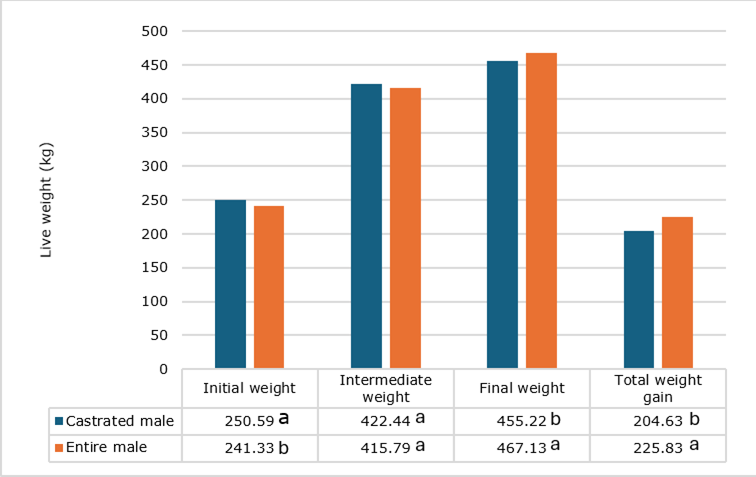
Figure 1 Graphical representation of the average live weights recorded in three weighings and the total gain obtained in 173 days of confinement.
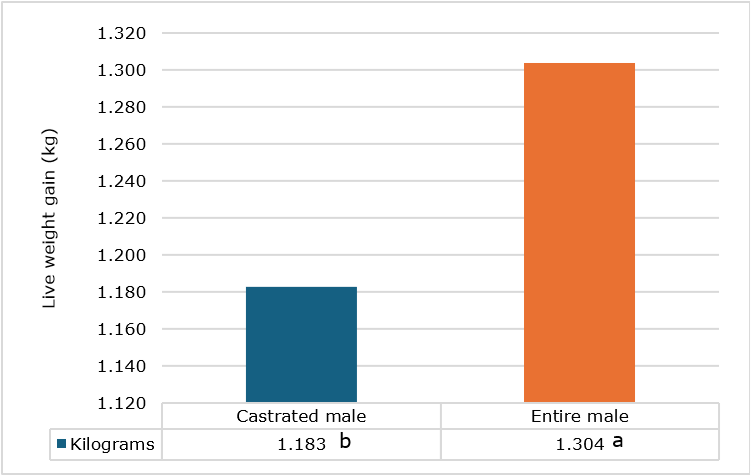
In Figure 2, the average daily live weight gain (ADG) of the animals according to their respective category is presented. The daily increase shown by the IM was statistically superior, with an increase of 130 grams of live weight per day more than the CM, which is reflected in the final weight of the animals at the time of slaughter. Other studies recorded similar results, and even with greater differences; Galo González, Paniagua Alcaráz, Ocampos Olmedo, Dueck, and González Balbuena (2012) found a difference of 0.307 kg/day. This is probably due to the natural effect of hormones that remain present in intact males. Additionally, castrated males tend to form more adipose tissue and at an earlier age due to the absence of these hormones.
Bavera and Peñafort (2006) and Soares de Lima Lapetina (2009) propose that, when reaching the final stage of growth, the CM requires feed with higher energy concentration to achieve the same gains as intact males, since castration reduces the plasma concentration of anabolic hormones such as testosterone, associated with muscle growth. Therefore, depositing fat is much slower and energetically more costly than producing muscle (Morao and Ruegger, 2011).
The evaluation of the carcass at the slaughterhouse of IM and CM determined that the weights of the carcasses on the hook did not present statistically significant differences, with an average of 242.7 kg and a numerical difference of 4.47 kg in favor of the IM.
Table 1 Hot carcass weight (HCW), hot carcass yield (HCY), and carcass compactness index (CI)
| Treatment / Variable | HCW (kg) | HCY (%) | CI |
| Castrated Male | 240,43 a | 52,83 a | 1,75 b |
| Intact Male | 244,90 a | 52,19 b | 1,82 a |
| p-value | 0,12 | 0,04 | 0,00 |
(a/b): Means with a common letter in rows do not present statistically significant difference.
Regarding the HCY (Hot Carcass Yield), statistically significant differences were detected between the studied treatments, where the CM (Castrated Males) presented higher yield, 1.13% superior to the IM (Intact Males). This result contradicts the literature, which supports a marked superiority in carcass yields in favor of intact male cattle (Morao and Ruegger, 2011; Ailan and Cisint, 2011).
The CI (Compactness Index), which refers to the relationship between the size of the carcass and its respective muscle mass, favored the IM over the CM, being 4% higher (Table 1).
Table 2 Fat coverage grade, Backfat Thickness (BFT), and Ribeye Area (REA) in Castrated Males (CM) and Intact Males (IM).
| Treatment / Variable | Fat (grade) | BFT (mm) | REA (cm²) |
| Castrated Males | 1,86 a | 6,68a | 82,66a |
| Intact Males | 1,6b | 5,27b | 82,7a |
| p-value | 0,0 | 0,0 | 1,0 |
(a/b): Means with a common letter in columns do not present statistically significant difference.
Regarding the Fat grade and BFT (Backfat Thickness), the CM were significantly superior to the IM, being 22.11% higher. This coincides with Bain, González, Iglesias, La Torraca, and López (2020), who found an average coverage grade of 1.9 in steers and an average of 1.00 in young intact males, fattened in confinement. Malaguido Climcaco et al. (2006) did not find significant differences in BFT between CM and IM, where CM had an average thickness of 4.17 mm and IM 2.20 mm. As shown in Figure 3, CM were mainly concentrated in grade 2 coverage (80%), while IM presented a more balanced distribution between grades 1 and 2 (Table 2).
There was no statistical difference between CM and IM for REA (Ribeye Area), which agrees with Malaguido Cilmcaco et al. (2006), who also found no significant differences in REA between CM and IM finished on pasture. The values obtained in this study are within the range of those recorded by Paniagua and Ocampos (2008), who obtained values between 79.2 and 93.1 cm² in steers from the eastern and western regions of Paraguay, respectively, finished on pastures. However, the data are superior to those observed by Ocampos et al. (2011), who obtained an average REA of 69.7 cm² in carcasses of three cattle breeds (Hereford, Brangus, and Brahman) in confinement.
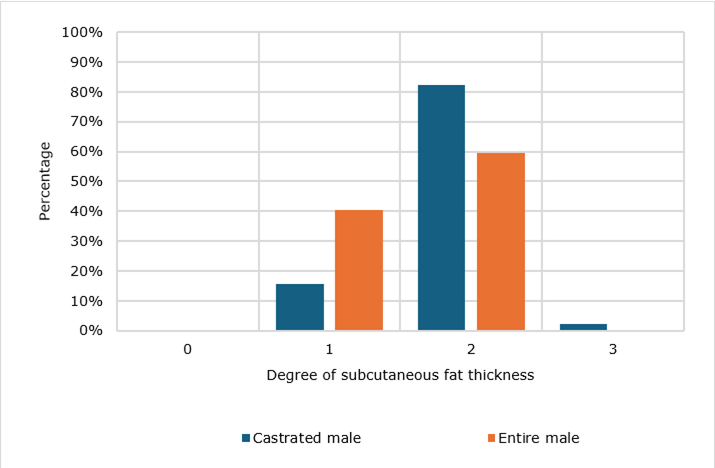
The carcasses of CM presented a distribution based on the degree of fat coverage where 82.2% of the carcasses qualified as grade 2; 2.2% with fat grade 3; and 15.6% of carcasses with fat grade 1 (Figure 3). The carcasses of IM presented 59.5% of carcasses with fat coverage grade 2 and 40.5% of carcasses with coverage grade 1. This coincides with Zone (2013), who found better fat coverage in CM than in young intact males.
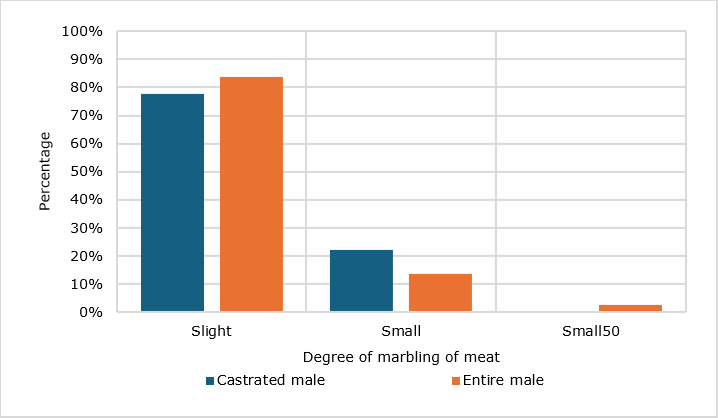
Figure 4 Percentage distribution of marbling score of Castrated Males (CM) and Intact Males (IM) according to the USDA classification system.
In Figure 4, the marbling score according to the American system (USDA) can be observed, where CM presented 77.78% for the Slight (SL) grade and IM 83.78%. For the Small (Sm) grade, CM had a total of 22.22% and IM 13.51%. No CM obtained the Small 50 (Sm50) grade and only one IM had the Sm50 grade. According to the USDA grading system, carcasses with SL grade, meeting some additional criteria such as age and sex, can enter the Select category; those with Sm and Sm50 grades, in Choice; and to obtain the Prime grade, the ribeyes must have considerably more marbling. According to Malaguido et al. (2006), intramuscular fat is the last to be deposited, which could be a possible cause of the low degree of marbling found in this study. Hiebert (2014) observed lower marbling in 3 genotypes of steers finished on pasture in the Central Chaco.
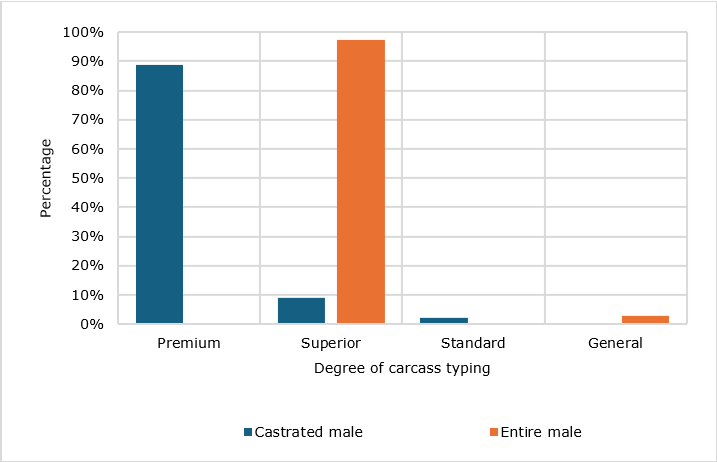
Figure 5 Percentage distribution of carcass grading degrees of Castrated Males and Intact Males according to the Paraguayan Standard NP 20-036-22.
The highest proportion of CM was classified in the Premium grading (88.89%) because they were young animals (milk teeth or 2 teeth) and presented good conformation, with fat coverage grade 2. The conditioning factor for some CM to be in the Superior category (8.89%) was fat coverage grade 1. The highest proportion of IM (97.30%) was placed in the Superior grading because, according to the applied standard, to enter the Premium grading they must be CM or young females, as observed in Figure 5.
For the monetary benefit analysis, the entry weight of the animals was taken as the reference "purchase" weight, with the current list price that Neuland Cooperative handled at the date of entry of the animals to the feedlot. This price was 1.8 USD per kilogram of live weight, which resulted in an average of 455.6 USD per animal for castrated males (CM) and 438.4 USD for intact males (IM). For the CM, an average amount per animal corresponding to the castration service and subsequent sanitization was added, valued at 2.8 USD per animal. The operating costs, maintenance and amortization of machinery and facilities, as well as labor and feed, totaled 2.1 USD per day and animal, which is equivalent to 356.1 USD per animal, without differentiation between the two groups, considering that both consumed the same diet during the same period. The sale value was calculated with the individual hook weight of each animal and the price of 3.6 USD per kilogram, for both CM and IM. With these values, an average gross income of 11.4 USD and a net income of 31.4 USD higher for IM compared to CM was obtained (1 USD = 7,150 Gs Py, 26-10-2022) (Table 3).
Table 3 Balance in average monetary value per animal between CM and IM.
| Description | Purchase Value USD | Castration USD | Operating Costs* USD | Sale Value USD | Net Income USD |
| Castrated Male | 455,6 | 2,8 | 356,1 | 867,6 | 53,1 |
| Intact Male | 438,4 | 0,0 | 356,1 | 878,9 | 84,5 |
| Difference | -17,2 | -2,8 | 0,0 | 11,4 | 31,4 |
*Operating costs include: maintenance, amortization of machinery and facilities, labor, and feed.
The IM were acquired at a lower price compared to the CM and sold at a higher value, obtaining a difference in net profit of 31.4 USD per animal on average superior to the CM.
CONCLUSION
The weight gain, both daily and total, and consequently, the final carcass weight was statistically superior for IM compared to CM.
No significant differences were observed in HCW between CM and IM; the hot carcass yield was statistically superior in CM compared to IM, and CM presented higher CI.
Regarding meat quality, CM were statistically superior in fat coverage grade, BFT, and marbling, while there was no difference in REA.
CM presented superior grading compared to IM; however, the economic evaluation showed IM with higher net income.
REFERENCES
Ailan, F. y Cisint, J. C. (2011). Engorde de machos enteros y jóvenes en Salta. Recuperado de: http//www.produccion_animal_com_ar//104/engorde_machos_enteros.pdf. [ Links ]
American Meat Science Association, (AMSA). (2001). Beef Trading. In Meat Evaluation Handbook. AMSA, p. 15 - 40. ISBN 0-9704378-0-3. [ Links ]
Bain, I., González, D.M., Iglesias, R. O., La Torraca, A. J. y López, O. F. (2020) Calidad de la res y de la carne bovina de machos enteros y castrados alimentados a corral. Recuperado de: https://repositorio.inta.gob.ar/handle/20.500.12123/9275 [ Links ]
Bavera, G. y Peñafort, C. (2006). Cursos de Producción Bovina de Carne, FAV UNRC. Castración de Machos y Hembras. Recuperado de: https://www.produccion-animal.com.ar/informacion_tecnica/cria/40-castracion_de_machos_y_hembras.pdf [ Links ]
Enrique, H. (2002). Estructura corporal o frame. Salta: INTA, 6 p. Recuperado de: https://www.produccion_animal_com.ar/condición/corporal/oframe//pdf [ Links ]
Ferrari, O. (2012). Fortalezas y debilidades del Macho Entero Joven (MEJ). Disponible: http://delsector.com/vernoti.php?notid=317 [ Links ]
Galo González, P., Paniagua Alcaráz, P., Ocampos Olmedo, D., Dueck, J. y González Balbuena, J. (2012). Desempeño productivo de bovinos machos enteros y castrados en un sistema de engorde a corral en el Departamento de Boquerón - Chaco Central. Revista Investigación Agraria, 14(2), 101-106 [ Links ]
Hiebert, M. (2014). Características de la canal y de la carne en novillos de tres genotipos terminados en pastura en el Chaco Central. (Tesis de grado, Universidad Nacional de Asunción, Facultad de Ciencias Agrarias). Ciudad: San Lorenzo - Paraguay. [ Links ]
INTN. (2022). Norma Paraguaya de Clasificación y tipificación de canales bovinas NP 20 036 22. Asunción: INTN. [ Links ]
Malaguido Climcaco, S., Azambuja Ribeiro, E., Rocha, M. da, Yurika Mizubuti, I., Ferreira da Silva, L., Noro, L. y Turini, T. (2006). Características de carcaça e qualidade de carne de bovinos inteiros ou castrados da raça Nelore, suplementados ou não durante o primeiro inverno. Ciencia Rural, 36 (6), 1867-1872. https://doi.org/10.1590/S0103-84782006000600031 [ Links ]
Manzanelli, D. y Ferrero, O. (2012). Más carne de calidad, en menos tiempo. Disponible en: http://www.sumarioganadero.com/notas.php?a=40 [ Links ]
Mesa Paraguaya de Carne Sostenible (MPCS) (2024). Datos generales del Paraguay y la participación de la Ganadería en la Economía. Recuperado de: https://carnesostenible.org.py/paraguay/ [ Links ]
Morao, G. A. y Ruegger, A. (2011). Desempeño Productivo, Tipificación y rendimiento de faena de machos enteros jóvenes Holando Argentino engordados a corral. Investigación Veterinaria, 13(2), 18 p. Recuperado de: http//www.fvet/uba.ar//archivos/docs_13_2011.pdf [ Links ]
Ocampos, D., Barcellos, J., Canellas, L., Velho, M., Paniagua, P., Horita, I. y Taurouco, J. (2011). Desempenho e características da carcaça de novilhos terminados em pastejo rotacionado ou em confinamento. Arquivo Brasileiro de Medicina Veterinária e Zootecnia, 63 (2), 348-355. [ Links ]
Oficina de Estudios y Políticas Agrarias del Ministerio de Agricultura (ODEPA) (2018). Estudio para la caracterización de la faena de animales y de los canales de comercialización de la carne bovina en los países del MERCOSUR. Publicación de la Oficina de Estudios y Políticas Agrarias del Ministerio de Agricultura, Gobierno de Chile. Recuperado de: https://www.odepa.gob.cl/wpcontent/uploads/2018/12/estudioCarneMercosur2018.pdf [ Links ]
Paniagua, P. L. y Ocampos, D. (2008). Efecto del genotipo animal sobre el rendimiento de la res y calidad de la carne de novillos alimentados sobre pastura y suplementados en el periodo invernal. Investigación Agraria, 9 (2), 22 - 24. [ Links ]
Servicio Nacional de Calidad y Salud Animal (SENACSA) (2024). Tenedores de ganado y poblacion bovina por departamento, primer periodo año 2024. SENACSA-PARAGUAY. Recuperado de: https://senacsa.gov.py/servicios/servicios-tecnicos/estadisticas/estadisticas-con-datos-abiertos/poblacion-animal-y-movilizacion-de-ganado/ [ Links ]
Schoomaker, J. P., Loerch, S. C., Fluharty, F. L., Zerby, H. N. and Turner, T. B. 2002. Effect of age at feedlot entry onperformance and carcass characteristics of bulls and stress.J. Anim. Sci. 80: 2247-2254. [ Links ]
Soares de Lima Lapetina, J. M. (2009). Modelo Bioeconómico para la evaluación del impacto de la genética y otras variables sobre la cadena cárnica Uruguaya. (Tesis Doctoral): Universitat Politècnica de València, 269p. Recuperado de: https://doi.org/10.4995/Thesis/10251/6030 [ Links ]
Zone, A. (2023) . Engorde, comercialización y producción de novillos y toritos en Argentina. Disponible en https://repositorio.uca.edu.ar/bitstream/123456789/320/1/doc.pdf [ Links ]
Funding: Fundación de Investigación y desarrollo Agropecuario para el Chaco Paraguayo (IDEAGRO), Cooperativa Chortitzer Ltda., Cooperativa Neuland Ltda.
Data availability: The dataset supporting the results of this study is available upon request to the corresponding author. The dataset is not publicly available due to data privacy restrictions.
Responsible Editor: Arnaldo Esquivel-Fariña https://orcid.org/0000-0002-7727-5243. Universidad Nacional de Asunción, Facultad de Ciencias Agrarias. San Lorenzo, Paraguay.
Received: September 05, 2024; Accepted: April 07, 2025; Published: June 20, 2025
 Este es un artículo publicado en acceso abierto bajo una licencia Creative Commons
