




Services on Demand
Journal

Article
 text in
 English (pdf)
 Article in xml format
 Article references

 Automatic translation
 Send this article by e-mail
Indicators
-
 Cited by SciELO
Related links
-
 Similars in
SciELO
Share

 Permalink

Investigación Agraria
On-line version ISSN 2305-0683
Investig. Agrar. vol.27 no.1 San Lorenzo 2025 Epub May 23, 2025
https://doi.org/10.18004/investig.agrar.2025.e2701800
Scientific article
Morphological Diversity of Common Bean (Phaseolus vulgaris L.) Germplasm Available at the Research Center for Family Agriculture of Choré, San Pedro, Paraguay
1
*
 http://orcid.org/0000-0001-9412-0684
1
http://orcid.org/0009-0000-3555-3797
1Instituto Paraguayo de Tecnología Agraria, Centro de Investigación para Agricultura Familiar, Programa de Recursos Genéticos para Agricultura Familiar. Choré, Paraguay.
2Instituto Paraguayo de Tecnología Agraria, Centro de Investigación Capitán Miranda, Laboratorio de Biotecnología. Capitán Miranda, Paraguay.
Common bean (Phaseolus vulgaris L.) is one of the most consumed legumes in Paraguay, where both its green pods and dry grains can be utilized, thus benefiting the families that produce it through its added value. This work was carried out with the objective of evaluating the genetic diversity among common bean accessions from the germplasm bank of the Research Center for Family Agriculture (CIAF) of the Paraguayan Institute of Agricultural Technology (IPTA) based on morpho-agronomic data. Twenty common bean accessions were characterized; the variables considered were: plant height (cm), root length (cm), pod length (cm), pod diameter (cm), seed length (cm), seed width (cm), number of pods per plant, number of grains per pod, weight of 100 grains (g), pod yield (kg ha⁻¹), grain yield (kg ha⁻¹). Genetic diversity was obtained by dissimilarity measures based on the mean Euclidean distance; for group delimitation, the Unweighted Pair Group Method with Arithmetic mean (UPGMA) dendrogram method and Tocher’s optimization clustering were used. The study of the relative importance of characters in predicting genetic divergence was carried out based on the method proposed by Singh (1981). Groups with greater and lesser distances were formed. Grain yield was the characteristic that contributed most to the genetic distance between accessions. Genetic distances were observed among the accessions that can be explored for a genetic improvement program aimed at obtaining new cultivars with higher production, among other characteristics or selection criteria to address future threats and challenges of the crop.
Keywords: Multivariate analysis; germplasm bank; phenotypic diversity; plant genetic resources; genetic variability
La habilla (Phaseolus vulgaris L.) es una de las leguminosas de mayor consumo en el Paraguay, pudiendo aprovecharse tanto sus vainas verdes como sus granos secos, beneficiando así a las familias que la producen por su valor agregado. Este trabajo se realizó con el objetivo de evaluar la diversidad genética entre accesiones de habilla del banco de germoplasma del Centro de Investigación para Agricultura Familiar (CIAF) del Instituto Paraguayo de Tecnología Agraria (IPTA) a partir de datos morfo-agronómicos. Se caracterizaron 20 accesiones de habilla. Las variables consideradas fueron: altura de planta (cm), longitud de raíz (cm), longitud de vaina (cm), diámetro de vaina (cm), longitud de semilla (cm), ancho de semilla (cm), número de vainas por planta, número de granos por vaina, peso de 100 granos (g), rendimiento con vainas (kg ha⁻¹), rendimiento de granos (kg ha⁻¹). La diversidad genética fue obtenida por las medidas de disimilaridad con base en la distancia Euclidiana media. Para la delimitación de grupos se utilizó el método de dendrograma Unweighted Pair Group Method with Arithmetic Mean (UPGMA) y el agrupamiento de optimización de Tocher. El estudio de la importancia relativa de los caracteres en la predicción de la divergencia genética se realizó con base en el método propuesto por Singh (1981). Se formaron grupos con mayores y menores distancias. El rendimiento de granos fue la característica que más contribuyó a la divergencia genética entre las accesiones. Fueron observadas distancias genéticas entre las accesiones que pueden ser explotadas para un programa de mejoramiento genético orientado a la obtención de nuevos cultivares de mayor producción, entre otras características o criterios de selección para afrontar amenazas y desafíos futuros del cultivo.
Palabras clave: Análisis multivariado; banco de germoplasma; diversidad fenotípica; recursos fitogenéticos; variabilidad genética
INTRODUCTION
Common bean (Phaseolus vulgaris L.) is one of the most consumed legumes in our country, widely distributed in the eastern region, being cultivated in monoculture and in associated crops, mainly with maize. Its consumption on family farming plots is primarily in the green (immature) state. The cultivated area in Paraguay varies according to the season and climatic conditions, but it is generally estimated to be around 20,000 to 30,000 hectares annually. Production is concentrated in the departments of Alto Paraná, Itapúa, Caaguazú, San Pedro, and Canindeyú (MAG, 2022).
Common bean, during a period of at least 7,000 to 8,000 years that includes the initial domestication phase and subsequent evolution under cultivation, has evolved from its wild form with a climbing type (indeterminate habit) to a bush type (determinate habit), becoming one of the most important domesticated legumes for food in the world (Flores-de la Cruz, Garcia-Esteva, Garcia-Nava, Kohashi-Shibata & Ybarra-Moncada, 2018).
The current distribution of wild common bean covers a large geographical area: from northern Mexico to northwestern Argentina (Toro, Tohme & Debouck, 1990). In general, two main ecogeographical gene pools are recognized: Mesoamerican and Andean (Bitocchi et al., 2012). According to the study by Bitocchi and colleagues, both South American gene pools originated through different migratory events of the Mesoamerican populations characteristic of central Mexico.
According to Casañas, Sino Casals, and Prohen (2017), a local variety is a dynamic population of a cultivated plant species; a heterogeneous group that evolved in a specific ecogeographical area and is adapted to soil and climatic conditions, as well as to local management regimes and traditional modes of use.
In Paraguay, there are several races considered local that were introduced at different times and present specific characteristics. Local varieties have specific growth requirements and defined agroenvironments that show inter- and intravarietal phenotypic variability (Carovic-Stanko et al., 2017).
There is a significant phenotypic diversity within common bean that is reflected in the variety of cultivated forms. This diversity is organized in the form of genetic collections preserved in gene banks and research institutes, which house seeds of traditional and modern cultivars, local races, and wild relatives (Savić, Zorić & Brdar-Jokanović, 2020).
Local races are of special interest as they represent genetically diverse material with specific traits for the growing region (Savić et al., 2020). Although local races have been replaced by modern cultivars, they remain a valuable part of traditional agriculture and diet, especially in marginal and rural areas (Mallor, Barberan & Albar, 2018).
In the classification and identification of plant species, races, and varieties, morphological traits play an important role (Meza-Vázquez, Lépiz-Ildefonso & López-Alcocer, 2015). Morphological characterization is considered the most accessible way to characterize a genotype, as it is important for understanding its potential and appropriate use (Hamouda, Haider, Elbehairy & Elshanshory, 2020).
Genetic diversity analysis of common bean populations is useful for breeding programs, as it helps to select genetic material that will be used for subsequent crosses (Hegay et al., 2014) and in germplasm banks to identify duplicate accessions. In common bean, several studies have been conducted demonstrating diversity among accessions: Neupane, Shrestha, Vaidya, Bhattarai & Darai (2005); Chhetri & Bhatta (2017); Flores-de la Cruz, Garcia-Esteva, Garcia-Nava, Kohashi-Shibata, & Ybarra-Moncada (2018); Bareke (2019); Hussain-Shah, Khaliq, Bashir & Jannat (2020); De Paula et al. (2024).
Currently, there are several analysis methods for the study of genetic diversity, using both phenotypic and genetic data. According to Chhetri and Bhatta (2017), plant agro-morphological characters are most preferred for genotype characterization as they are cheaper and easier to evaluate.
Multivariate analyses can be used for the study of genetic diversity; Euclidean distance is one of them that uses standardized data and determines measures of dissimilarity between accessions. Several authors have demonstrated that these analyses constitute an efficient statistical tool for differentiating genotypes, grouping and/or classifying them with important attributes for selective processes in genetic improvement programs. Studies related to plant genetic resources, such as those involving the collection, characterization, and maintenance of germplasm banks, emerge as a promising strategy for the conservation of important species, such as common bean (De Paula et al., 2024).
The knowledge of genetic distances between local races has become crucial for improving the productivity of common bean varieties through breeding programs and establishing conservation mechanisms. Considering these aspects, this work is proposed with the objective of evaluating the genetic diversity among common bean accessions available in the CIAF germplasm bank based on morpho-agronomic data, for use in future genetic improvement programs.
MATERIALS AND METHODS
The work was carried out at the Research Center for Family Agriculture of the Paraguayan Institute of Agricultural Technology (CIAF-IPTA) located in the Department of San Pedro, 220 km northeast of Asunción, at 24° 10' South Latitude and 56° 37' West Longitude of Greenwich, and an altitude of 220 meters above sea level. Twenty common bean accessions from the CIAF germplasm bank in Choré were studied. Each accession was identified with the entry code: PRYH-0001, PRYH-0002, PRYH-0003, PRYH-0004, PRYH-0005, PRYH-0006, PRYH-0007, PRYH-0008, PRYH-0009, PRYH-0010, PRYH-0011, PRYH-0012, PRYH-0013, PRYH-0014, PRYH-0015, PRYH-0016, PRYH-0017, PRYH-0018, PRYH-0019, PRYH-0020. These accessions were collected since the 1980s and lack complete passport data. For this study, the complete collection available at the research center was used.
The variables considered for the study were: plant height measured in centimeters (cm) from the base of the stem to the apex in five representative plants; root length in centimeters (cm) from the base of the stem to the end of the main root in the same five plants; pod length in centimeters (cm) measured from the base to the apex in five randomly selected pods; pod diameter (cm) measured at the widest part between the dorsal and ventral sutures in the same five pods; seed length and width (cm) measured at the longest and widest parts, respectively, in five representative seeds; number of pods per plant counted in the five selected plants; number of grains per pod counted in the five selected pods; weight of 100 grains (g) obtained by counting and weighing one hundred seeds; pod yield (kg ha⁻¹) corresponding to the total weight of pods (shell with grains) harvested from the useful plot; and grain yield (kg ha⁻¹) corresponding to the net weight of grains obtained from the same useful plot.
The original data were standardized and subjected to multivariate analyses. The estimation of genetic diversity was obtained by the mean dissimilarity measures (MDM) based on the mean Euclidean distance. For group delimitation, the Unweighted Pair Group Method with Arithmetic Mean (UPGMA) dendrogram method was used, which always attributes the same weight to the two elements being integrated, producing the effect that the last integrated elements have greater influence than the first ones. Tocher's optimization clustering was also employed, which divides a set of objects into homogeneous groups, minimizing variability within groups and maximizing variability between them. The study of the relative importance of characters in predicting genetic divergence was carried out based on the method proposed by Singh (1981), which considers the interactions between characters through the covariance matrix, dividing the variance of each character by the total diversity and multiplying by 100 to express it as a percentage. For all statistical analyses, the GENES program (Cruz, 2016) was used, a free-use software applied for multivariate statistical and biometric analyses, widely used by researchers in the field.
RESULTS AND DISCUSSION
Large variations were observed among the accessions, where the greatest distances were recorded between PRY H 0001 with PRY H 0014 and PRY H 0005 with PRY H 0014, with values of 0.740 and 0.697 respectively. The smallest genetic distances were observed between PRY H 0007 with PRY H 0012, with a value of 0.081, and PRY H 0009 with PRY H 0017, with a value of 0.108 (Table 1). Elias, Vidigal, Gonela and Vogt (2007) suggest that for breeding programs, genotypes that combine high productivity with high genetic divergence should be used in crossings.
Table 1 Greatest and smallest genetic distances between common bean accessions based on the mean Euclidean distance. Choré, Paraguay, 2024.
| Genotypes | Greatest distances | Smallest distances | ||||
| Genotypes | Value | Genotypes | Value | |||
| PRY H 0001 | PRY H 0014 | 0,740 | PRY H 0009 | 0,206 | ||
| PRY H 0002 | PRY H 0005 | 0,599 | PRY H 0004 | 0,132 | ||
| PRY H 0003 | PRY H 0005 | 0,477 | PRY H 0018 | 0,236 | ||
| PRY H 0004 | PRY H 0005 | 0,601 | PRY H 0002 | 0,132 | ||
| PRY H 0005 | PRY H 0014 | 0,697 | PRY H 0008 | 0,337 | ||
| PRY H 0006 | PRY H 0014 | 0,500 | PRY H 0008 | 0,154 | ||
| PRY H 0007 | PRY H 0014 | 0,509 | PRY H 0012 | 0,081 | ||
| PRY H 0008 | PRY H 0014 | 0,550 | PRY H 0011 | 0,134 | ||
| PRY H 0009 | PRY H 0014 | 0,604 | PRY H 0017 | 0,108 | ||
| PRY H 0010 | PRY H 0014 | 0,555 | PRY H 0011 | 0,152 | ||
| PRY H 0011 | PRY H 0014 | 0,518 | PRY H 0008 | 0,134 | ||
| PRY H 0012 | PRY H 0001 | 0,557 | PRY H 0010 | 0,180 | ||
| PRY H 0013 | PRY H 0005 | 0,574 | PRY H 0007 | 0,209 | ||
| PRY H 0014 | PRY H 0001 | 0,740 | PRY H 0004 | 0,326 | ||
| PRY H 0015 | PRY H 0005 | 0,484 | PRY H 0018 | 0,161 | ||
| PRY H 0016 | PRY H 0014 | 0,468 | PRY H 0007 | 0,142 | ||
| PRY H 0017 | PRY H 0014 | 0,569 | PRY H 0009 | 0,109 | ||
| PRY H 0018 | PRY H 0013 | 0,480 | PRY H 0015 | 0,161 | ||
| PRY H 0019 | PRY H 0005 | 0,640 | PRY H 0013 | 0,237 | ||
| PRY H 0020 | PRY H 0014 | 0,493 | PRY H 0017 | 0,194 | ||
| Maximum: 0.740 Accessions: 1 and 14 | Minimum: 0.081 Accessions: 7 and 12 | |||||
In the study conducted by De Paula et al. (2024) using Gower's dissimilarity matrix, the accessions IFES 18 and IFES 45 were identified as the most genetically distant with a value of 1.10. Conversely, accessions IFES 25 and IFES 67 were determined to be the most closely related with a minimal distance value of 0.09.
Elias et al. (2007) emphasized that, while general diversity among genotypes is valuable, plant breeders are particularly interested in those genotypes that demonstrate superiority in key agronomic traits while also exhibiting sufficient genetic diversity to generate significant variability in segregating populations, which is essential for effective selection in breeding programs.
Accessions PRYH-0014 and PRYH-0005 were the least similar genotypes, participating in 14 and 9 of the greatest distances, respectively. Among the most similar accessions were PRYH-0007 and PRYH-0011, which participated in 8 and 7 of the smallest distances, respectively (Table 2).
Table 2 Dissimilarity measures between common bean accessions. Choré, Paraguay, 2024.
| Accessions | Least Similar | Average | Most Similar | Average | ||||
| PRY H 0001 | 14 | 19 | 2 | 0,6 | 9 | 17 | 8 | 0,3 |
| PRY H 0002 | 5 | 1 | 9 | 0,6 | 4 | 3 | 15 | 0,3 |
| PRY H 0003 | 5 | 13 | 1 | 0,5 | 18 | 4 | 15 | 0,3 |
| PRY H 0004 | 5 | 1 | 9 | 0,5 | 2 | 3 | 15 | 0,2 |
| PRY H 0005 | 14 | 19 | 4 | 0,6 | 8 | 6 | 11 | 0,3 |
| PRY H 0006 | 14 | 2 | 4 | 0,5 | 8 | 16 | 7 | 0,2 |
| PRY H 0007 | 1 | 14 | 5 | 0,4 | 16 | 11 | 10 | 0,2 |
| PRY H 0008 | 14 | 2 | 4 | 0,5 | 11 | 17 | 6 | 0,1 |
| PRY H 0009 | 14 | 2 | 19 | 0,5 | 17 | 8 | 1 | 0,2 |
| PRY H 0010 | 14 | 2 | 1 | 0,5 | 11 | 7 | 12 | 0,2 |
| PRY H 0011 | 14 | 2 | 4 | 0,5 | 8 | 17 | 7 | 0,1 |
| PRY H 0012 | 1 | 5 | 14 | 0,5 | 10 | 7 | 20 | 0,2 |
| PRY H 0013 | 5 | 1 | 14 | 0,5 | 7 | 19 | 16 | 0,2 |
| PRY H 0014 | 1 | 5 | 9 | 0,7 | 4 | 19 | 2 | 0,4 |
| PRY H 0015 | 5 | 13 | 10 | 0,4 | 18 | 3 | 20 | 0,2 |
| PRY H 0016 | 14 | 2 | 4 | 0,4 | 7 | 11 | 8 | 0,2 |
| PRY H 0017 | 14 | 2 | 4 | 0,5 | 9 | 8 | 11 | 0,1 |
| PRY H 0018 | 13 | 19 | 14 | 0,5 | 15 | 3 | 9 | 0,2 |
| PRY H 0019 | 5 | 1 | 18 | 0,6 | 13 | 7 | 12 | 0,3 |
| PRY H 0020 | 14 | 5 | 1 | 0,5 | 17 | 7 | 11 | 0,2 |
The high average distance between the accessions studied in this work indicates the elevated level of genetic diversity of the obtained genotypes (De Paula et al., 2024).
The diversity found among the accessions is of great importance from all agronomic perspectives for current or future use. According to Chhetri and Bhatta (2017), maintaining this diversity is fundamental for developing and supporting genetic improvement programs and increasing productivity. Bareke (2019) mentions that the characterization and evaluation of available germplasm of local common bean varieties are very important to facilitate breeding efforts.
Greater dissimilarity is valuable in breeding efforts where crosses are made with the objective of recombining parental characteristics, as well as promoting enhanced segregation in improvement programs, thereby enhancing the probability of selecting superior individuals in segregating generations (Nogueira et al., 2021).
The clustering of accessions by the Tocher method is based on the principle of maintaining homogeneity within groups and heterogeneity among them. The accessions were organized into six groups, where the first group consists of 11 accessions. Group 2 is formed by 5 accessions and the remaining groups are constituted by just one accession each (Table 3).
Table 3 Clustering of common bean accessions using the Tocher optimization method. Choré, Paraguay, 2024.
| Groups | Accessions |
| < 1 > | PRYH-0009 PRYH-0017 PRYH-0008 PRYH-0011 PRYH-0006 PRYH-0016 PRYH-0007 PRYH-0020 PRYH-0010 PRYH-0012 PRYH-0013 |
| < 2 > | PRYH-0002 PRYH-0004 PRYH-0003 PRYH-0015 PRYH-0018 |
| < 3 > | PRYH-0014 |
| < 4 > | PRYH-0019 |
| < 5 > | PRYH-0001 |
| < 6 > | PRYH-0005 |
The formation of different groups shows differentiated behaviors among the evaluated accessions. Genotypes belonging to the same group present common characteristics or share genes, while individuals from different groups exhibit greater genetic distance; therefore, when crossed, a greater heterotic effect could be obtained, favoring success in selection and recombination in genetic improvement programs.
Neupane et al. (2005) mention that the agro-morphological variation observed in local varieties may present sufficient scope for the selection of suitable varieties for diverse production systems.
The greatest distances between groups were observed between G3 and G5, and between G3 and G6, with values of 0.73 and 0.69 respectively. Meanwhile, the smallest distances between groups were observed between G1 and G4, and between G3 and G4, with values of 0.34 and 0.36 respectively (Figure 1).
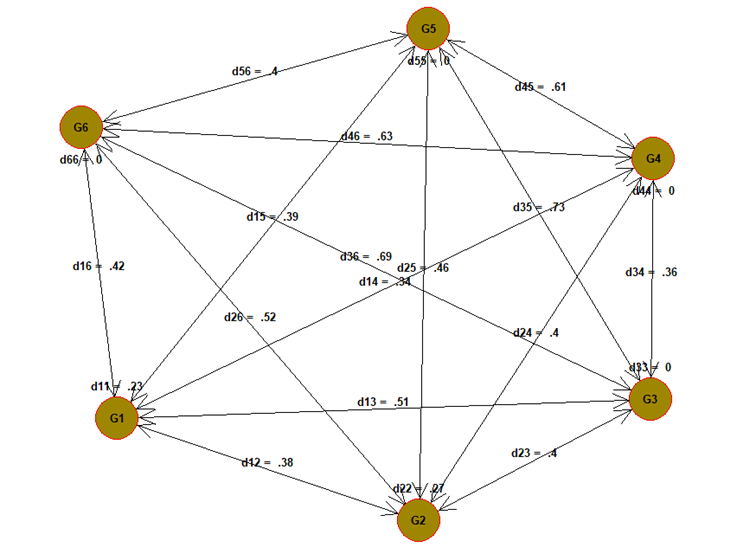
Figure 1 Genetic distances between groups formed by the Tocher method with common bean accessions. Choré, Paraguay, 2024.
De Paula et al. (2024) also observed a marked formation of genetic groups in their work with common bean, similar to Cabral et al. (2011) and Nasar, Ostevik, Murtaza and Rausher (2022).
The diversity within a crop species is fundamental for the development of new products and, consequently, must be preserved for future generations (Bareke, 2019). Likewise, Hussain-Shah et al. (2020) mentions the importance of genetic diversity for initiating a genetic improvement program in common bean.
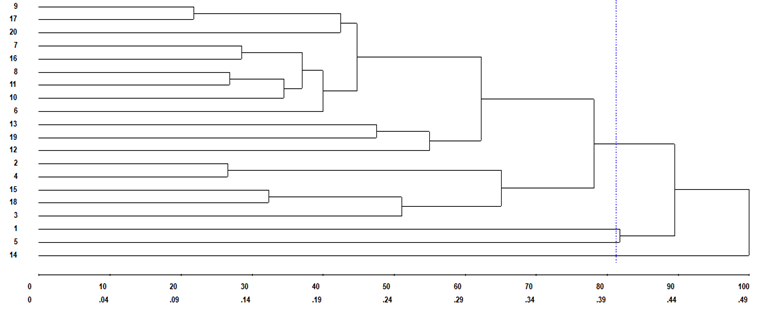
In the UPGMA dendrogram clustering, four groups were identified, with the first group consisting of 17 accessions, while accessions PRYH-0014, PRYH-0005, and PRYH-0001 individually belong to each of the three remaining groups (Figure 2).
The characters that contributed in greater proportion to the genetic distance were pod yield and grain yield, with values of 70.246% and 29.751% respectively. Meanwhile, the characters of lesser importance were pod length, pod diameter, seed length, seed width, and number of grains per pod (Table 4).
Seed number per pod is a characteristic of great importance in bean productivity (De Paula et al., 2024). In general, genotypes with high values for this trait are selected for breeding programs focused on increasing crop production (Stoilova, Pereira, de Sousa & Carnide, 2005).
The main characteristic that breeding programs focus on is yield; however, this trait is very complex as it involves several genes that act directly or indirectly on grain yield (Nascimento, Daher, Santos & Souza, 2022).
Table 4 Relative contribution (%) of the evaluated characters to genetic distance according to Singh's method (1981). Choré, Paraguay, 2024.
| Variables | S.J | Value (%) |
|---|---|---|
| Plant Height | 20.007,11 | 0,0008 |
| Root Length | 1.366,22 | 0,0001 |
| Pod Length | 545,448 | 0,000 |
| Pod Diameter | 5,567 | 0,000 |
| Seed Length | 23,905 | 0,000 |
| Seed Width | 4,172 | 0,000 |
| Number of Grains per Pod | 795,000 | 0,000 |
| Number of Pods per Plant | 7.813,7770 | 0,0003 |
| 100-grain Weight | 30.764,000 | 0,0012 |
| Pod Yield | 1.731.243.055,59 | 70,246 |
| Grain Yield | 733.222.222,36 | 29,751 |
The calculation of the relative importance of characters is estimated as the contribution of the components of genetic distance to the total observed dissimilarity related to each variable (Albuquerque Lins Neto, Atroch & Nascimiento Filho, 2020). Among the characteristics with the greatest contribution to genetic distance was pod yield, followed by grain yield.
CONCLUSION
Exploitation of genetic diversity: The evaluated accessions exhibit significant genetic diversity, which can be strategically utilized in crossing programs to improve existing varieties or develop new ones. This potential suggests the existence of suitable accessions for immediate applications.
Formation of groups based on genetic distance: Six groups were identified using the Tocher method and four groups using the UPGMA dendrogram, characterized by different degrees of similarity among their members. This finding provides a clear framework for selecting accessions for specific genetic improvement purposes.
Contribution of yield variables: Pod yield (70.246%) and grain yield (29.751%) emerged as the most influential factors in determining the genetic distance between the evaluated accessions. These results underscore the importance of considering these key characteristics in future selection and improvement strategies.
REFERENCES
Albuquerque Lins Neto, N. L., Atroch, A. y Nascimento Filho, F. J. (2020). Importância de caracteres morfoagronômicos no guaranazeiro por componentes principais. Biodiversidade, 19 (1), 97 - 105. Disponible en: https://ainfo.cnptia.embrapa.br/digital/bitstream/item/213128/1/9994-35954-1-SM.pdf. [ Links ]
Bareke, T. (2019). Diversity and genetic potential of various morphological traits among common bean (Phaseolus vulgaris, Fabaceae) landraces. Biodiversitas. 20 (11), 3237 - 3245. doi: 10.13057/biodiv/d201116. [ Links ]
Bitocchi, E., Nanni L., Bellucci, E., Rossi, M., Giardini, A., Spagnoletti Zeuli, P., Logozzo, G., Stougaard, J., McCleand, P., Attenee, G. & Papa, R. (2012). Mesoamerican origin of the common bean (Phaseolus vulgaris L.) is revealed by sequence data. Proceedings of the National Academy of Sciences of the United States of America, 109 (14), E788 - E796. https://doi.org/10.1073/pnas.1108973109 [ Links ]
Cabral, P. D. S., Soares, T. C. B., Lima, A. B. P., De Miranda, F. D., Souza, F. B. y Goncalves, L. S. A. (2011). Genetic diversity in local and commercial dry bean (Phaseolus vulgaris) accessions based on microsatellite markers. Genetics and Molecular Research, 10 (1), 140-149. [ Links ]
Carovic-Stanko, K., Liber, Z., Vidak, M., Baresić, A., Grdisa, M., Lazarević, B. & Šatović, Z. (2017). Genetic diversity of Croatian common bean landraces. Frontiers in Plant Science, 8, 604. Disponible en: https://doi.org/10.3389/fpls.2017.00604 [ Links ]
Casañas, F., Sino, J., Casals, J. & Prohen, J. (2017). Toward an evolved concept of landrace. Frontiers in Plant Science , 8, 145. https://doi.org/10.3389/fpls.2017.00145 [ Links ]
Chhetri, A. & Bhatta, A. (2017). Agro-Morphological Variability Assessment of Common Bean (Phaseolus vulgaris L.) Genotypes in High Hill Jumla, Nepal. International Journal of Environment, Agriculture and Biotechnology (IJEAB). 2 (6): 3110 - 3115. https://dx.doi.org/10.22161/ijeab/2.6.42. [ Links ]
Cruz, C. D. (2016). Genes Software - extended and integrated with the R, Matlab and Selegen. Acta Scientiarum, 38 (4), 547 - 552. https://doi.org/10.4025/actasciagron.v38i4.32629. [ Links ]
De Paula, E., Almeida, R.N.d., Santos, T.d.O., Souza Neto, J.D.d., Riva-Souza, E.M., Posse, S.C.P., Souza, M. N., Madella de Oliveira, A.d.F., Santos Júnior, A. C. & Santos, J. O. (2024). Genetic Diversity of Common Bean (Phaseolus vulgaris L.) Landraces Based on Morphological Traits and Molecular Markers. Plants, 13, 2584. Disponible em: https://doi.org/10.3390/plants13182584 [ Links ]
Elias, H. T., Vidigal, M. C., Gonela. A., e Vogt, G.A. (2007). Variabilidade genética em germoplasma tradicional de feijão-preto em Santa Catarina. Pesquisa Agropecuaria Brasileira, 42 (10), 1443-1449. [ Links ]
Flores-de la Cruz, M. J., Garcia-Esteva, A., Garcia-Nava, J. R., Kohashi-Shibata, J. & Ybarra-Moncada, C. (2018). Diferencias fenológicas, morfológicas y de componentes del rendimiento entre una forma silvestre y domesticada de frijol común. Revista Mexicana Ciencias Agrícolas, 9 (1), 137 - 149. Disponible en: https://doi.org/10.29312/remexca.v9i1.854. [ Links ]
Hamouda, M., Haider, A. S., Elbehairy, E. & Elshanshory, A. R. (2020). Genetic variation among common beans cultivars (Phaseolus vulgaris L.) as revealed by morphological, protein and molecular markers. The Egyptian Journal of experimental Biology, 16 (1), 129-139. [ Links ]
Hegay, S., Geleta, M., Bryngelsson, T., Garkava-Gusavsson, L., Persson, H. y Ortiz, R. (2014). Análisis de la diversidad genética en Phaseolus vulgaris L. mediante caracteres morfológicos. Genetic Resources Crop Evolution, 61, 555-566. Disponible en: https://doi.org/10.1007/s10722-013-0056-3. [ Links ]
Hussain-Shah, A., Khaliq, I., Bashir, G. y Jannat, S. (2020). Genetic Diversity in Common Bean (Phaseolus vulgaris L.) Germplasm to Establish a Breeding Program in the Mountainous Region of Jammu and Kashmir. Indian Journal of Agricultural Research ., 54(5), 629-634. doi: 10.18805/IJARe.A-421. [ Links ]
Mallor C., Barberan M. & Albar J. (2018) Recovery of common bean landrace (Phaseolus vulgaris L.) for comercial purposes. Frontiers in Plant Science , 9, 1440. Disponible en: https://doi.org/10.3389/fpls.2018.01440 [ Links ]
Meza-Vázquez, K. E., Lépiz-Ildefonso, R., López-Alcocer, J. de J., & Morales-Rivera, M. M. (2015). Caracterización morfológica y fenológica de especies silvestres de frijol (Phaseolus).Revista fitotecnia mexicana,38(1), 17-28. Disponible en: http://www.scielo.org.mx/scielo.php?script=sci_arttext&pid=S0187-73802015000100004&lng=es&tlng=es. [ Links ]
Ministerio de Agricultura y Ganadería (MAG). (2022). "Informe Anual de Producción Agrícola 2022". Disponible en: https://www.mag.gov.py. [ Links ]
Nasar, S., Ostevik, K., Murtaza, G. & Rausher, M. D. (2022). Morphological and molecular characterization of variation in common vean (Phaseolus vulgaris L.) germplasm from Azad Jammu and Kashmir, Pakistan. PLoS ONE, 17, e0265817. [ Links ]
Nascimento, M. R., Daher, R. F., Santos, P. R. D. & Souza, A. G. D. (2002). Adaptability and stability of black and purple bean genotypes. Pesquisa Agropecuária Tropical, 52, e71631. [ Links ]
Neupane, R. K., Shrestha, R., Vaidya, M. L., Bhattarai, E. M. & Darai, R. (2005). Agromorphological diversity in common bean (Phaseolus vulgaris L.) landraces of Jumla, Nepal. Food Legumes for Nutritional Security and Sustainable Agriculture. 1 - 11. Disponible en: https://www.researchgate.net/publication/302933464_Agromorphological_diversity_in_common_bean_Phaseolus_vulgaris_L_landraces_of_Jumla_Nepal. [ Links ]
Nogueira, A. F., Moda-Cirino, V., Delfini, J., Brando, L. A., Mian, S., Constantino, L. V. & Azeredo Goncalves, L.S. (2021). Morphoagronomic, biochemical and molecular analysis of genetic diversity in the Mesoamerican common bean panel. PLoS ONE , 16, e0249858. [ Links ]
Toro, O., Tohme, J. y Debouck, D. G. (1990). Frijol Silvestre (Phaseolus vulgaris L): Descripción y Distribución. Cali: Centro Internacional de Agricultura Tropical. [ Links ]
Savić, A., Zorić, M. y Brdar-Jokanović, M. Dimitrijević, M. Petrović, S. Živanov, D. Vasić, M. (2020). Origin and diversity study of local common bean (Phaseolus vulgaris L.) germplasm from Serbia: phaseolin and phenotyping approach. Genetic Resources and Crop Evolution, 67, 2195-2212. Disponible en: https://doi.org/10.1007/s10722-020-00974-9. [ Links ]
Singh, D. (1981). The relative importance of characters affecting genetic divergence. The Indian Journal of Genetics & Plant Breeding, New Delhi, 41 (2), 237 - 245. [ Links ]
Stoilova, T., Pereira, G., de Sousa, M. M. T. & Carnide, V. (2005). Diversity in common bean landraces (Phaseolus vulgaris L.) from Bulgaria and Portugal. Journal Central European Agriculture, 6(4), 443-448. [ Links ]
Funding: All activities carried out during the execution of the work were funded by IPTA (Paraguayan Institute of Agricultural Technology).
Data Availability: The dataset belongs to morphological characterization data from the Research Program in Rescue and Valorization of Genetic Resources for Family Agriculture of the Paraguayan Institute of Agricultural Technology (IPTA). It is not yet available to the public, but in the short term it will be available in Grin Global Community Edition (GGCE) that IPTA is implementing for its germplasm databases.
Editor responsable: Arnaldo Esquivel-Fariña https://orcid.org/0000-0002-7727-5243. Universidad Nacional de Asunción, Facultad de Ciencias Agrarias. San Lorenzo, Paraguay.
Received: June 25, 2024; Accepted: March 19, 2025; Published: May 23, 2025
 Este es un artículo publicado en acceso abierto bajo una licencia Creative Commons
