




Services on Demand
Journal

Article
 text in
 English (pdf)
 Article in xml format
 Article references

 Automatic translation
 Send this article by e-mail
Indicators
-
 Cited by SciELO
Related links
-
 Similars in
SciELO
Share

 Permalink

Investigación Agraria
On-line version ISSN 2305-0683
Investig. Agrar. vol.27 no.1 San Lorenzo 2025 Epub Apr 29, 2025
https://doi.org/10.18004/investig.agrar.2025.e2701818
Scientific article
Agronomic performance of five carrot varieties under protected environment and open field conditions in summer
1
 http://orcid.org/0009-0008-6330-7372
1
http://orcid.org/0000-0002-8691-2689
1
http://orcid.org/0000-0001-5131-9415
1 Universidad Nacional de Asunción, Facultad de Ciencias Agrarias, Programa de Maestría en Producción Vegetal. San Lorenzo, Paraguay.
This experiment was conducted from January to April 2023, with the objective of evaluating the agronomic performance of five carrot varieties under both field and protected environment conditions. Variables assessed included: ambient temperature, plant stand, leaf count, leaf length and fresh weight, root fresh weight, length and diameter, as well as total, commercial, and non-commercial yields. Data underwent analysis of variance, and when significant differences were detected, means were compared using the Scott-Knott test at 5% probability error. Statistical analyses revealed no interaction among the evaluated variables, except for total yield. Significant differences between growing environments were found for all variables except total root yield. In open field conditions, superior means were observed for fresh weight and root length. The Nativa and Brasilia Irecê varieties achieved greater root mass and length, with means of 116.13 g and 98.37 g; 12.53 cm and 12.32 cm, respectively. Overall, the Nativa variety demonstrated superior performance in agronomic characteristics during summer conditions.
Key-words: Daucus carota; productivity; horticulture; shading mesh
Este experimento fue conducido entre los meses de enero a abril de 2023, y tuvo como objetivo evaluar el comportamiento agronómico de raíces de cinco variedades de zanahoria en condiciones de campo y ambiente protegido. Las variables evaluadas fueron: temperatura de los ambientes, stand de plantas, número de hojas, longitud y masa fresca de hojas, masa fresca, longitud y diámetro de raíz, rendimiento total, comercial y no comercial. Los datos fueron sometidos a análisis de varianza y, en caso de diferencias significativas, las medias fueron comparadas por la prueba de Scott-Knott al 5% de probabilidad de error. Los resultados obtenidos de los análisis estadísticos indican que no hubo interacción para las variables evaluadas, a excepción del rendimiento total. Se encontraron diferencias significativas para los ambientes en todas las variables, con excepción del rendimiento total de raíz. En campo abierto fueron superiores las medias de la masa fresca y longitud de la raíz. Las variedades Nativa y Brasilia Irecê obtuvieron mayor masa y longitud de raíces con medias de 116,13 g y 98,37 g; 12,53 cm y 12,32 cm, respectivamente. La variedad Nativa fue la que presentó mejor desempeño para las características agronómicas en verano.
Palabras clave: Daucus carota; productividad; horticultura; malla de sombreo
INTRODUCTION
The carrot, belonging to the ancient family Umbilliferae (now classified as Apiaceae), originated in Central Asia and the Mediterranean region. It ranks among the world's most extensively cultivated crops and holds substantial economic value (Saavedra and Kehr 2019, Filgueira 2008). Consumed globally, this vegetable offers significant nutritional benefits due to its rich beta-carotene content, a vitamin A precursor, as well as valuable mineral salts (FAO 2022).
In Paraguay, the planted area during the 2018/19 agricultural year totaled 1,100 hectares, yielding a production volume of 13,200 tons with an average yield of 12,000 kg/ha (MAG 2019). According to DAMA (2023) data, domestic carrot production fails to meet local demand between February and May, necessitating imports from Brazil and Argentina.
This production shortfall stems from adverse climatic conditions, particularly the elevated temperatures characteristic of this period (Enciso-Garay and Zaracho 2011). Many producers have not adopted varieties adapted to high-temperature conditions due to insufficient scientific information regarding varietal performance during this challenging season. One of the critical factors influencing plant growth and development is temperature; both insufficient and excessive temperatures affect metabolic activity, consequently impacting the plant's ability to compete for assimilates (Leandro 2018).
Protected environments consist of a structured space utilizing protective coverings such as shade netting that reduces light penetration and shields plants from adverse weather conditions, pests, and diseases. This approach is widely adopted and accepted throughout horticultural production regions (Pratt and Ortega 2019). Embracing technological innovations like protected environment cultivation is essential, as these methods can significantly enhance yields during the summer months.
Identifying superior carrot varieties that perform well during periods of elevated temperatures would enable year-round production of this horticultural crop, whether in open field conditions or under protective coverings.
For the reasons stated above, the general objective of this research was to evaluate the agronomic performance and root quality of five carrot varieties during the summer season under both open field conditions and protected environment cultivation.
MATERIAL AND METHODS
The experiment was conducted at the Horticultural Research Center of the Faculty of Agricultural Sciences, National University of Asunción, located in San Lorenzo, Central Department, Paraguay.
Five carrot varieties were evaluated: Brasilia, Brasilia Irecê, Shin Kuroda, Rubí, and Nativa. The experimental design employed was a randomized complete block with a 2×5 split-plot arrangement. The main plots consisted of two growing environments: open field conditions and black shade netting with 35% light retention. The subplots comprised five carrot varieties. This arrangement yielded a total of 10 treatments, each with four replications (Table 1).
Table 1 Experimental treatments with carrot varieties under protected environment and open field conditions. San Lorenzo, 2023.
| Treatments | Varieties | Environments |
|---|---|---|
| T1 | V1 Brasilia | SMS¹ |
| T2 | V1 Brasilia | OF² |
| T3 | V2 Brasilia Irecê | SMS |
| T4 | V2 Brasilia Irecê | OF |
| T5 | V3 Shin Kuroda | SMS |
| T6 | V3 Shin Kuroda | OF |
| T7 | V4 Rubí | SMS |
| T8 | V4 Rubí | OF |
| T9 | V5 Nativa | SMS |
| T10 | V5 Nativa | OF |
¹ SMS: Shade Mesh Screen
² OF: Open Field
Each experimental unit consisted of a raised bed measuring 1.50 m in length, 1.20 m in width, and 15 cm in height. The beds were separated by 0.5 m walkways. Each bed contained four rows with 0.3 m spacing between rows. The total experimental area was 128.52 m², divided equally between the shade netting environment (64.26 m²) and open field conditions (64.26 m²).
According to edaphic characteristics, the regional soil is classified as Rhodic Paleudult, featuring a substantial argillic horizon with reddish coloration and a udic moisture regime, categorized within the Ultisol order (Lopez et al., 1995). Based on soil analysis and recommendations from the Soil Laboratory, dolomitic agricultural lime was applied at a rate of 500 kg ha⁻¹. Base fertilization consisted of decomposed manure (30 t ha⁻¹) and an application of 40-00-70 kg ha⁻¹ of N, P₂O₅, and K₂O, administered ten days before sowing. Top-dressing fertilization was performed 15 days after germination, with nitrogen applied at 30 kg ha⁻¹.
For the protected environment treatments, black shade netting with 35% light retention was installed at a height of 2.5 m, completely covering the designated experimental area. To monitor temperature conditions, two thermometers were positioned at a height of 1.20 m in both experimental areas (open field plot and shade net plot). These were monitored daily with readings taken between 13:00 and 14:00 hours.
Seeds were sown manually in continuous rows, and plants were irrigated using a drip system. Following emergence, seedlings were thinned to maintain a density of 20 plants per linear meter.
Harvesting was conducted 100 days after sowing. All evaluations were performed on plants from the central rows of each treatment and replication to minimize edge effects.
The following variables were assessed:
1. Plant stand: The central rows of each treatment were evaluated. Results were expressed as number of plants per linear meter (m⁻¹). Twenty plants per linear meter were maintained and assessment was conducted one week prior to harvest.
2. Number of leaves: Counted individually for each sampled plant. Results were expressed as number of leaves per plant.
3. Leaf length: Measured using a centimeter ruler from the leaf apex to the root shoulder. Results were expressed in centimeters (cm).
4. Root fresh weight: Determined using a precision scale with results for each treatment expressed in grams (g).
5. Root length: Measured using a centimeter ruler from the root tip to the shoulder or crown of the plant. Results were expressed in centimeters (cm).
6. Root diameter: Measured at the root shoulder using a Vernier caliper. Results were expressed in centimeters (cm).
7. Total root yield: Calculated by summing the root mass per experimental unit. Results were expressed in tons per hectare (t ha⁻¹).
8. Commercial root yield: Quality classification was conducted according to the regulations established by the National Service for Plant Quality and Health and Seeds (SENAVE, 2014). Results were expressed in tons per hectare (t ha⁻¹).
9. Non-commercial root yield: Included discarded roots (bifurcated, cracked, or those with length less than 10 cm). Results were expressed in tons per hectare (t ha⁻¹).
Data were subjected to analysis of variance (ANOVA), and when significant differences were detected, means were compared using the Scott-Knott test at 5% probability of error. All statistical analyses were performed using Infostat software, version 2020 (Di Rienzo et al., 2020).
RESULTS AND DISCUSSION
During the course of the experiment, an average temperature of 34°C was recorded in both the open field (OF) and protected environment (PE) conditions. The highest temperature was observed during the second week, reaching 39.5°C in the open field and 39°C in the protected environment. These measurements indicate that there were no substantial temperature differences between the two cultivation environments.
Although carrots are traditionally considered a cool-season crop, modern varieties have been developed with adaptations to tropical and subtropical conditions, capable of growing in temperatures ranging from 4 to 40°C (Guimarães, 2019). For warm climates, the optimal temperature range for carrot development is between 20 and 30°C (EMBRAPA, 2021). As illustrated in Figure 1, the temperature values recorded during this research exceeded this optimal range for carrot crop development.
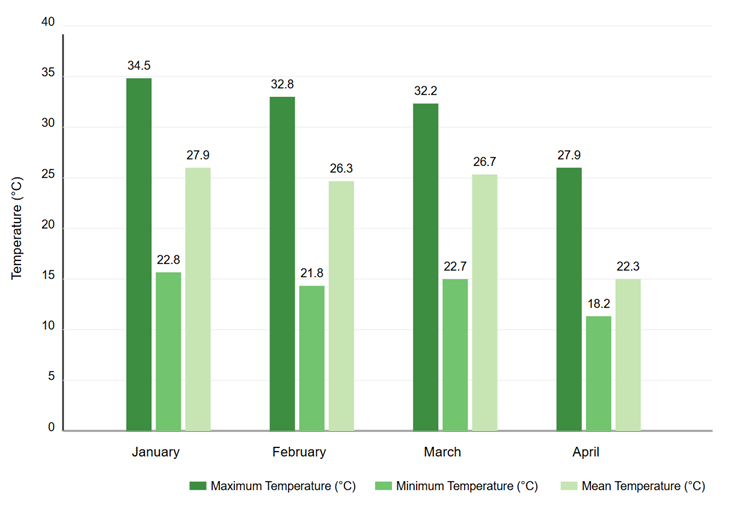
Figure 1 Mean temperature readings recorded throughout the experimental period, San Lorenzo, Paraguay, 2023.
Statistical analysis (ANOVA) revealed no significant interaction between environments and varieties for the variables plant stand, root fresh weight, root length, root diameter, and number of leaves per plant. However, significant differences were detected for the environment factor across all aforementioned variables, while the variety factor showed significant differences specifically for plant stand, root fresh weight, and root length (Table 2).
Table 2 Mean values of plant stand (PSt), root fresh weight (RFW), root length (RL), root diameter (RD), and number of leaves (NL) of five carrot varieties grown in different environments during summer. FCA/UNA, San Lorenzo, Paraguay, 2023.
| Environments (Main factor) | PSt (plants m⁻¹) | RFW (g) | RL (cm) | RD (cm) | NL (n°·p⁻¹) | |
|---|---|---|---|---|---|---|
| Shade net | 18,98 A | 51,95 B | 9,42 B | 3,01 B | 9,34 B | |
| Open field | 9,41 B | 131,11 A | 14,02 A | 4,10 A | 11,83 A | |
| Varieties (Secondary factor) | ||||||
| Brasilia | 15,71 ns | 69,06 b | 10,84 b | 3,24 ns | 9,85 ns | |
| Brasilia Irecê | 14,13 | 98,37 a | 12,32 a | 3,31 | 10,94 | |
| Shin Kuroda | 13,81 | 90,97 b | 11,38 b | 3,62 | 10,85 | |
| Rubí | 14,44 | 83,12 b | 11,52 b | 3,39 | 11,28 | |
| Nativa | 12,88 | 116,13 a | 12,54 a | 4,2 | 9,99 | |
| General Mean | 14,19 | 91,53 | 11,72 | 3,55 | 10,58 | |
| CV | 24,05 | 29,94 | 10,46 | 11,13 | 17,86 | |
Means followed by the same letter in the column do not differ statistically from each other by the Scott-Knott test at 5% probability.
ⁿˢ = not significant.
The protected environment yielded the highest mean plant stand with 18.89 plants m⁻¹, significantly higher than open field conditions where approximately 50% plant loss was observed, primarily due to poor seed germination, despite using identical sowing density in both environments (Table 2). Plant stand directly correlates with germination success, and according to Pereira et al. (2008), temperature is one of the most critical abiotic factors affecting seed germination. Their research demonstrated varying germination percentages among different varieties under open field conditions, with optimal germination occurring between 20-32°C, while temperatures ranging from 35-40°C inhibit seed germination and compromise field establishment. Similarly, Saavedra and Kehr (2019) emphasize that temperature and humidity are fundamental for successful germination, identifying 26°C as the optimal temperature with an upper threshold of 35°C.
Regarding root fresh weight, plants grown in open field conditions exhibited significantly higher values, averaging 131.11 g per root, compared to those in the protected environment, which yielded substantially lower values averaging 51.95 g per root.
Oliveira (2019), in research investigating shade netting effects on carrot cultivation, reported higher root fresh weight values (114.45 g) in control field conditions compared to black shade netting (50%), which yielded only 77.51 g. The researcher concluded that shade netting reduces radiation availability regardless of netting color, consequently diminishing root fresh weight. Queiroga et al. (2001) noted that photosynthetic activity increases when plants are exposed to more favorable light conditions, supporting the observation that reduced radiation can negatively impact root development.
Among the varieties evaluated in this study, Nativa exhibited the highest root fresh weight with 116.13 g per root, significantly outperforming Brasilia, Shin Kuroda, and Rubí varieties. However, no statistical difference was observed between Nativa and Brasilia Irecê varieties (Table 2). In a comparable study, Resende et al. (2016) evaluated 12 carrot varieties under summer open field conditions and reported mean values of 77.6 g and 70.1 g for Brasilia and Shin Kuroda varieties, respectively. Similarly, Zaracho (2010), in an evaluation of five varieties, documented that Brasilia and Brasilia Irecê produced root fresh weights of 91.10 g and 86.90 g, respectively-values higher than those observed for these same varieties in our current investigation.
As illustrated in Table 2, root length was significantly greater under open field conditions, averaging 14.02 cm, compared to the shade netting treatment. Oliveira (2019) attributes enhanced root elongation in full sun cultivation to increased photosynthetic capacity, as unfiltered sunlight provides a broader radiation spectrum with higher proportions of red and far-red wavelengths. These specific light qualities optimize photosynthetically active radiation intensity and utilization efficiency. It's important to note that carrot root length results from complex interactions between cultivar-specific genotypic traits, prevailing environmental conditions, and applied cultivation technologies (Szczepanek et al., 2017).
Among the evaluated cultivars, Brasilia Irecê and Nativa demonstrated superior root length development, with means of 12.32 cm and 12.54 cm respectively, significantly outperforming all other varieties in the trial. These results align with findings reported by Enciso-Garay and Zaracho (2011), who documented comparable root lengths of 12.52 cm and 12.28 cm for Brasilia Irecê and Brasilia varieties during summer-autumn cultivation. Root length represents a critical commercial parameter subject to specific quality standards; according to the classification established by the National Service for Plant Quality and Health and Seeds (SENAVE 2014), the mean lengths observed in this experiment fall within the "short" category classification.
The root shoulder diameter exhibited significant differences between growing environments, with plants cultivated in open field conditions developing substantially larger diameters (4.10 cm) compared to those in the protected environment (3.01 cm). Among varieties, mean diameters ranged from 4.20 cm for Nativa to 3.24 cm for Brasilia Irecê; however, these varietal differences were not statistically significant.
These results can be attributed to multiple factors including soil type, plant spacing affecting intraspecific competition, and local temperature conditions (Barros Junior et al., 2005). In comparable research, Zaracho Aguilar (2010) documented similar root diameter measurements under open field conditions for Brasilia and Brasilia Irecê varieties, reporting means of 3.4 cm and 3.3 cm respectively. As noted by Díaz González (2021), significant variability in root shape and size exists naturally among carrot varieties, representing inherent genotypic characteristics that influence morphological development.
However, it is noteworthy that leaf length, total yield, and non-commercial yield were superior under protected environment conditions, whereas number of leaves per plant and commercial yield showed better performance in open field conditions (Table 3). Among the varieties evaluated, Nativa and Shin Kuroda exhibited significantly greater leaf length and leaf number compared to the other cultivars tested.
The number of leaves per plant varied among the evaluated varieties, ranging from 9.85 (Brasilia) to 11.28 (Rubí). These values align closely with findings reported by Enciso-Garay and Zaracho (2011), who documented means between 8 and 10 leaves per plant when evaluating five carrot varieties under open field conditions. According to Goneim et al. (2011), leaf number and leaf area-related indices are among the most reliable indicators of potential crop yield. Supporting this correlation, Gomes (2019) reported similar results when evaluating 10 carrot varieties, specifically noting approximately 10 leaves per plant for the Brasilia variety.
Regarding leaf length, leaf fresh weight, and commercial and non-commercial root yield variables, statistical analysis (ANOVA) revealed significant differences attributable to environmental factors for all these parameters. Additionally, the variety factor showed significant differences specifically for leaf length and leaf fresh weight measurements (Table 3).
Table 3 Mean values of leaf length (LL), leaf fresh weight (LFW), total root yield (TRY), commercial root yield (CRY) and non-commercial root yield (NCRY) of five carrot varieties grown in different environments in summer. FCA/UNA, San Lorenzo, Paraguay, 2023.
| Environments (Main factor) | LL (cm) | LFW (g) | TRY (t·ha⁻¹) | CRY (t·ha⁻¹) | NCRY (t·ha⁻¹) |
| Shade net | 60,17 A | 52,25 B | 44,10 A | 25,98 B | 18,14 A |
| Open field | 52,11 B | 99,28 A | 46,14 A | 39,23 A | 6,90 B |
| Varieties (Secondary factor) | |||||
| Brasilia | 52,91 b | 54,61 b | 36,68 ns | 25,92 ns | 10,86 ns |
| Brasilia Irecê | 54,64 b | 79,61 a | 53,33 | 39,79 | 13,54 |
| Shin Kuroda | 60,20 a | 86,86 a | 42,91 | 31,74 | 11,17 |
| Rubí | 52,46 b | 61,98 b | 45,21 | 31,68 | 13,53 |
| Nativa | 60,49 a | 95,76 a | 47,48 | 33,87 | 13,49 |
| General Mean | 56,14 | 75,76 | 42,12 | 32,6 | 12.52 |
| CV | 8,15 | 41,88 | 25,55 | 35,86 | 40.94 |
Capital letters in common for columns and lowercase letters in columns in relation to varieties do not differ from each other by the Scott-Knott test at 5% probability of error.
ⁿˢ: Not significant.
For leaf length, the protected environment produced significantly longer leaves, averaging 60.27 cm, compared to open field conditions which averaged 52.11 cm. These findings align with Oliveira (2019), who documented greater leaf elongation under black shade netting with 50% light retention in carrot cultivation research. The researcher noted that plants subjected to varying light intensities exhibit measurable changes in their physiological, morphological, and growth characteristics.
Studies in protected environments (greenhouses) have consistently demonstrated enhanced vegetative development, particularly regarding foliage height (Nina Alejo, 2020). Plants not naturally adapted to low radiation conditions possess physiological mechanisms that accelerate vertical growth, responding to shading through stem elongation as they seek increased light exposure (Schuster et al., 2012).
Among the varieties tested, Nativa and Shin Kuroda exhibited superior leaf development, with mean lengths of 60.49 cm and 60.20 cm respectively, significantly outperforming all other varieties evaluated in the trial. These findings are consistent with observations reported by Meza Daboín-León (2023). In contrast, Resende et al. (2016), in their comprehensive evaluation of 12 carrot varieties, documented a mean leaf length of 48.65 cm for Shin Kuroda, considerably lower than the values recorded in our current study. Similarly, Gomes (2019), who assessed ten carrot varieties under field conditions, reported more modest leaf lengths for Nativa and Brasilia varieties (50.68 cm and 46.38 cm respectively), values significantly below those observed in our experiment.
The leaf fresh weight data revealed statistically significant differences between both growing environments and varieties. Regarding environmental effects, open field conditions produced substantially higher leaf biomass, with plants averaging 99.28 g plant⁻¹, while those cultivated in the protected environment (under shade netting) developed significantly less foliar mass, averaging only 52.25 g plant⁻¹.
Among the varieties tested, Nativa (95.76 g), Shin Kuroda (86.86 g), and Brasilia Irecê (79.61 g) demonstrated significantly superior leaf fresh weight compared to Rubí and Brasilia, which produced only 61.98 g and 54.61 g respectively (Table 3). Carrot crop productivity and yield are determined by the complex interplay of environmental conditions, genetic characteristics of the selected variety, and applied cultivation practices. This multifaceted interaction facilitates optimal root development and enables full expression of genotypic potential specific to each production environment (Gaviola, 2013). Research indicates that incorporating organic fertilizers enhances soil structure and nutrient availability, consequently improving overall production (Megueni, 2017). In a comparative study examining agronomic performance of five carrot varieties (Daucus carota L.) during summer-autumn cultivation, Zaracho Aguilar (2010) documented lower yields in open field conditions for Brasilia and Brasilia Irecê varieties, reporting means of 26.3 t ha⁻¹ and 25.1 t ha⁻¹ respectively-values considerably below those obtained in the present investigation.
In comparative research, Gomes (2019) conducted an open field trial evaluating ten carrot varieties and documented lower yields for Nativa and Brasilia varieties (31.84 t ha⁻¹ and 24.11 t ha⁻¹ respectively) than those observed in our study. Similarly, Zaracho Aguilar (2010) reported even more modest yield performance under open field conditions for Brasilia Irecê and Brasilia varieties, with means of only 20.30 t ha⁻¹ and 19.28 t ha⁻¹ respectively.
Regarding non-commercial yield, our results revealed that the protected environment generated a substantially higher proportion of unmarketable roots (18.14 t ha⁻¹) compared to open field conditions, which produced significantly fewer non-commercial roots (6.90 t ha⁻¹). Among the varieties tested, although differences were not statistically significant, Brasilia Irecê exhibited the highest non-commercial yield (13.54 t ha⁻¹), followed closely by Rubí and Nativa with nearly identical values (13.53 t ha⁻¹ and 13.49 t ha⁻¹ respectively). Shin Kuroda and Brasilia varieties demonstrated marginally better commercial quality, producing the lowest non-commercial yields with means of 11.17 t ha⁻¹ and 10.86 t ha⁻¹ respectively (Table 3).
CONCLUSIONS
The varieties evaluated did not demonstrate significant interaction with growing environments; however, Nativa and Brasilia Irecê varieties exhibited superior agronomic performance across multiple parameters including root fresh weight, root length, leaf length, and leaf fresh weight. Additionally, the Nativa variety achieved the largest root diameter among all cultivars tested.
Regarding environmental effects, open field conditions consistently produced better results for critical commercial characteristics including root fresh weight, root length, root diameter, and number of leaves per plant.
REFERENCIAS BIBLIOGRAFICAS
Barros Junior, A. P., Bezerra Neto, F., Silva, E. O., Negreiros, M. Z., Oliveira, E. Q., Da Silveira, L. M., Lima, J. S. S. y Freitas, K. K. C. (2005). Qualidade de raízes de cenoura em sistemas consorciados com alface sob diferentes densidades populacionais. Horticultura Brasileira, Brasília, 23(2), 290-293. Disponible em: https://doi.org/10.1590/S0102-05362005000200025 [ Links ]
DAMA (Dirección de Abastecimiento de la Municipalidad de Asunción, Dpto. de Estadísticas). (2023). Cultivo de zanahoria nacional y extranjera 2023. Asunción. DAMA. [ Links ]
Díaz González, C. A. (2021). Manejo del cultivo de Zanahoria (Daucus carota) cv. Japonesa en el valle de Cañete. (Tesis Ing. Agr.). Lima: UNALM. Disponible en: https://hdl.handle.net/20.500.12996/5062 [ Links ]
Di Rienzo, S. L., Casanoves, F., Balzarini, M., González, L., Tablada, M. y Robledo, C. (2020). InfoStat versión actualizada 2020 . Grupo InfoStat. Córdoba: FCA, Universidad Nacional de Córdoba. Disponible en: https://www.infostat.com.ar [ Links ]
EMBRAPA (Empresa Brasileira de Pesquisa Agropecuária). (2021). Sistema de produção de cenoura. Disponible em: https://www.embrapa.br/hortalicas/cenoura/clima2 [ Links ]
Enciso Garay, C. R. y Zaracho Aguilar, C. M. (2011). Evaluación de variedades de zanahoria sem bradas en verano. Investigación Agraria, 13 (2), 75-79. Disponible en: https://www.agr.una.py/revista/ index.php/ria/article/view/218/211 [ Links ]
FAO (Organización de las Naciones Unidas para la Alimentación y la Agricultura). (2022). Cantidades de producción por país promedio. Disponible en: http://www.fao.org/faostat/es/#data/QLC. [ Links ]
Filgueira, F. A. R. (2008). Novo manual de olericultura: agrotecnología moderna na produção de hortaliças. 3 ed. Viçosa: Editora UFV. 418 p. [ Links ]
Gaviola, J. C. (2013). Manual de producción de zanahoria. Disponible en: https://inta.gob.ar/documentos/manual-de-produccion-de-zanahoria [ Links ]
Gomes, V. E. (2019). Desempenho agronômico de cultivares de cenoura em função da época de plantio. (Tesis de Maestría en Agronomía: Fitotecnia). Mossoró, Río Grande del Norte: UFERSA. Disponible en: https://repositorio. ufersa.edu.br/handle/prefix/3738 [ Links ]
Goneim, G., Ibrahim, F., y El-Shehawy, S. (2011). Carrot Leaves: Antioxidative and Nutritive Values. Journal of Food and Dairy Sciences, 2 (4), 201-211. doi: 10.21608/jfds.2011.81946 [ Links ]
Guimarães, C. M. (2019). Irrigação de cultivares de alface e cenoura em ambiente protegido. (Tesis de Doctorado). Madrid: UFV. Disponible en: https://locus.ufv.br//handle/123456789/27406 [ Links ]
Leandro, F. (2018). Adaptación y rendimiento de cinco variedades de Zanahoria (Daucus carota L.) en condiciones de Yanahuanca -Pasco. (Tesis In. Agr.) Yanahuanca : UNDAC. Disponible en: http://repositorio.undac.edu.pe/handle/undac/609 [ Links ]
López, G. O., González, E. E. y De Llamas, G. (1995). República de Paraguay: Mapa de reconocimiento de suelos de la Región Oriental. Asunción, Paraguay. 260 p. [ Links ]
MAG (Ministerio de Agricultura y Ganadería). (2019). Síntesis estadística. Informe. San Lorenzo. Disponible en: https://www.mag.gov.py/Censo/SINTESIS%202018_2019_vers._final_04.12.2019%20mod.pdf [ Links ]
Megueni, C., Tchuenteu, L., Noubissie, E., Maimouna, A. y Bachirou, H. (2017). Field Productivity of Carrot (DaucuscarotaL.) in Adamawa Cameroonand Chemical Properties of Roots According ToChicken Manure Pretreatments and Vivianite Powder. Journal of Agriculture and Veterinary Science, 10(5), 16-23. doi: 10.9790/2380-1005011623 [ Links ]
Meza, N. M. y Daboín-León, B. M. (2023). Comportamiento agronómico del híbrido de zanahoria Candela bajo dos densidades de siembra en condiciones de Cubiro, Estado Lara-Venezuela. Revista Científica Agroindustria, Sociedad y Ambiente, 1 (20 ), 81-90. Disponible en: http://doi.org /10.5281/zenodo.8194646 [ Links ]
Nina Alejo, D. (2020). Evaluación de tres variedades de zanahoria (daucus carota l.) en invernadero y a campo abierto en el municipio de la ciudad de la Paz. (Tesis Lic. Agr.). La Paz, Bolivia: UMSA. Disponible en: http://repositorio.umsa.bo/xmlui/handle/123456789/25659 [ Links ]
Oliveira, L. G. (2019). Malhas de sombreamento e concentrações de ácido salicílico no cultivo de cenoura em sistema orgânico de Produção. (Tesis Agr.). Laranjeiras do Sul: UFFS. Disponible en: https://rd.uffs.edu.br/handle/prefix/3766 [ Links ]
Pereira, R. S., Nascimiento, W. M. y Vieira, J. V. (2008). Germinação e vigor de sementes de cenoura em resposta a temperatura e ordens de umbela. Revista Scientia Agricola (Piracicaba, Braz.), 65 (2), 145-150. Disponible en: https://doi.org/10.1590/S0103-90162008000200006 [ Links ]
Pratt, L., y Ortega, J. M. (2019). Agricultura protegida em México: Elaboración de la metodología para el primer bono verde agrícola certificado. BID, 73 p. https://doi.org/10.18235/0001705 [ Links ]
Queiroga, R. C. F., Bezerra Neto, F., Negreiros, M. Z., Oliveira, A. P. y Azevedo, C.M.S.B. (2001). Produção de alface em função de cultivares e tipos de tela de sombreamento nas condições de Mossoró. Horticultura Brasileira, Brasília , 19 (3), 192-196. Disponible em: http://www.scielo.br/pdf/hb/v19n3/v19 n3a06 [ Links ]
Resende, G. M., Yuri, J. E., Costa, N. D. y Mota, J. H. (2016). Desempenho de cultivares de cenoura em sistema orgânico de cultivo em condições de temperaturas elevadas. Horticultura Brasileira 34, (1): 121-125. Disponible en: https://doi.org/10.1590/S0102-053620160000100018 [ Links ]
Saavedra, G. y Kehr, E. (2019). Zanahoria. In Saavedra, G; Jana, C; Kehr, E. (eds) Hortalizas para procesamiento industrial. Boletín INIA 411:71-119. Disponible en: https://hdl.handle.net/20.500.14001/6818 [ Links ]
SENAVE (Servicio Nacional de Calidad y Sanidad Vegetal y de Semillas). (2014). Reglamento técnico para la fijación de identidad y calidad de la zanahoria. Resolución de 2014. Asunción: SENAVE, 11 p. [ Links ]
Schuster, M. Z., Kawakami, J., Broetto, D., Szycsak, L. y Ramalho, K.R. (2012). Influência do fotoperíodo e da intensidade de radiação solar no crescimento e produção de tubérculos de rabanete. Revista Brasileira de Tecnologia Aplicada nas Ciências Agrárias . Guarapuava-PR, 5 (2), 73-86. Disponible en: https://revistas.unicentro.br/index.php/repaa/article/view/1617/1 754 [ Links ]
Szczepanek, M., Wilczewski, E., Pobereżny, J., Wszelaczyńska, E. y Ochmian, I. (2017). Carrot root size distribution in response to biostimulant application. Acta Agriculturae Scandinavica, Section B - Soil & Plant Science, 67(4), 334-339. Recuperado de: https://doi.org/10.1080/09064710.2017.1278783 [ Links ]
Zaracho Aguilar, C. M. (2010). Comportamiento agronómico de cinco variedades de zanahoria (Daucus carota L.) en verano-otoño. (Tesis Ing. Agr.) San Lorenzo: UNA. 34 p. [ Links ]
Received: October 28, 2024; Accepted: March 22, 2025; Published: April 29, 2025
 Este es un artículo publicado en acceso abierto bajo una licencia Creative Commons
