




Servicios Personalizados
Revista

Articulo
 texto en
 Inglés (pdf)
 Articulo en XML
 Referencias del artículo

 Traducción automática
 Enviar articulo por email
Indicadores
-
 Citado por SciELO
Links relacionados
-
 Similares en
SciELO
Compartir

 Permalink

Anales de la Facultad de Ciencias Médicas (Asunción)
versión impresa ISSN 1816-8949
An. Fac. Cienc. Méd. (Asunción) vol.59 no.1 Asunción 2026 Epub 21-Jul-2026
https://doi.org/10.18004/anales/2026.e59012652
CASE REPORT
Azathioprine-Induced Anagen Effluvium: A Report of a Rare Adverse Effect
1
 http://orcid.org/0009-0000-2085-1580
1
http://orcid.org/0000-0002-1465-5126
1
http://orcid.org/0000-0002-2975-8283
1Universidad Nacional de Asunción, Facultad de Ciencias Médicas, Hospital de Clínicas, Cátedra y Servicio de Dermatología, San Lorenzo, Paraguay.
Azathioprine is an immunosuppressive drug widely used in autoimmune dermatological diseases. It is a purine analog that acts by inhibiting an enzyme involved in DNA synthesis, thereby affecting cellular proliferation. Adverse effects related to this mechanism of action include bone marrow suppression, hepatic abnormalities, oral ulcers, and, at the dermatological level, a few published cases of anagen effluvium. Some of these manifestations may be associated with low levels of the enzyme thiopurine methyltransferase, which is responsible for inactivating purine-derived metabolites. Anagen effluvium usually develops during the first weeks after the initiation of azathioprine therapy and is generally reversible following drug discontinuation. We report the case of a 36-year-old female patient with a diagnosis of dry eye syndrome, receiving hydroxychloroquine therapy and subsequently started on azathioprine 50 mg/day. She developed agranulocytosis requiring hospitalization and subsequently experienced diffuse hair loss two weeks after initiating the immunosuppressive therapy, without other associated predisposing factors, with a pattern suggestive of anagen effluvium. The patient showed a favorable clinical response after discontinuation of azathioprine and treatment with topical and oral minoxidil, with hair regrowth observed one month after the initiation of therapy. This case is of particular interest because of the limited number of published reports describing anagen effluvium associated with azathioprine use and the rapid and excellent response following withdrawal of the drug.
Keywords: azathioprine; hair diseases; alopecia
La azatioprina es un fármaco inmunosupresor ampliamente utilizado en patologías dermatológicas autoinmunes. Es un análogo de las purinas y actúa inhibiendo una enzima que interviene en la síntesis del ADN, afectando la proliferación celular. Entre los efectos adversos por este mecanismo de acción se describe la supresión medular, alteraciones hepáticas y a nivel dermatológico úlceras bucales y pocos casos publicados de efluvio anágeno. Algunas de estas manifestaciones podrían estar relacionados a niveles bajos de la enzima tiopurina metiltransferasa, encargada de inactivar metabolitos derivados de las purinas. El efluvio anágeno suele presentarse en las primeras semanas tras el inicio de la azatioprina y suele ser reversible con la suspensión del fármaco. Se presenta el caso de una paciente femenina de 36 años con diagnóstico de síndrome de ojo seco, en tratamiento con hidroxicloroquina e inicio de azatioprina 50mg/día, con lo cual presentó agranulocitosis con requerimiento de internación, y que desarrolló posteriormente caída de pelo difusa luego de 2 semanas del inicio del inmunosupresor, sin otros factores predisponentes asociados, con patrón sugerente de efluvio anágeno, con buena respuesta clínica tras la suspensión del inmunosupresor y tratamiento con minoxidil tópico y oral, con repilación al mes de implementada la terapéutica, con interés particular por los escasos reportes publicados en la literatura de efluvio anágeno asociado al uso de azatioprina y la rápida y excelente respuesta a la suspensión de la azatioprina.
Palabras clave: azatioprina; enfermedades del pelo; alopecia
INTRODUCTION
Azathioprine is an immunosuppressive drug frequently used in dermatology and other medical specialties for the treatment of various autoimmune diseases, including psoriasis, vitiligo, and systemic lupus erythematosus, among others 1. It is a purine analogue that is converted into its active metabolites, 6-mercaptopurine (6-MP) and thioguanine (6-TG), through the action of two enzymes: hypoxanthine-guanine phosphoribosyltransferase (HPRT) and thiopurine methyltransferase (TPMT), thereby inhibiting purine synthesis. These metabolites are incorporated into DNA during replication, resulting in cell cycle arrest 2, primarily affecting the proliferation of T and B lymphocytes of the immune system, which exhibit a high rate of cellular turnover 1,3.
In individuals with low thiopurine methyltransferase activity, azathioprine is less efficiently inactivated, resulting in higher levels of the active metabolite thioguanine and, consequently, an increased risk of cellular toxicity. Therefore, determination of thiopurine methyltransferase activity is generally recommended in all patients prior to initiating treatment with this immunosuppressive agent 3,4.
Although bone marrow suppression is the most important, most frequent, and potentially life-threatening adverse effect (5), other adverse events have been reported in 15-28% of cases, including nausea, vomiting, hepatotoxicity, renal injury, diarrhea, pancreatitis, and dermatologic manifestations, particularly disorders involving the hair follicle such as telogen effluvium, oral ulcers, and anagen effluvium. Only a few cases of azathioprine-induced anagen effluvium have been reported in the literature 2,6.
Variants of the NUDT15 gene have been associated with abnormalities in thiopurine metabolism and a consequent reduction in TPMT enzymatic activity, leading to azathioprine-induced leukopenia and anagen effluvium 7,8. The most common variant is p.R139C, which is found predominantly in Asian populations 8,9.
At toxic concentrations, this immunosuppressive agent produces mitotic inhibition of the hair follicle matrix, resulting in abrupt loss of hair in the anagen phase and subsequent progression to anagen effluvium. Some studies have suggested that rapid and extensive anagen hair loss following azathioprine administration represents an early clinical marker of myelotoxicity 6, whereas other reports have demonstrated a correlation between blood cell counts and azathioprine-induced hair loss 1.
Azathioprine-induced anagen effluvium usually begins within the first month after initiation of therapy, although the onset may vary from as early as 48 hours to one month, according to published reports 1,9. Following discontinuation of the immunosuppressive drug, hair regrowth generally occurs within two months after the onset of the condition, paralleling the recovery from the accompanying bone marrow suppression 1.
We report the case of a 36-year-old woman with a diagnosis of dry eye syndrome who was receiving hydroxychloroquine therapy and subsequently started on azathioprine 50 mg/day. She developed agranulocytosis requiring hospitalization and subsequently presented with diffuse hair loss two weeks after initiating immunosuppressive therapy, without other associated predisposing factors. This case is of particular interest because of the limited number of published reports describing anagen effluvium associated with azathioprine use and the rapid and excellent clinical response following discontinuation of azathioprine. Appropriate institutional permissions were obtained, and patient anonymity and confidentiality were ensured throughout the study.
CASE REPORT
A 36-year-old female patient with dry eye syndrome had been receiving hydroxychloroquine 200 mg/day for one year and was subsequently started on azathioprine 50 mg/day. She had a history of hospitalization for agranulocytosis after only two days of azathioprine treatment, with an absolute neutrophil count of 200 cells/mm³ (severe neutropenia). Azathioprine was therefore discontinued, and granulocyte colony-stimulating factors were initiated. Two weeks after starting azathioprine, the patient subsequently developed diffuse hair loss. She had no additional history of infections or exposure to other medications.
Physical examination revealed diffuse thinning of the entire scalp, predominantly involving the interparietal midline and bilateral temporal regions, with a positive hair pull test. No reduction in hair density was observed in the eyebrows or other hair-bearing areas (Figure 1).
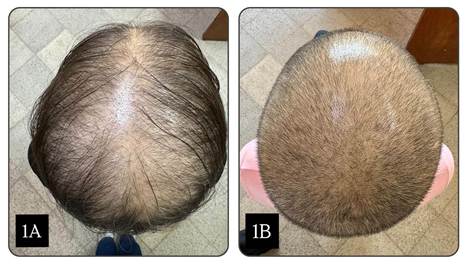
Figure 1 1A. Diffuse scalp hair thinning, predominantly involving the interparietal midline and bilateral temporal regions. 1B. Hair regrowth in the affected areas one month after discontinuation of azathioprine and initiation of hair regrowth therapy.
Laboratory findings: Hemoglobin 10.2 g/dL; hematocrit 30%, normocytic and normochromic anemia. Leukocyte count 6,700 cells/mm³, with neutrophils 66% and lymphocytes 30%. Platelet count 180,000 cells/mm³. Renal and hepatic function tests were within the normal range. Ferritin levels were normal. Antinuclear antibodies (ANA) were positive at a titer of 1:320 with a homogeneous nuclear pattern. Anti-dsDNA antibodies were negative. Complement fractions C3 and C4 were within normal limits. Anti-Ro, Anti-La, Anti-Sm, and Anti-RNP antibodies were negative. TPMT activity could not be determined because of financial constraints. Vitamin D level was 28 ng/mL, consistent with insufficiency. Treatment was initiated with oral minoxidil 1.25 mg/day, topical minoxidil 5% lotion applied twice daily, and vitamin D supplementation (50,000 IU every two weeks for three months). The decision was made not to restart azathioprine.
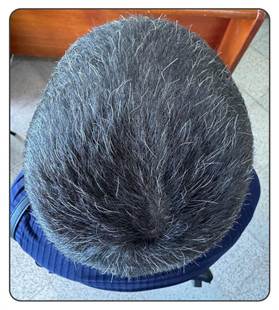
Initial hair regrowth was observed one month after discontinuation of azathioprine and initiation of minoxidil therapy. After six months of treatment with minoxidil, oral therapy was discontinued. The patient subsequently reported renewed hair loss, which was confirmed on physical examination by a reduction in hair density. Consequently, oral minoxidil was resumed and continued for one year (Figure 2).
DISCUSSION
Azathioprine alters cellular proliferation by inducing DNA damage through its active metabolites, which are generated by the action of two enzymes, the most important of which is thiopurine methyltransferase (TPMT) 2,6. Patients with reduced TPMT activity have a higher risk of adverse effects, particularly myelosuppression; therefore, TPMT activity testing is generally recommended before initiating treatment 3,4. Due to financial limitations, TPMT activity could not be determined in our patient. In most published cases, TPMT testing was likewise not performed before initiating azathioprine for the same reasons encountered in our case 1,3. In the case of anagen effluvium reported by Vázquez et al., low TPMT activity (14.9 IU/mL) was documented before initiation of immunosuppressive therapy 6.
From a dermatological perspective, azathioprine may cause oral ulcers, hypersensitivity reactions, and hair follicle disorders, including telogen effluvium and anagen effluvium. Azathioprine-induced anagen effluvium has been reported in only a limited number of cases in the literature (1,3-6). It usually develops within the first month after initiation of therapy, as described by Balasubramanian P et al. 11, although the onset varies among published series. In the reports by Bokhare et al. and Vázquez et al., anagen effluvium developed two weeks after initiation of azathioprine at a dose of 1.5 mg/kg/day in patients with vitiligo and inflammatory bowel disease, respectively 1,6. In other published cases, anagen hair loss began as early as 48 hours or four days after starting azathioprine 5,10. In our patient, hair loss developed two weeks after treatment initiation, consistent with the cases reported by Bokhare et al. and Vázquez et al.
Although azathioprine may also induce telogen effluvium, distinguishing between these two entities is important. Telogen effluvium generally occurs two to three months after the triggering event 11,12. Therefore, although cases of azathioprine-induced telogen effluvium have been reported 2, the timing of onset and the clinical characteristics of hair thinning and follicular involvement in our patient support the diagnosis of anagen effluvium rather than telogen effluvium. As a general rule, anagen effluvium is most commonly associated with chemotherapeutic agents, toxic metals, and, less frequently, medications such as bismuth, levodopa, colchicine, and cyclosporine; therefore, these sporadic cases associated with azathioprine are of particular interest 13.
Although bone marrow suppression is the most important adverse effect associated with azathioprine, an association between anagen effluvium and myelosuppression has also been described. In the series reported by Saoji et al., among 18 patients with azathioprine-induced myelosuppression, eight developed anagen effluvium. In these patients, anagen effluvium and oral ulcers preceded the subsequent onset of bone marrow suppression 3 and were considered early clinical markers of bone marrow toxicity 3,5. In other reports, anagen effluvium developed after myelotoxicity had already occurred 1. In our patient, hair loss appeared after the onset of myelotoxicity, although simultaneous development of both manifestations cannot be excluded.
Management of drug-induced anagen effluvium primarily consists of discontinuation of the offending agent, after which the hair follicle rapidly resumes its normal growth cycle, with visible hair regrowth generally occurring within three to six months 14. In all published cases of azathioprine-induced anagen effluvium 1,5,6, azathioprine was discontinued. In addition, adjunctive therapies have been described to promote hair regrowth, with the strongest evidence supporting the use of both oral and topical minoxidil 14,15. Although the optimal duration of treatment has not been established, when the causative medication cannot be discontinued, the lowest effective dose is recommended together with adjunctive minoxidil therapy 14. In the present case, azathioprine had already been discontinued because of agranulocytosis, and the patient received both oral and topical minoxidil, achieving an excellent clinical response within one month after withdrawal of the immunosuppressive agent. Other therapies that have been reported include finasteride, topical bimatoprost, spironolactone, and topical calcipotriol, with variable outcomes 14. Although no clear association has been established between anagen effluvium and low vitamin D levels, our patient received vitamin D supplementation because vitamin D insufficiency could have contributed to concomitant telogen effluvium.
Only a few reports describing anagen effluvium secondary to azathioprine therapy have been published. Additional cases are therefore needed to better characterize the risk factors associated with this uncommon adverse effect and to further clarify the relationship between anagen effluvium, telogen effluvium, and myelotoxicity, the latter representing an adverse event associated with substantial morbidity and mortality.
CONCLUSION
This case is of particular interest because of the limited number of published reports describing anagen effluvium associated with the initiation of azathioprine, an immunosuppressive agent widely used in the treatment of various diseases, as well as the rapid and excellent clinical recovery observed following drug discontinuation and the initiation of hair regrowth therapy. Additional case reports are needed to determine whether this manifestation could be considered a predictive marker of myelotoxicity or other adverse effects associated with azathioprine.
REFERENCES
1. Bhokare AB. Azathioprine-induced alopecia as an early clinical marker of its myelotoxicity. Indian J Drugs Dermatol. 2017;3(1):40-1. doi: 10.4103/ijdd.ijdd_4_17. [ Links ]
2. Mohammadi O, Kassim TA. Azathioprine. Treasure Island (FL): StatPearls Publishing; 2026 . Disponible en: https://www.ncbi.nlm.nih.gov/books/NBK542190/. [ Links ]
3. Saoji VV, Jawade SA, Agrawal P, Rimmalapudi S. Azathioprine-induced marrow suppression in dermatology patients: analysis of 18 patients. Indian J Dermatol. 2022;67(1):50-3. doi: 10.4103/ijd.ijd_249_21. [ Links ]
4. Kaur S, Mittal AK, Jain S, Kumar L. Anagen effluvium as an early sign of azathioprine toxicity. J Assoc Physicians India. 2025;73(8):104-5. doi: 10.59556/japi.73.1073. [ Links ]
5. Sharma R, Poddar S, Podder I. Azathioprine induced anagen effluvium: an uncommon adverse effect of a commonly used drug. Indian J Dermatol. 2022;67(6):815-7. doi: 10.4103/ijd.ijd_497_22. [ Links ]
6. Vázquez Rodríguez JA, Merino Gallego E, Baños Arévalo AJ, Gallardo Sánchez F, Miras Lucas L, Pérez González A. Azathioprine-induced alopecia: a rare adverse event, early marker of myelotoxicity. Rev Esp Enferm Dig. 2022;114(1):63-4. doi: 10.17235/reed.2021.8175. [ Links ]
7. Yang SK, Hong M, Baek J, Choi H, Zhao W, Jung Y, et al. A common missense variant in NUDT15 confers susceptibility to thiopurine-induced leukopenia. Nat Genet. 2014;46(9):1017-20. doi: 10.1038/ng.3060. [ Links ]
8. Kishibe M, Nozaki H, Fujii M, Iinuma S, Ohtsubo S, Igawa S, et al. Severe thiopurine-induced leukocytopenia and hair loss in Japanese patients with defective NUDT15 variant: retrospective case-control study. J Dermatol. 2018;45(10):1160-5. doi: 10.1111/1346-8138.14588. [ Links ]
9. Nomura H, Kurihara Y, Saito M, Fukushima A, Shintani Y, Shiiyama R, et al. Azathioprine-induced alopecia and leukopenia associated with NUDT15 polymorphisms. J Eur Acad Dermatol Venereol. 2018;32(10). doi: 10.1111/jdv.15028. [ Links ]
10. Sonthalia S, Daulatabad D. Azathioprine-associated anagen effluvium. Indian J Dermatol Venereol Leprol. 2016;82(3):322-4. doi: 10.4103/0378-6323.174411. [ Links ]
11. Balasubramanian P, Jagadeesan S, Anjaneyan G, Thomas J. An interesting case report of azathioprine-induced anagen effluvium. Indian J Dermatol . 2015;60(3):324. doi: 10.4103/0019-5154.156471. [ Links ]
12. Agüero-Zaputovich MF, Aguilar Naville S. Efluvio telógeno: revisión de la literatura. Gaceta Dermatológica. 2022;16(1):80-9. [ Links ]
13. Gowda SK, Rout AN, Panigrahi A, Sirka C. A case report on azathioprine induced anagen effluvium, plica polonica, and bicytopenia in a patient of vitiligo. Int J Risk Saf Med. 2025;36(3):141-3. doi: 10.1177/09246479241311431. [ Links ]
14. Saleh D, Nassereddin A, Saleh HM, Cook C. Anagen effluvium. In: StatPearls. Treasure Island (FL): StatPearls Publishing; 2026 . Disponible en: https://www.ncbi.nlm.nih.gov/books/NBK482293/. PMID: 29493918. [ Links ]
15. Gupta AK, Talukder M, Venkataraman M, Bamimore MA. Minoxidil: a comprehensive review. J Dermatol og Treat. 2022;33(4):1896-906. doi: 10.1080/09546634.2021.1945527. [ Links ]
4Editor responsible: Prof. Dr. Hassel Jimmy Jiménez, https://orcid.org/0000-0003-4078-5853; Dra. Lourdes Talavera, https://orcid.org/0000-0001-9671-3037.
Received: May 06, 2026; Accepted: June 09, 2026
 Este es un artículo publicado en acceso abierto bajo una licencia Creative Commons
