




Servicios Personalizados
Revista

Articulo
 texto en
 Inglés (pdf)
 Articulo en XML
 Referencias del artículo

 Traducción automática
 Enviar articulo por email
Indicadores
-
 Citado por SciELO
Links relacionados
-
 Similares en
SciELO
Compartir

 Permalink

Anales de la Facultad de Ciencias Médicas (Asunción)
versión impresa ISSN 1816-8949
An. Fac. Cienc. Méd. (Asunción) vol.59 no.1 Asunción 2026 Epub 30-Abr-2026
https://doi.org/10.18004/anales/2026.e59012650
CASE REPORT
Fatal fluoride intoxication - Clinicopathological correlation and autopsy findings

1Ministerio Público, Dirección de Medicina Legal y Ciencias Forenses. Asunción, Paraguay.
2Universidad Nacional de Asunción, Facultad de Ciencias Médicas, Hospital de Clínicas, Cátedra de Histología y Anatomía Patológica. Asunción, Paraguay.
3Universidad Columbia del Paraguay, Sede Posgrado Columbia, Escuela de Gobierno, Dirección de Investigación y Extensión. Asunción, Paraguay.
Acute fluoride intoxication is an uncommon but highly lethal condition, whose early diagnosis is challenging due to the nonspecific nature of initial symptoms. We present the case of a 23-year-old Paraguayan woman, previously healthy, who ingested several compounded capsules containing fluoride. Hours later, she developed gastrointestinal symptoms, loss of consciousness, and cardiorespiratory arrest, ultimately dying despite resuscitation efforts. Autopsy findings revealed cerebral edema, pulmonary edema and hemorrhage, gastric erosions with hemorrhagic content, and visceral congestion. Histological examination confirmed diffuse pulmonary edema and hemorrhage, gastric foveolar erosions, and congestion of the liver, spleen, and kidneys. Clinical laboratory tests prior to death showed severe hypocalcemia, electrolyte disturbances, anemia, and elevated transaminases. The integration of clinical, biochemical, and pathological findings allowed confirmation of acute fluoride intoxication as the cause of death, even in the absence of direct serum level determination. This case highlights the irreplaceable role of autopsy in medico-legal contexts and provides relevant evidence to promote improvements in pharmaceutical regulation and healthcare response capacity in cases of fluoride intoxication. Furthermore, it constitutes a valuable contribution to strengthening forensic toxicology in Paraguay by emphasizing current diagnostic limitations and the need to optimize resources in this field.
Keywords (DeCS): Fluorides; Poisoning; Autopsy; Pathology; Forensic Toxicology
La intoxicación aguda por fluoruros es una entidad poco frecuente pero altamente letal, cuyo diagnóstico temprano resulta complejo por la inespecificidad de los síntomas iniciales. Presentamos el caso de una mujer paraguaya de 23 años, previamente sana, que ingirió varias cápsulas magistrales con flúor. Horas después desarrolló síntomas gastrointestinales, pérdida de conciencia y paro cardiorrespiratorio, falleciendo pese a maniobras de reanimación. La autopsia reveló edema cerebral, edema y hemorragia pulmonar, erosiones gástricas con contenido hemático y congestión visceral. El estudio histológico confirmó edema y hemorragia pulmonar difusa, erosiones foveolares gástricas y congestión de hígado, bazo y riñones. Los análisis clínicos previos al deceso evidenciaron hipocalcemia severa, alteraciones hidroelectrolíticas, anemia y elevación de transaminasas. La integración de hallazgos clínicos, bioquímicos y anatomopatológicos permitió confirmar la intoxicación aguda por flúor como causa de muerte, aun sin determinación directa de niveles séricos. Este caso resalta la función insustituible de la autopsia en contextos médico-legales y aporta evidencia relevante para impulsar mejoras en la regulación farmacéutica y en la capacidad de respuesta sanitaria ante intoxicaciones por fluoruros. Asimismo, constituye un aporte valioso para el fortalecimiento de la toxicología forense en Paraguay, al visibilizar las limitaciones diagnósticas actuales y la necesidad de optimizar recursos en este campo
Palabras clave (DeCS): Fluoruros; Envenenamiento; Autopsia; Patología; Toxicología Forense.
INTRODUCTION
Acute fluoride poisoning is an infrequent but highly lethal event, whose clinical relevance lies in the rapid progression of the condition and the difficulty of its initial diagnosis 1. The fluoride ion has a high affinity for calcium, leading to severe hypocalcemia capable of triggering ventricular arrhythmias, tetany, seizures, and sudden death 2.
Additionally, it interferes with essential enzymes such as Na-K ATPase and cholinesterase, causing alterations in nerve conduction, muscle weakness, and cardiovascular depression 3. In the gastrointestinal tract, fluoride can react with gastric hydrochloric acid to form hydrofluoric acid, a highly corrosive compound that causes mucosal erosions and hemorrhages 4. At a systemic level, acute poisoning is associated with severe hydroelectrolytic imbalance-hypocalcemia, hyperkalemia, hypermagnesemia, and hypernatremia-as well as metabolic acidosis and coagulation disorders 5,6.
The literature describes that the probable toxic dose ranges from 3-5 mg/kg in children and debilitated adults, while the confirmed lethal dose ranges between 32-60 mg/kg of body weight 7,8. Case reports have documented fatal outcomes following voluntary or accidental ingestion of fluoride-containing preparations, with autopsy findings including pulmonary edema, alveolar hemorrhage, cerebral edema, and gastric erosive lesions 9-11.
In this context, the anatomopathological study plays an essential role in correlating clinical, biochemical, and histological findings and in establishing a solid causal relationship between fluoride ingestion and death 12.
In recent years, cases have been published that are consistent with autopsy findings in fluoride or hydrofluoric acid (HF) intoxications. Kodama et al. reported a recent case of acute HF poisoning by ingestion, in which the post-mortem examination showed extensive tissue damage and correlated fluoride levels with morphological findings 1. Cheong et al. described an occupational death following exposure to 50% hydrofluoric acid, with small chemical burns on the body surface but fatal systemic effects; findings included epidermal and dermal necrosis and cardiac arrhythmias even with emergency treatment 2.
On the other hand, broader reviews, such as that by Guth, Clarke, and Saha, critically analyze the risks to human health associated with fluoride exposure, highlighting that although most documented cases involve occupational or environmental exposure, acute effects can be rapid and lethal when ingestion or cutaneous/inhalational exposure involves high concentrations 3.
Individual reports, by providing data on exposure dose, expected clinical effects, route of elimination, and toxicokinetics, are complemented by toxicological guidelines such as the ATSDR fluoride profile. These frameworks serve as a comparative reference for assessing the severity of specific cases and underscore the importance of autopsy studies like the present one, which provide concrete evidence in contexts where chemical diagnosis may be limited 4.
CASE DESCRIPTION
A 23-year-old Paraguayan woman, previously healthy, ingested several compounded fluoride capsules. Hours later, she developed gastrointestinal symptoms characterized by abdominal pain, nausea, vomiting, and diarrhea, followed by loss of consciousness and cardiorespiratory arrest at a private healthcare institution, where she died despite resuscitation efforts.
External examination revealed generalized pallor and nail cyanosis. Internally, the brain showed cerebral edema (Figure 1), the lungs were edematous with pink frothy fluid (Figure 2), the stomach and esophagus exhibited mucosal erosions with hemorrhagic content (Figure 3), and hepatic, renal, and splenic congestion were observed.
Histological examination revealed pulmonary edema and hemorrhage (Figure 4), cerebral edema (Figure 5), gastric mucosa with submucosal vascular congestion, foveolar erosions with loss of superficial epithelium, focal mucosal necrosis, and hemorrhage (Figure 6). Additionally, myocyte hypertrophy and congestion of the liver, kidneys, and spleen were identified (Figure 7).
Clinical laboratory tests prior to death showed anemia (Hb 8 g/dL), hypocalcemia (7.16 mg/dL), hyperphosphatemia, hyperkalemia, hypernatremia, hyperchloremia, and elevated transaminases (Table 1).
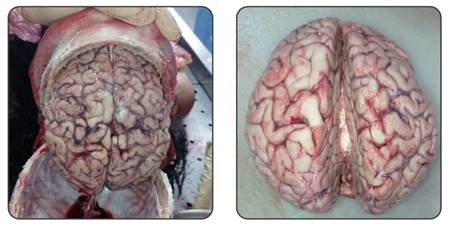
Brain with diffuse cerebral edema, evidenced by flattening of the gyri, effacement of the sulci, and incipient herniation of the cerebellar tonsils.
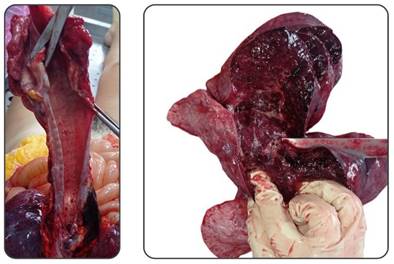
Lungs increased in volume and weight, with soft consistency, a moist cut surface, and the release of abundant serohemorrhagic foamy fluid, also present in the trachea.
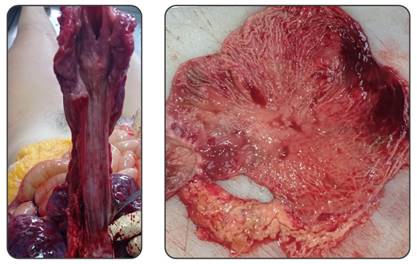
Esophagus opened along its longitudinal axis; the esophageal mucosa shows multiple longitudinal erosions with associated hemorrhage. The stomach, opened along the greater curvature, shows extensive areas of superficial mucosal erosion with hemorrhagic content and congested gastric folds.
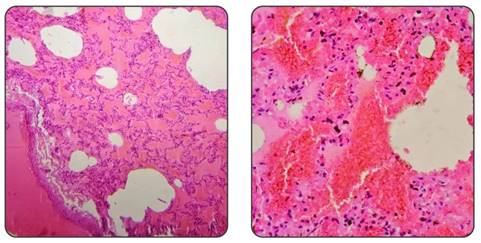
Histological section of the lung showing alveolar septa thickened by edema, diffuse intra-alveolar hemorrhage, and abundant proteinaceous material within the air spaces-findings consistent with acute pulmonary edema and hemorrhage.
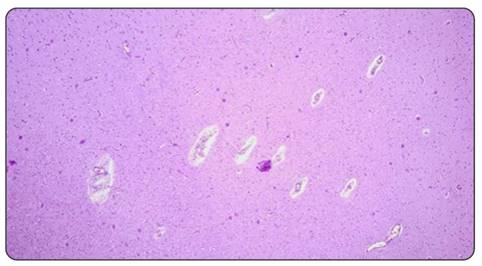
Histological section of the brain showing intraparenchymal vascular congestion and enlargement of the Virchow-Robin perivascular spaces, consistent with cerebral edema.
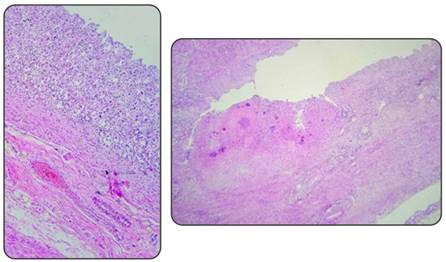
Histological section of the stomach showing submucosal vascular congestion, foveolar erosions with loss of the superficial epithelium, and severe mucosal necrosis.
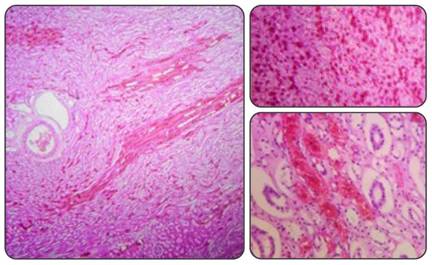
Histological section of renal parenchyma showing marked vascular congestion, more prominent at the medullary level.
Table 1: Patient’s laboratory results compared with normal reference values. Source: authors’ own elaboration
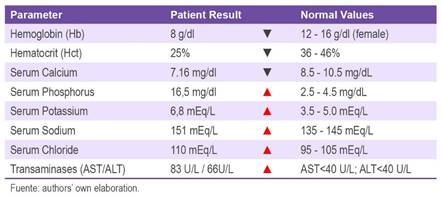
Anemia, severe hypocalcemia, and significant electrolyte disturbances are observed, along with elevated hepatic transaminases.
DISCUSSION
The clinical presentation, as well as the anatomopathological and laboratory findings observed in this case, are consistently correlated with acute fluoride intoxication. The pathophysiology of this condition is multifactorial and explains the rapid progression toward a fatal outcome.
Firstly, severe hypocalcemia constitutes the most relevant mechanism. The fluoride ion has a high affinity for calcium, forming insoluble salts that drastically reduce its plasma availability. This decrease precipitates ventricular arrhythmias, tetany, seizures, and hemodynamic collapse 1,2. In the present case, serum calcium levels were significantly reduced, a finding consistent with that described in previous reports of fatal fluoride intoxication.
In addition to this mechanism, fluoride inhibits critical enzymes such as Na-K ATPase and cholinesterase, affecting nerve conduction and cellular excitability. This explains the neuromuscular weakness, central nervous system depression, and cardiac depression reported in severe intoxications 3,4.
In the digestive system, ingested fluoride reacts with gastric hydrochloric acid, forming hydrofluoric acid (HF), a highly liposoluble substance that is rapidly absorbed and exerts a corrosive effect on the gastrointestinal mucosa, characterized by erosions and digestive hemorrhages. These lesions were evident in the autopsy, where extensive areas of foveolar erosion in the gastric mucosa were observed, a finding consistent with that described in the literature 5.
Severe hydroelectrolytic imbalance constitutes another fundamental mechanism. The combination of hypocalcemia and hyperkalemia creates an electrically unstable myocardial environment, predisposing to fatal ventricular arrhythmias. These changes, together with metabolic acidosis, have been identified in multiple reports of acute fluoride intoxication as determining factors of cardiac arrest 5,7.
Furthermore, fluoride has been shown to induce hepatocellular injury with elevated transaminases and anemia secondary to ATP depletion in red blood cells, which reduces their lifespan 8. These findings were corroborated in this case, where marked anemia and elevated liver enzymes were observed in clinical analyses prior to death.
Taken together, these pathophysiological mechanisms explain the rapid progression to multiorgan failure. The international literature consistently reports that the confirmed lethal dose of fluoride ranges between 32 and 60 mg/kg of body weight, with symptoms evolving within hours and multisystem involvement 9-11.
This highlights the need for early clinical suspicion and immediate interventions-such as aggressive calcium and magnesium replacement, along with supportive care measures. However, in most reported cases, the outcome remains unfavorable despite intensive medical management 12-15.
CONCLUSION
This case illustrates a fatal acute fluoride intoxication in a young woman, confirmed through clinical, biochemical, histological, and anatomopathological correlation. The autopsy played a central role by integrating morphological findings with clinical and laboratory data, allowing a robust determination of the cause of death and its relationship with the ingestion of the magistral preparation 12.
A relevant aspect was the inability to measure serum fluoride concentrations in Paraguay, which represents a diagnostic limitation. However, this gap was compensated by clinical and biochemical evidence-severe hypocalcemia, hyperphosphatemia, hyperkalemia, hypernatremia, hyperchloremia, anemia, and elevated transaminases-and by autopsy findings (pulmonary edema and hemorrhage, gastric erosions, cerebral edema, and visceral congestion), constituting a clinical picture highly suggestive of fluoride intoxication 2-5.
From a medico-legal perspective, the autopsy was decisive in confirming the cause of death and excluding other etiologies, providing essential information for the judicial investigation 6. In parallel, this case highlights the need to strengthen diagnostic capacity in forensic toxicology in the country, particularly through the incorporation of fluoride quantification methods 7.
It also underscores the urgency of regulating the preparation of magistral formulations, given the risk of fatal intoxications in the absence of adequate controls 8.
In summary, even without direct measurement of fluoride in biological fluids, the integration of clinical data, laboratory findings, and autopsy results allowed for a robust diagnosis. This case demonstrates the irreplaceable role of autopsy in medico-legal contexts and provides key elements to improve both pharmaceutical regulation and the healthcare response to fluoride intoxications 9-11. Furthermore, this case contributes to global reports and provides evidence from an underreported Latin American context, enriching the international literature on acute fluoride intoxication.
ETHICAL CONSIDERATIONS
The report was authorized by the Head of the Pathology Department of the National Hospital of Itauguá, ensuring patient confidentiality. A waiver of informed consent was granted, as this was an incidental finding without identifiable data and was used exclusively for academic and scientific purposes.
REFERENCES
1. Cheong H, Kim J. Fatal hydrofluoric acid poisoning: histologic findings and review of the literature. Forensic Sci Med Pathol. 2023;19(1):67-71. doi: 10.1007/s12024-022-00552-8 [ Links ]
2. Kodama S, Maebashi K, Takasu S, Sakamoto K, Iwadate K. An autopsy case of acute poisoning via ingestion of hydrofluoric acid. Forensic Sci Int Rep. 2021;100182. doi: 10.1016/j.fsir.2021.100182 [ Links ]
3. Martínez MA, Ballesteros S, Piga FJ, Sánchez de la Torre C, Cubero CA. The tissue distribution of fluoride in a fatal case of self-poisoning. J Anal Toxicol. 2007;31(8):526-33. doi: 10.1093/jat/31.8.526 [ Links ]
4. Chan KM, Svancarek WP, Creer M. Fatality due to acute hydrofluoric acid exposure. Clin Toxicol (Phila). 1987;25(4):333-9. doi: 10.3109/15563658708992636 [ Links ]
5. Bridwell RE, Bost RT, Zuckerman SL, Liu JY, Olson KR. Intentional toxic ingestion of sodium fluoride: a case report. Clin Toxicol (Phila). 2019;57(7):663-7. doi: 10.1080/15563650.2019.1639951 [ Links ]
6. Gessner BD, Barraj LM, Hoffman PD. Acute fluoride poisoning from a public water system. N Engl J Med. 1994;331(2):117-23. doi: 10.1056/NEJM199401133300203 [ Links ]
7. Guth S, Clarke TK, Saha S. Toxicity of fluoride: critical evaluation of evidence for human health hazards. Crit Rev Toxicol. 2020;50(7):583-623. doi: 10.1080/10408444.2020.1767615 [ Links ]
8. Johnston, NR; Strobel, SA. Principios de la toxicidad del fluoruro y la respuesta celular: una revisión. Archives of toxicology. 2020; 94 (4): 1051-1069. [ Links ]
9. Baltazar RF, Stowe DF, Hall AH. Acute fluoride poisoning leading to fatal hyperkalemia. Chest. 1980; 78(4):660-3. doi: 10.1378/chest.78.4.660. [ Links ]
10. Taher MK, Williams SN, Gopalakrishnan A, et al. Systematic review of epidemiological and toxicological effects of fluoride exposure. Crit Rev Toxicol . 2024;54(5):305-24. doi: 10.1080/10408444.2023.2295338 [ Links ]
11. Schneir A, Clark RF, Kene M, Betten D. Systemic fluoride poisoning and death from inhalational exposure to sulfuryl fluoride. Clin Toxicol (Phila). 2008;46(9):850-4. doi: 10.1080/15563650801938662 [ Links ]
12. Strunecká A, Patocka J, Tuna AB. Mechanisms of fluoride toxicity: from enzymes to the cell. Appl Sci. 2020;10(20):7100. doi: 10.3390/app10207100. [ Links ]
13. Talebi SF, Nasrollahi SA, Rasouli-Seyyed-Emami S, Gholami S, Jaafari MR, Aghaei H, et al. Fluoride-induced testicular and ovarian toxicity: evidence from animal and human studies. Biol Res. 2025;58:14. doi: 10.1186/s40659-025-00586-6. [ Links ]
14. Shulman JD, Dalla-Vecchia LK, Jacobsen SJ, Allen RL. Acute fluoride toxicity from ingesting home-use dental products. J Public Health Dent. 1997;57(3):165-70. doi: 10.1111/j.1752-7325.1997.tb02969.x. [ Links ]
15. Bost RT, Martinez MA, Bridwell RE, Olson KR. Unusual method of suicide: fluoride toxicity due to combined drugs and topical/systemic fluoride exposure. Am J Clin Pathol. 2015;144(Suppl 2):A018. [ Links ]
Responsible editor: Prof. Dr. Hassel Jimmy Jiménez, https://orcid.org/0000-0003-4078-5853; Dra. Lourdes Talavera, https://orcid.org/0000-0001-9671-3037.
Author contributions (credit)
Silvia Valdez (SV): Conceptualization, Methodology, Investigation, Data curation, Writing - original draft, Supervision, Project administration.
Cándida González (CG): Methodology, Investigation, Writing - review and editing, Visualization, Literature review.
Received: October 07, 2025; Accepted: March 26, 2026
 Este es un artículo publicado en acceso abierto bajo una licencia Creative Commons
