




Servicios Personalizados
Revista

Articulo
 texto en
 Inglés (pdf)
 Articulo en XML
 Referencias del artículo

 Traducción automática
 Enviar articulo por email
Indicadores
-
 Citado por SciELO
Links relacionados
-
 Similares en
SciELO
Compartir

 Permalink

Anales de la Facultad de Ciencias Médicas (Asunción)
versión impresa ISSN 1816-8949
An. Fac. Cienc. Méd. (Asunción) vol.59 no.1 Asunción 2026 Epub 30-Abr-2026
https://doi.org/10.18004/anales/2026.e59012615
ORIGINAL ARTICLE
Antimicrobial resistance of Gram-negative bacilli in ventilator-associated pneumonia in an ICU in Itauguá, 2022-2024.

1Universidad Nacional de Asunción, Facultad de Ciencias Médicas, Unidad de Medicina Crítica y Cuidados Intensivos Adultos. San Lorenzo, Paraguay.
Introduction:
Ventilator-associated pneumonia is the most frequent nosocomial infection in patients receiving respiratory support, representing a significant cause of morbidity and mortality in critical care units. Its occurrence is associated with multiple clinical and microbiological factors, including oropharyngeal colonization, biofilm formation on respiratory devices, and the selection of highly resistant pathogens within the hospital environment.
Objective:
To describe the etiological agents and their antimicrobial resistance patterns in an adult intensive care unit at Hospital Nacional de Itauguá, Paraguay, during the period 2022-2024.
Materials and Methods:
Observational, descriptive, cross-sectional, and retrospective study. A total of 244 adult patients with confirmed diagnosis by tracheal aspirate culture or bronchoalveolar lavage were included. Demographic variables, type of pneumonia, and microbiological profile were analyzed.
Results:
The mean age was 53 years, with a predominance of males (72%). Late-onset pneumonia was the most frequent form (58%). The predominant isolated agents were the Acinetobacter baumannii complex (29.5%), Pseudomonas aeruginosa (16.8%), and Klebsiella pneumoniae (9.0%). Polymicrobial etiology was observed in 27.9% of cases. Additionally, 25% of isolates showed multidrug resistance, while 12.7% exhibited special resistance mechanisms, notably metallo-beta-lactamases and carbapenemases.
Conclusion:
Gram-negative bacilli continue to be the main causative agents and show a high prevalence of resistance, highlighting the need to optimize empirical treatment, reinforce microbiological surveillance, and strengthen institutional programs for the rational use of antimicrobials.
Keywords: ventilator-associated pneumonia; multiple bacterial drug resistance; Gram-negative bacteria.
Introducción:
La neumonía asociada a la ventilación mecánica es la infección intrahospitalaria más frecuente en pacientes sometidos a asistencia respiratoria, representando una causa significativa de morbimortalidad en unidades de cuidados críticos. Su aparición se relaciona con múltiples factores clínicos y microbiológicos, entre ellos la colonización orofaríngea, la formación de biopelículas en los dispositivos respiratorios y la selección de patógenos altamente resistentes dentro del ambiente hospitalario.
Objetivo:
Describir los agentes etiológicos y sus patrones de resistencia antimicrobiana en una unidad de cuidados intensivos de adultos del Hospital Nacional de Itauguá, Paraguay, durante el periodo 2022-2024.
Materiales y métodos:
Estudio observacional, descriptivo, transversal y retrospectivo. Se incluyeron 244 pacientes adultos con diagnóstico confirmado mediante cultivo de aspirado traqueal o lavado broncoalveolar. Se analizaron variables demográficas, tipo de neumonía y perfil microbiológico.
Resultados:
La edad media fue de 53 años, con predominio del sexo masculino (72%). La forma de inicio tardío fue la más frecuente (58%). Los agentes aislados predominantes fueron el complejo Acinetobacter baumannii (29,5%), Pseudomonas aeruginosa (16,8%) y Klebsiella pneumoniae (9,0%). Se observó etiología polimicrobiana en el 27,9% de los casos. Además, el 25% de los aislados presentó multirresistencia, mientras que un 12,7% exhibió mecanismos especiales, destacándose metalo-β-lactamasas y carbapenemasas.
Conclusión:
Los bacilos gramnegativos continúan siendo los principales agentes causales y muestran una elevada prevalencia de resistencia, lo que subraya la necesidad de optimizar el tratamiento empírico, reforzar la vigilancia microbiológica y fortalecer los programas institucionales de uso racional de antimicrobianos.
Palabras clave: Neumonía asociada al ventilador; Farmacorresistencia Bacteriana Múltiple; Bacterias Gramnegativas.
INTRODUCTION
Ventilator-associated pneumonia (VAP) remains the most prevalent and severe infectious complication in intensive care units (ICUs) worldwide, specifically defined as an infection of the pulmonary parenchyma that develops after a minimum period of 48 to 72 hours of endotracheal intubation 1. The magnitude of this problem is reflected in a persistent incidence affecting approximately 20% of patients receiving invasive ventilatory support, positioning this condition as the main driver of broad-spectrum antibiotic use in the critical care setting 2,3. Despite the systematic implementation of prevention protocols and optimization of supportive care, VAP continues to exert a devastating impact on health indicators, being associated with mortality rates that can reach significant levels, particularly in contexts where multidrug-resistant pathogens predominate 4. Beyond the life-threatening risk, this infection markedly prolongs hospital stay, adding an average of 7 to 9 additional days of mechanical ventilation, resulting in an exponential increase in healthcare costs and a higher risk of secondary complications for the patient 4.
Current challenges for its control are multiple and complex, beginning with the pathophysiology of the infection itself, where the endotracheal tube acts as a bridge that bypasses the natural defenses of the upper airway, facilitating the formation of bacterial biofilms and the continuous microaspiration of contaminated oropharyngeal secretions into the bronchial tree. From a diagnostic perspective, the scenario is equally critical due to the absence of an unequivocal gold standard; the classic triad of fever, leukocytosis, and radiological infiltrates has limited specificity in critically ill patients, as these signs often overlap with other common conditions such as pulmonary edema, atelectasis, or acute respiratory distress syndrome. This diagnostic ambiguity makes it difficult to accurately distinguish between simple bacterial colonization and active invasive infection, highlighting an urgent need to improve current tools through the integration of more sensitive biomarkers or rapid molecular techniques that enable accurate and timely diagnosis 5.
MATERIALS AND METHODS
An observational, descriptive, and retrospective study was conducted in the adult ICU of Hospital Nacional de Itauguá. All patients aged ≥18 years with a confirmed diagnosis of VAP between January 1, 2022, and December 31, 2024, were consecutively included. The diagnosis of VAP was based on compatible clinical and imaging criteria (new pulmonary infiltrate after ≥48 h of mechanical ventilation) 6,7, together with significant bacterial isolation in tracheal aspirate culture 8. Patients with pneumonia at admission (community-acquired or hospital-acquired not associated with the ventilator), those under 18 years of age, or with incomplete clinical records were excluded. No a priori sample size calculation was performed; all available cases were included (N=244).
Demographic and clinical data were retrospectively extracted from medical records using a standardized form. Recorded variables included sociodemographic characteristics (age, sex), clinical variables (reason for ICU admission, comorbidities, severity scores APACHE II 9 and SOFA 10 at admission), type of VAP (early or late according to time of onset) 1,11, isolated microorganisms, and their resistance mechanisms/patterns. Data sources included clinical records and microbiology reports. No intervention was applied; selection bias was minimized by including all consecutive patients meeting the criteria. As this is a retrospective study, there is a possibility of information or confounding biases inherent to the design.
Statistical analysis was descriptive. Frequencies and percentages were calculated for qualitative variables, and mean ± standard deviation for quantitative variables. IBM SPSS v.25 (IBM Corp., Armonk, NY) was used. No inferential or comparative analyses were performed, as this was a descriptive study. This study was approved by the institutional Ethics Committee, ensuring data confidentiality.
RESULTS
During the study period, 244 patients with confirmed diagnosis of VAP were included. Seventy-two percent were male, with a mean age of 53 years (SD 16). The most frequent reason for admission was postoperative mechanical ventilation (76% of cases), followed by acute respiratory failure from other causes. The most common comorbidities were arterial hypertension (74% of patients) and diabetes (36%). The mean severity scores at admission were APACHE II = 11 (SD 4) and SOFA = 2 (SD 1). Late-onset VAP (occurring ≥96 hours after intubation) was observed in 58% of cases. Polymicrobial infection (two or more organisms in tracheal culture) was identified in 27.9% of patients.
The isolated microorganisms (n = 244 positive cultures) are presented in Figure 1. Gram-negative bacilli predominated widely; the main ones were the Acinetobacter baumannii complex (29.5% of isolates), Pseudomonas aeruginosa (16.8%), and Klebsiella pneumoniae (9.0%). Staphylococcus aureus was isolated in a single case. These findings are consistent with recent reports identifying K. pneumoniae and A. baumannii as predominant agents in VAP 12,13.
Regarding antimicrobial resistance, 12.7% of isolates presented some specific resistance mechanism. Among these, the most frequent was the production of metallo-β-lactamases (MBL), detected in 58.1% of resistant isolates. The most common resistance pattern consisted of multidrug resistance to multiple classes of antibiotics; specifically, combined resistance to ampicillin-sulbactam, amikacin, ciprofloxacin, cefepime, meropenem, imipenem, ceftazidime, and piperacillin/tazobactam was found in 25% of isolates. Additionally, carbapenemases were detected in 14% of isolates (mainly KPC-producing K. pneumoniae). No isolates were found to be pan-resistant to all tested antibiotics. Details of resistance patterns by species are summarized in Figure 2. In general, non-fermenting bacilli (P. aeruginosa, A. baumannii) showed high resistance to fluoroquinolones and β-lactams, while enterobacteria (K. pneumoniae, Escherichia coli) presented significant resistance to third- and fourth-generation cephalosporins, aminoglycosides, and carbapenems in the cases mentioned.
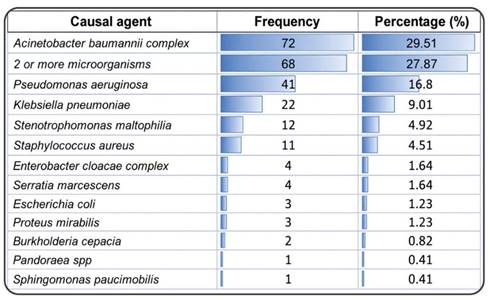
Figure 1: Causative microorganisms of VAP in patients admitted to the AICU of Hospital Nacional de Itauguá from 2022-2024 (n: 244)
In 27.9% of cases, the isolation of two or more microorganisms was observed, indicating a polymicrobial etiology of the respiratory infectious condition. The most frequent associations of causative microorganisms are detailed in Figure 2, highlighting the predominance of the Acinetobacter baumannii complex associated with Pseudomonas aeruginosa (3.28%) and with Klebsiella pneumoniae (2.87%). A considerable proportion of Pseudomonas aeruginosa associated with Serratia marcescens (2.46%) was also observed.
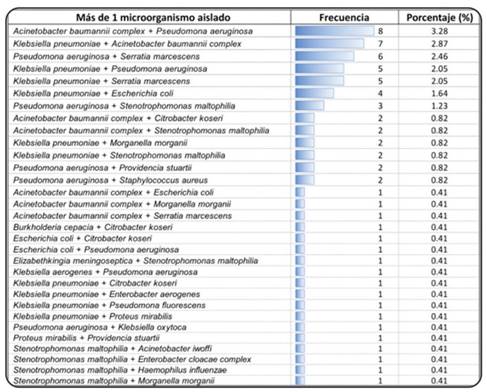
Figure 2: Association of causative microorganisms of VAP in patients admitted to the adult ICU of Hospital Nacional de Itauguá from 2022-2024 (n: 244)
In 31 (12.7%) of the samples collected, resistance mechanisms were identified. As illustrated in Table1, more than half of these corresponded to metallo-beta-lactamases (MBL) at 58.1%. Other identified mechanisms were AmpC-type beta-lactamases (19.4%), extended-spectrum beta-lactamases (ESBL) (12.9%), and, to a lesser extent, Klebsiella pneumoniae carbapenemase (KPC) at 3.2%. Combinations of mechanisms were also observed, such as metallo-beta-lactamases + Klebsiella pneumoniae carbapenemase and metallo-beta-lactamases + AmpC-type beta-lactamases, both at 3.2% each. Additionally, several microorganisms showed resistance to two or more antibiotics.
Table 1: Resistance mechanisms in microorganisms isolated from patients with VAP admitted to the adult ICU of Hospital Nacional de Itauguá from 2022-2024 (n: 31)
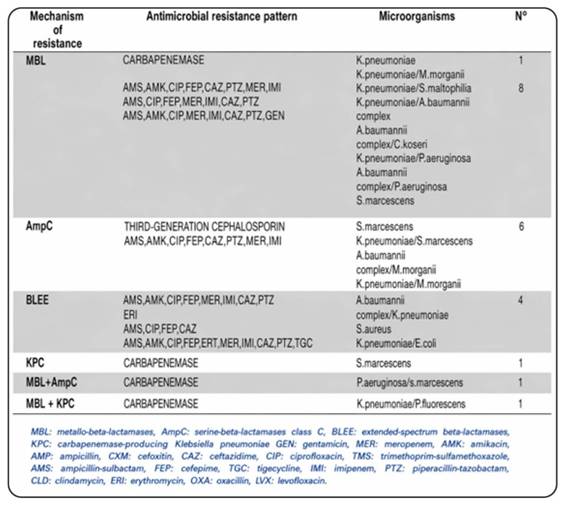
The predominant mechanism was metallo-beta-lactamases (MBL), present in 58.1% of cases. This was followed by AmpC-type beta-lactamases (19.4%) and extended-spectrum beta-lactamases (ESBL) (12.9%). To a lesser extent, Klebsiella pneumoniae carbapenemase (KPC) was detected (3.2%), as well as combinations of mechanisms such as MBL+KPC and MBL+AmpC (3.2% each).
DISCUSSION
Attributable mortality of VAP has been the subject of intense academic debate due to the complexity of isolating the direct impact of the infection from the intrinsic confounding factors of critically ill patients. However, the most recent scientific evidence has begun to clarify this scenario, suggesting that VAP contributes substantially and directly to fatal outcomes. A contemporary multicenter study of great relevance demonstrated that the presence of VAP is associated with a significantly higher risk of death at 60 days, with an adjusted hazard ratio of approximately 1.8 compared to patients with similar characteristics who did not develop the infection 14. This finding is fundamental, as it reinforces the notion that VAP is not merely a coincidental event in patients with poorer baseline prognosis, but rather adds its own specific mortality burden. Consequently, the implementation of strategies aimed at reducing its incidence and ensuring optimal treatment directly represents a critical opportunity to improve overall survival rates in ICUs.
With regard to therapeutic management, the current trend is clearly oriented toward optimization and prudent use of antimicrobial resources. The REGARD-VAP clinical trial has marked a milestone in this transition by demonstrating that an individualized short-course antibiotic treatment strategy, ranging from 3 to 7 days and guided by clinical response and culture results, is not inferior to longer conventional regimens in terms of mortality or recurrence 15. This paradigm shift allows for a significant reduction in unnecessary antibiotic exposure without compromising patient safety, which is essential to mitigate the selection of multidrug-resistant pathogens and minimize systemic adverse effects. Thus, modern therapy for VAP is evolving toward personalized management based on dynamic patient assessment and judicious use of broad-spectrum agents, prioritizing clinical efficacy over predetermined treatment duration.
Complementarily, success in the management of VAP relies on robust prevention based on the rigorous implementation of critical care “bundles” These preventive strategies integrate key interventions such as maintaining the head of the bed elevated, oral hygiene with specific antiseptics, continuous subglottic suctioning, and daily interruption of sedation to facilitate weaning and early mobilization 16-20. The consistent and disciplined application of these multifactorial protocols has proven to be extraordinarily effective, achieving marked reductions in infection rates. In fact, the literature currently reports units that have achieved rates close to zero, validating the premise that minimal incidence is an attainable clinical goal when sustained preventive efforts are maintained 18.
In summary, the integration of evidence-based prevention, accurate diagnosis, and optimized antibiotic treatment constitutes the fundamental pillar for addressing the persistent challenge of VAP and improving the prognosis of critically ill patients.
CONCLUSION
In the present study, the mean severity scores at admission were APACHE II = 11 (SD 4) and SOFA = 2 (SD 1). VAP was predominantly of late onset. The most common resistance pattern consisted of simultaneous multidrug resistance to multiple antibiotic classes; specifically, combined resistance to ampicillin-sulbactam, amikacin, ciprofloxacin, cefepime, meropenem, imipenem, ceftazidime, and piperacillin/tazobactam was found in one third of the isolates. Additionally, carbapenemases were detected in 14% of isolates (mainly KPC-producing K. pneumoniae). The most recent clinical guidelines on VAP provide an updated framework for its management and prevention, integrating the evidence discussed.
These guidelines emphasize the importance of individualizing initial empirical treatment according to local bacterial resistance patterns and patient-specific risk factors. Both main guidelines agree in recommending short courses of antibiotics (≈7 days) for most patients with VAP who show good clinical evolution, in order to limit unnecessary antimicrobial exposure. Likewise, a pragmatic diagnostic approach is promoted: one guideline discourages the routine use of invasive techniques with quantitative cultures, favoring non-invasive methods to identify the causative pathogen, while the other considers both approaches valid. On the other hand, although neither guideline recommends the routine use of biomolecular markers such as procalcitonin to establish the diagnosis of VAP, there is some discrepancy regarding its serial use to shorten the duration of antibiotic therapy.
In conclusion, the integration of these updated recommendations and evidence-based therapeutic and preventive strategies is essential to improve clinical outcomes in VAP. A multidisciplinary approach, aligned with guidelines and adapted to the local context, will allow optimization of care for these critically ill patients and more effective management of the challenges posed by this condition.
REFERENCES
1. Kalil AC, Metersky ML, Klompas M, Muscedere J, Sweeney DA, Palmer LB, et al. Management of adults with hospital-acquired and ventilator-associated pneumonia: 2016 clinical practice guidelines. Clin Infect Dis. 2016;63(5):e61-e111. doi: 10.1093/cid/ciw353. [ Links ]
2. Chastre J, Fagon JY. Ventilator-associated pneumonia. Am J Respir Crit Care Med. 2002;165(7):867-903. doi: 10.1164/ajrccm.165.7.2105078. [ Links ]
3. Howroyd F, Chacko C, MacDuff A, Gautam N, Pouchet B, Tunnicliffe B, et al. Ventilator-associated pneumonia: pathobiological heterogeneity and diagnostic challenges. Nat Commun. 2024;15(1):6447. doi: 10.1038/s41467-024-50805-z. [ Links ]
4. Rosenthal VD, Memish ZA, Bearman G, Graves N, Balkhy HH, Hu B, et al. Preventing ventilator-associated pneumonia: a position paper of the International Society for Infectious Diseases, 2024 update. Int J Infect Dis. 2025;151:107305. doi:10.1016/j.ijid.2024.107305. [ Links ]
5. Koulenti D, Lisboa T, Brun-Buisson C, Krueger WA, Macor A, Sole-Violan J, et al. Spectrum of practice in the diagnosis of nosocomial pneumonia in European ICUs. Crit Care Med. 2009;37(8):2360-8. doi: 10.1097/CCM.0b013e3181a037ac. [ Links ]
6. American Thoracic Society; Infectious Diseases Society of America. Guidelines for the management of adults with hospital-acquired, ventilator-associated, and healthcare-associated pneumonia. Am J Respir Crit Care Med. 2005;171(4):388-416. doi: 10.1164/rccm.200405-644ST. [ Links ]
7. Papazian L, Klompas M, Luyt CE. Ventilator-associated pneumonia in adults: a narrative review. Intensive Care Med. 2020;46(5):888-906. doi: 10.1007/s00134-020-05980-0. [ Links ]
8. Tablan OC, Anderson LJ, Besser RE, Bridges CB, Hajjeh RA, CDC, et al. Guidelines for preventing health-care-associated pneumonia, 2003. MMWR Recomm Rep. 2004;53(RR-3):1-36. [ Links ]
9. Knaus WA, Draper EA, Wagner DP, Zimmerman JE. APACHE II: a severity of disease classification system. Crit Care Med . 1985;13(10):818-29. [ Links ]
10. Vincent JL, Moreno R, Takala J, Willatts S, De Mendonça A, Bruining H, et al. The SOFA score to describe organ dysfunction/failure. Intensive Care Med . 1996;22(7):707-10. doi: 10.1007/BF01709751. [ Links ]
11. Caballero Valiente GA. Resistencia antimicrobiana de gérmenes aislados en pacientes con neumonía asociada a ventilación mecánica ingresados a UCIA del Hospital Nacional de Itauguá durante el periodo 2022-2024 (tesis). San Lorenzo: Universidad Nacional de Asunción, Facultad de Ciencias Médicas; 2024. [ Links ]
12. Ochoa P, Rico Mendoza A, Molano D, Masclans JR, Parada-Gereda EM. Risk factors and outcomes of ventilator-associated pneumonia: an updated systematic review and meta-analysis. BMC Pulm Med. 2025;25(1):453. doi: 10.1186/s12890-025-03932-2. [ Links ]
13. Garay Z, Vera A, Pitta N, Bianco H, Ayala C, Almada P, et al. Impacto de las neumonías asociadas a la ventilación mecánica en la mortalidad en una Unidad de Cuidados Intensivos Adultos. Rev Inst Med Trop. 2018;13(1):23-30. doi: 10.18004/imt/20181323-30. [ Links ]
14. Laurichesse G, Schwebel C, Buetti N, Garrouste-Orgeas M, Souweine B, Goldgran-Toledano D, et al. Mortality, incidence, and microbiological documentation of ventilator-associated pneumonia in critically ill patients with COVID-19 or influenza. Ann Intensive Care. 2023;13(1):108. doi: 10.1186/s13613-023-01207-9. [ Links ]
15. Mo Y, Booraphun S, Li AY, Zhou Q, Lee KH, Paterson DL, et al. Individualised short-course antibiotic treatment versus usual long-course treatment for ventilator-associated pneumonia (REGARD-VAP). Lancet Respir Med. 2024;12(5):399-408. doi: 10.1016/S2213-2600(23)00418-6. [ Links ]
16. Vázquez-Guillamet C, Kollef MH. Is zero ventilator-associated pneumonia achievable? Updated practical approaches to ventilator-associated pneumonia prevention. Infect Dis Clin North Am. 2024;38(1):65-86. doi: 10.1016/j.idc.2023.11.001. [ Links ]
17. Rello J, Lode H, Cornaglia G, Masterton R. A European care bundle for prevention of ventilator-associated pneumonia. Intensive Care Med . 2010;36(5):773-80. doi: 10.1007/s00134-010-1841-5. [ Links ]
18. Klompas M, Branson R, Cawcutt K, Crist M, Eichenwald EC, Greene LR, et al. Strategies to prevent ventilator-associated pneumonia and other hospital-acquired pneumonia. Infect Control Hosp Epidemiol. 2022;43(6):687-713. doi: 10.1017/ice.2022.88. [ Links ]
19. Metersky ML, Kalil AC. Management of ventilator-associated pneumonia: guidelines. Infect Dis Clin North Am. 2024;38(1):87-101. doi: 10.1016/j.idc.2023.12.004. [ Links ]
20. Torres A, Niederman MS, Chastre J, Ewig S, Fernandez-Vandellos P, Hanberger H, et al. International guidelines for the management of hospital-acquired pneumonia and ventilator-associated pneumonia. Eur Respir J. 2017;50(3):1700582. doi: 10.1183/13993003.00582-2017. [ Links ]
Responsible editor: Prof. Dr. Hassel Jimmy Jiménez, https://orcid.org/0000-0003-4078-5853; Dra. Lourdes Talavera, https://orcid.org/0000-0001-9671-3037.
Author’s contributions:
Dr. Gloria Angélica Caballero Valiente: Study conception and design, data collection, drafting of the original manuscript.
Dr. Amalio Ariel Acosta Salinas: Actively contributed to the validation of microbiological data, statistical analysis, and the preparation of tables and figures. Serves as the corresponding author for all communications related to this manuscript.
Dr. Patricia Añazco Mareco: Critical review of the scientific content, ensuring its methodological quality and approval of the final version.
Received: July 08, 2025; Accepted: March 26, 2026
 Este es un artículo publicado en acceso abierto bajo una licencia Creative Commons
