




Servicios Personalizados
Revista

Articulo
 texto en
 Inglés (pdf)
 Articulo en XML
 Referencias del artículo

 Traducción automática
 Enviar articulo por email
Indicadores
-
 Citado por SciELO
Links relacionados
-
 Similares en
SciELO
Compartir

 Permalink

Anales de la Facultad de Ciencias Médicas (Asunción)
versión impresa ISSN 1816-8949
An. Fac. Cienc. Méd. (Asunción) vol.59 no.1 Asunción 2026 Epub 30-Abr-2026
https://doi.org/10.18004/anales/2026.e59012613
ARTÍCULO ORIGINAL
Blood pressure behavior in hemodialysis: a longitudinal observational study during interdialytic periods
1
 http://orcid.org/0000-0002-4677-877X
2
http://orcid.org/0009-0008-2190-7329
1
http://orcid.org/0009-0003-8133-9304
1Universidad Católica de Nuestra Señora de la Asunción, Facultad de Ciencias de la Salud; Centro de Hemodiálisis, Servicio de Nefrología. Asunción, Paraguay.
2Universidad Nacional de Asunción, Facultad de Ciencias Médicas, Cátedra de Fisiopatología, San Lorenzo, Paraguay.
3Universidad Católica de Nuestra Señora de la Asunción, Facultad de Ciencias de la Salud, Asunción, Paraguay.
Introduction:
Arterial hypertension (HTN) is highly prevalent in patients with chronic kidney disease on hemodialysis and is associated with cardiovascular complications. Blood pressure variability according to the timing of measurement generates diagnostic and therapeutic uncertainty.
Objective:
To analyze the behavior of ambulatory blood pressure during the long (72 hours) and short (48 hours) interdialytic periods, relating it to pre- and post-dialysis values and correlating body weight with all measurements.
Materials and Methods:
Observational, analytical, longitudinal study with repeated measures in 84 patients on chronic hemodialysis. Home measurements (4 determinations/day) were performed for 1 month in both interdialytic periods. Student’s t-test for paired samples and Pearson’s correlation coefficient were used. A p-value <0.05 was considered significant.
Results:
Systolic blood pressure was higher in the long interdialytic period vs the short period (151.12±24.66 vs 139.92±24.69 mmHg; p<0.003). Diastolic pressure was also higher (85.07±13.14 vs 79.40±14.40 mmHg; p<0.008). A positive correlation was found between weight gain and systolic pressure (r=0.43).
Conclusion:
Ambulatory blood pressure is significantly higher in the long interdialytic period. Interdialytic weight gain correlates mainly with systolic blood pressure.
Keywords: pressure; arterial hypertension; hemodialysis; chronic kidney disease; short interdialytic period; long interdialytic period
Introducción:
La hipertensión arterial (HTA) es altamente prevalente en pacientes con enfermedad renal crónica en hemodiálisis y se asocia a complicaciones cardiovasculares. La variabilidad de la presión arterial según el momento de medición genera incertidumbre diagnóstica y terapéutica.
Objetivo:
Analizar el comportamiento de la presión arterial ambulatoria en los períodos interdialíticos largo (72 horas) y corto (48 horas), relacionándola con los valores pre y post-diálisis y correlacionando el peso corporal con todas las mediciones.
Material y Métodos:
Estudio observacional, analítico, longitudinal de medidas repetidas en 84 pacientes en hemodiálisis crónica. Se realizaron mediciones domiciliarias (4 determinaciones/día) durante 1 mes en ambos períodos interdialíticos. Se utilizó prueba t de Student para muestras relacionadas y coeficiente de Pearson. Se consideró significativo p<0,05.
Resultados:
La presión arterial sistólica fue mayor en el período interdialítico largo vs corto (151,12±24,66 vs 139,92±24,69 mmHg; p<0,003). La presión diastólica también fue mayor (85,07±13,14 vs 79,40±14,40 mmHg; p<0,008). Se encontró correlación positiva entre ganancia de peso y presión sistólica (r=0,43).
Conclusión:
La presión arterial ambulatoria es significativamente mayor en el período interdialítico largo. La ganancia de peso interdialítica se correlaciona principalmente con la presión arterial sistólica.
Palabras Claves: Presión arterial - hipertensión arterial - hemodiálisis - enfermedad renal crónica - periodo Inter dialítico corto - período Inter dialítico largo
INTRODUCTION
Arterial hypertension (HTN) is a frequent association in patients with chronic kidney disease (CKD) undergoing hemodialysis (HD) and is a risk factor for the development of cardiovascular complications, constituting an important cause of morbidity and mortality in these patients 1,2.
Sustained elevation of blood pressure (BP) can lead to: cerebrovascular accident, left ventricular hypertrophy, myocardial ischemia, and atherosclerotic vascular lesions, which threaten the life of the individual 3,4. Optimal BP control is essential to prevent the morbidity and mortality associated with it.
The prevalence of HTN in individuals on HD is highly variable and probably depends on the modality used for its diagnosis 1. In the PRESDIAL Study, conducted in Hemodialysis Centers in Barcelona, it was found that 67.4% of patients on hemodialysis had HTN 5.
HTN is defined as blood pressure values higher than 140 mmHg for systolic blood pressure (SBP) and 90 mmHg for diastolic blood pressure (DBP) 6. Rahman et al. define uncontrolled HTN as SBP equal to or greater than 160 mmHg and/or DBP equal to or greater than 90 mmHg 7, measured pre-dialysis and over 1 month. In fact, the diagnosis of HTN in patients on HD is a challenge and may lead to overtreatment or undertreatment due to the multiple factors involved 8.
Adequate control of volume expansion is probably the key to better BP control, since studies analyzing the prevalence of HTN in subjects undergoing prolonged HD show better BP control. A study conducted by Bernard Charra, published in 2005, demonstrates that better control of extracellular volume leads to better blood pressure control. The mean pre-dialysis BP of HD patients in that study was 128/79 mmHg 9. Therefore, there are important differences in BP according to the extracellular volume they present. For example, those patients who have significant interdialytic weight gain undergo substantial fluid removal in a few hours during the HD session and present a decrease in BP. These patients regain the amount of fluid that was removed during the interdialytic period and show an increase in BP. Therefore, it is unclear which BP measurement should be used to diagnose HTN. In pre-dialysis, the patient may be hypertensive, and in post-dialysis, may be hypotensive, and substantial errors in treatment may occur 9.
So, what BP do they maintain most of the time? In pre-dialysis, the patient has the greatest fluid gain, but not all the time does the patient have that condition. At the end of the HD session, do they have the same BP values as in pre-dialysis? Does BP gradually increase as the subject gains weight during the interdialytic period? What happens to BP during long interdialytic periods (72 hours) and short interdialytic periods (48 hours)? After long interdialytic periods, should patients have higher BP than during short periods? And if these BP variations are significant, how can we manage their treatment appropriately to reduce morbidity and mortality?
The objective of the study is to analyze, in patients on hemodialysis, the behavior of ambulatory blood pressure during long periods (72 hours between dialysis) and short periods (48 hours between dialysis), relating it to blood pressure values during the hemodialysis session (pre- and post-dialysis), and to correlate body weight with all blood pressure values of the hemodialyzed patient.
MATERIALS AND METHODS
Design: Observational, analytical, and correlational study with repeated measures. It was conducted at the NEFRO SERV Hemodialysis Center from March to November 2024. Ninety-six prevalent patients (more than 3 months on hemodialysis treatment) were considered, but only 84 patients consented to participate in this observational study without exposure to any risk and therefore completed the proposed study protocol. Patients who could not or did not wish to follow the protocol were excluded (dependent patients, patients with emotional instability, and those non-adherent for unidentified reasons).
60.5% were male and 39.5% female. The mean age of the patients was 58±18 years. Among the conditions leading to CKD, the most prevalent was type 2 diabetes mellitus, present in 47%, while 53% were non-diabetic. All patients received 3 HD sessions per week, each lasting 3.5 to 4 hours. The filters used were polysulfone, bicarbonate-based buffer, and NIPRO Diamax dialysis machines.
80% received antihypertensive treatment based on: calcium channel blockers, beta-blockers (43%), angiotensin-converting enzyme inhibitors (20%), angiotensin II receptor antagonists (5%), and central blockers (38%). 90% received two or more antihypertensive agents. The most commonly used combination was calcium channel blockers with beta-blockers. Only 42% strictly followed the recommendations.
58% of patients received HD through an arteriovenous fistula and 42% through a central venous catheter. Blood pressure was monitored before the start of the HD session, every hour, and at the end of the HD session using an OMRON sphygmomanometer installed on the HD machine.
At home, patients were monitored with digital OMRON sphygmomanometers on Sundays (for those receiving HD on Monday, Wednesday, and Friday) and on Mondays for those receiving HD on Tuesday, Thursday, and Saturday. Four measurements were taken in one day for one month. This corresponded to the long interdialytic period (LIDP). An average of these periods was obtained. Home measurement protocol: patient seated, 5 minutes of rest, no prior caffeine intake, appropriate cuff size, 2 measurements per determination, and recording of the average.
Similarly, patients receiving HD sessions on Monday, Wednesday, and Friday were monitored four times a day on Thursdays for one month (short interdialytic period, SIDP). Those receiving HD on Tuesday, Thursday, and Saturday were monitored on Mondays (LIDP) and Fridays (SIDP) four times a day for one month.
Likewise, pre-dialysis BP was obtained on Mondays (for patients on HD Monday, Wednesday, and Friday) and Tuesdays (for those on Tuesday, Thursday, and Saturday HD) for one month (pre-HD BP of the long interdialytic period, Pre-HD BP LIDP). Post-dialysis BP (Post-HD BP LIDP) was also measured.
Additionally, pre- and post-dialysis BP were recorded for one month on Wednesdays for patients receiving HD on Monday, Wednesday, and Friday, and on Thursdays for those receiving HD on Tuesday, Thursday, and Saturday (Pre-HD BP SIDP and Post-HD BP SIDP). Weight was measured at the HD center following the same protocol as BP measurements. Written informed consent was obtained, confidentiality was guaranteed, and results were shared with the patients.
STATISTICAL ANALYSIS
Data were grouped by convenience and analyzed by comparison using Student’s t-test and Pearson’s correlation coefficient. Results were expressed as mean and standard deviation (SD), with statistical significance set at p<0.05 and a 95% confidence level.
RESULTS
In the results of the measurements of the 84 patients on dialysis, we found that considering blood pressure up to 140/90 mmHg as normal, in the Pre-HD LIDP, 67% of hemodialyzed patients had uncontrolled BP; in contrast, in the Pre-HD SIDP period, 53% of patients had uncontrolled BP.
Systolic blood pressure (SBP) in the LIDP was significantly higher than SBP in the SIDP: 151.12±24.66 vs 139.92±24.69 mmHg (p<0.003). The same occurred with diastolic blood pressure (DBP) in the LIDP vs SIDP: 85.07±13.14 vs 79.40±14.40 mmHg (p<0.008), which was also significantly higher. See Table 1.
Table 1 Comparison of systolic and diastolic blood pressure across the different measurement periods.
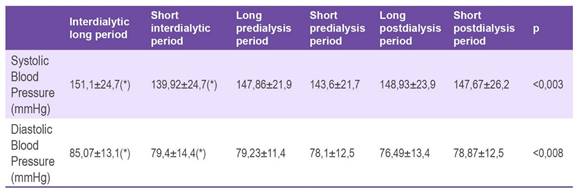
Subsequently, Pre-HD BP LIDP and Post-HD BP LIDP, as well as Pre-HD BP SIDP and Post-HD BP SIDP, were compared, and no significant differences were found between them.
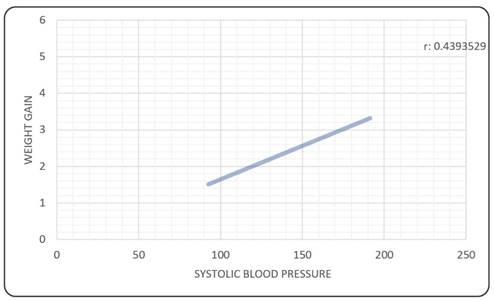
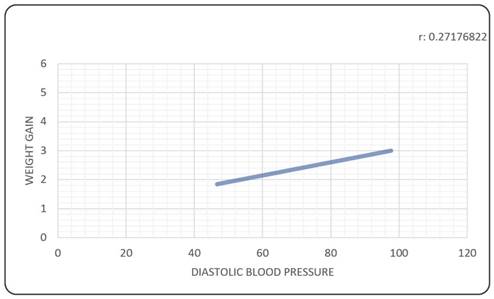
Additionally, to determine the influence of weight gain on SBP and DBP, a correlation analysis between variables was performed. Interdialytic weight gain and SBP: r=0.43, and between interdialytic weight gain and DBP: r=0.27 Figures 1and2.
.
.
DISCUSSION
HTN is a serious problem in patients undergoing periodic and chronic HD. HTN in hemodialysis patients presents particularities that make its management complex 10,11. Sodium retention and the consequent volume expansion would be one of the mechanisms involved in its development and perhaps the most powerful mechanism responsible for the difficult clinical management in these patients. Other mechanisms such as activation of the renin-angiotensin system, activation of the sympathetic nervous system, reduced nitric oxide synthesis due to endothelial dysfunction, treatment with erythropoietin, hyperparathyroidism with increased intracellular calcium, and accelerated atherosclerosis with arterial stiffness are all very important pathophysiological mechanisms; however, undoubtedly, the main mechanism of development would be sodium retention and volume expansion, which causes an increase in venous return leading to an increase in cardiac output and the development of HTN. Therefore, the main cause of poor HTN control would be the difficulty in achieving appropriate weight in patients, which would depend on interdialytic fluid intake and dietary salt consumption 11.
We found an increase in BP levels in Pre-HD LIDP (72 hours) compared with Pre-HD SIDP (48 hours). This increase in BP was observed for both SBP and DBP. Therefore, in those patients who receive HD sessions on Monday, Wednesday, and Friday (three times per week), Mondays would present higher pre-dialysis BP than Wednesdays. This situation raises the question: what is the patient’s BP? Which data should be considered for appropriate patient management? This phenomenon leads us to consider that fluid accumulation is a primary factor in the pathophysiology of pre-dialysis HTN.
Regarding the criteria for HTN in hemodialysis patients, there is no clear definition of arterial hypertension due to the wide fluctuations observed in these patients. What occurs in the non-hemodialysis population is not fully extrapolable to the hemodialysis population, as hemodialysis patients have greater tolerance to higher BP levels. The KDOQI/KDIGO clinical guidelines mention BP values greater than 140/90 mmHg in pre-dialysis and greater than 130/90 mmHg in post-dialysis; however, their level of evidence is 2c and, although relevant, these values are not differentiated between long and short interdialytic periods. Long interdialytic periods (72 hours) involve greater fluid gain, which clearly influences BP. Strictly speaking, pre-dialysis may occur after a long (72 hours) or short (48 hours) interdialytic period, but their values are different.
According to Gardano et al., 70% to 80% of patients undergoing hemodialysis present HTN, and it is diagnosed when BP is higher than 140/90 mmHg in pre-dialysis and/or higher than 130/80 mmHg in post-dialysis 12. In the same line, the 2021 KDIGO guidelines propose that pre-dialysis BP should be equal to or lower than 140/90 mmHg and post-dialysis equal to or lower than 130/80 mmHg 13. Sarafidis et al., in a European study, also mention the same values but emphasize home blood pressure, arguing patient stress during the hemodialysis procedure 14. None of these studies consider interdialytic periods, and we found an important difference between pre-dialysis BP values depending on whether the HD session occurs after 48 hours or after 72 hours. This finding gives an important particularity to our study.
HTN presents particularities in HD patients, which include: a) isolated systolic hypertension in a higher proportion than other HTN modalities, b) increased pulse pressure, c) a high percentage of nocturnal hypertension 11,15. In addition, unlike what occurs in the general population, in which HTN is associated with higher mortality, this does not occur in the same way in hemodialysis patients. This paradoxical phenomenon indicates that in hemodialysis patients, low BP has more deleterious long-term effects, and higher BP is associated with better outcomes. This phenomenon is called inverse BP epidemiology and leads to uncertainties regarding the danger of HTN and how to treat it in this particular population 8.
Pre-dialysis hypotension, which would reflect hypovolemia or significant vasodilation that could be due to overdose of antihypertensive medications or patients with heart disease such as congestive heart failure with reduced left ventricular ejection fraction, conditions hemodialysis therapy by increasing episodes of intradialytic hypotension that may generate hypoperfusion in different organs 16. This situation emphasizes that appropriate patient management would depend on the physicians who regularly attend patients during their hemodialysis sessions. This would seem logical; however, unfortunately, this does not always occur in Paraguay, where in many cases medication management is handled by physicians who are not responsible for the hemodialysis sessions and are therefore not familiar with the patient, generating problems in adequate clinical management due to the great variability in BP levels in these patients. With outpatient visits on a given day of the week and once every two months, optimal treatment is impossible and compromises the quality of hemodialysis due to recurrent episodes of hypotension that may occur when patients are overmedicated.
Post-dialysis HTN, which would indicate increased activity of the renin-angiotensin system in response to volume removal, increased activity of the autonomic nervous system, and the possibility of removal of antihypertensive medications during dialysis, would be situations that increase morbidity and mortality in these patients 17. In our patients, despite the relationship between fluid gain and HTN, pre- and post-dialysis BP did not show significant differences, which would indicate that with volume removal, compensatory mechanisms (renin-angiotensin system, sympathetic nervous system) are activated. Therefore, immediately after the HD session, no differences in BP values were observed despite volume removal. Thus, in the immediate post-dialysis period, volume removal does not play a major role in BP levels (after volume removal, BP should decrease in all patients), with other BP-regulating mechanisms being more important than volume. Is this a transient reaction?
In our study, we observed that both SBP and DBP are higher in the LIDP compared with the SIDP, based on home blood pressure monitoring (HBPM). Obviously, volume gain would determine this difference. We emphasize that BP control by HBPM was performed the day before HD; therefore, in the LIDP, control was at 48 hours after the last HD session, and in the SIDP, at 24 hours. In addition, we did not find statistically significant differences between BP measured at home by HBPM in the LIDP and Pre-HD BP in the LIDP. These data indicate that volume gain plays a central role in BP. The difference in SBP between the LIDP and SIDP is approximately 10 mmHg, and in DBP 6 mmHg. An increase of 10 mmHg and 5 mmHg increases mortality 11.
In addition, when we performed a correlation between interdialytic weight gain and SBP (r=0.43), this correlation was positive and would explain the difference between the measurements obtained in the LIDP and SIDP. For DBP, the correlation was low (r=0.27). Between Pre-HD BP LIDP and Post-HD BP SIDP, there was no statistically significant difference despite fluid removal; therefore, other mechanisms come into play to maintain BP in response to the removal of weight gained during the interdialytic period. In patients undergoing prolonged HD, is fluid removal alone the key factor for achieving normotension? In prolonged HD sessions, is better BP control solely related to interdialytic fluid gain? By prolonging HD hours, could vasoconstrictive substances be removed, contributing to better BP control?
In our patients, despite reaching clinically appropriate weight, we did not observe a statistically significant difference in BP before and after the HD session. Therefore, we consider that in the immediate post-dialysis period, despite fluid removal, BP is maintained due to the aforementioned compensatory mechanisms, and over time (the duration of which is not clearly defined), BP becomes more dependent on volemia. This explains why we found a significant difference in BP between the LIDP and SIDP. Additionally, we found a positive correlation (mainly systolic) between BP and weight gain (increase in fluids) between one HD session and the next.
What is the actual BP of the hemodialyzed patient? When should BP be measured to be most reliable? What consequences do these volume variations have on the vascular tree, given the frequent vascular alterations and neurohormonal changes they entail? What is the contribution of the different factors to BP levels? Due to the complex pathophysiology of HTN in these patients, appropriate treatment remains a major challenge.
STUDY LIMITATIONS
First, this is a single-center study; second, BP levels were not measured using Ambulatory Blood Pressure Monitoring (ABPM), which could clarify many uncertainties regarding blood pressure throughout the day and particularly its nighttime behavior (nocturnal blood pressure); and third, bioimpedance was not used to determine patients’ appropriate weight.
CONCLUSION
The diagnosis of HTN in hemodialysis patients is difficult due to its wide variability. Therefore, initiating or adjusting antihypertensive treatment without adequate communication with the team supervising hemodialysis sessions may lead to therapeutic errors and complications. We do not agree with Panagiotis et al. 18 that midweek pre-dialysis BP is reliable. We also do not agree with simply establishing pre- and post-dialysis parameters, given that there are significant differences when BP is measured after 48 hours and after 72 hours from the previous HD session.
Many factors are involved in HTN in these patients, and fluid gain has an influence, especially in pre-dialysis. The gradual accumulation of fluids during the interdialytic period may activate certain mechanisms that increase BP, which may respond even more intensely to rapid fluid removal in order to maintain BP and ensure tissue perfusion. Patients undergoing prolonged HD (8-10 hours) have better BP control, but this may not be explained solely by fluid removal, which may even be similar to that in patients undergoing shorter sessions (4 hours). Rather, prolonged sessions may allow better removal of substances that increase BP, improved control of phospho-calcium metabolism, or a reduction in inflammatory factors that play a role in the arterial system.
REFERENCES
1. Vukusich AC, Fierro AC, Morales BJ, Fantuzzi SA, Vukusich VC, Mañalich MJ, et al. Epidemiología de la hipertensión en hemodiálisis crónica. Rev Med Chil. 2002;130(6):610-615. doi: 10.4067/S0034-98872002000600002. [ Links ]
2. Agodoa LY. United States Renal Data System (USRDS): current and future perspectives. Nefrologia. 2000;20 Suppl 5:1-81. [ Links ]
3. Rostand SG. Coronary heart disease in chronic renal insufficiency: some management considerations. J Am Soc Nephrol. 2000;11(10):1948-1956. doi: 10.1681/ASN.V11101948. [ Links ]
4. Canella G, Ravera G, Cassottana P, Araghi P, Mulas D, Peloso G, et al. Inadequate diagnosis and therapy of arterial hypertension as causes of left ventricular hypertrophy in uremic dialysis patients. Kidney Int. 2000;58(1):260-268. doi: 10.1046/j.1523-1755.2000.00161.x. [ Links ]
5. Poch E, Rodrigo JA, Tovar JL, Pérez A, Botey A, Darnell A, et al. Prevalencia y factores asociados a hipertensión arterial en hemodiálisis. Estudio PRESDIAL . Nefrologia. 2006;26(5):570-575. [ Links ]
6. James PA, Oparil S, Carter BL, Cushman WC, Dennison-Himmelfarb C, Handler J, et al. 2014 evidence-based guideline for the management of high blood pressure in adults: report from the panel members appointed to the Eighth Joint National Committee (JNC 8). JAMA. 2014;311(5):507-520. doi: 10.1001/jama.2013.284427. [ Links ]
7. Rahman M, Dixit A, Donley V, Gupta S, Hanslik T, Lacson E Jr, et al. Factors associated with inadequate blood pressure control in hypertensive hemodialysis patients. Am J Kidney Dis. 1999;33(3):498-506. doi: 10.1016/S0272-6386(99)70187-0. [ Links ]
8. Agarwal R. Hypertension and survival in chronic hemodialysis patients: past lessons and future opportunities. Kidney Int . 2005;67(1):1-13. doi: 10.1111/j.1523-1755.2005.00050.x. [ Links ]
9. Charra B. From adequate to optimal dialysis: long 3 × 8 hours dialysis: a reasonable compromise. Nefrologia . 2005;25 Suppl 2:19-24. [ Links ]
10. Santos SF, Mendes RB, Santos CA, Dorigo D, Peixoto AJ. Profile of interdialytic blood pressure in hemodialysis patients. Am J Nephrol. 2003;23(2):96-105. doi: 10.1159/000068038. [ Links ]
11. Rizo-Rivera GO. Tratamiento de hipertensión arterial en pacientes en hemodiálisis e insuficiencia renal crónica. Rev Fed Arg Cardiol. 2020;49(4):133-137. [ Links ]
12. Bucharles SGE, Wallbach KKS, Moraes TP, Pecoits-Filho R. Hypertension in patients on dialysis: diagnosis, mechanisms, and management. J Bras Nefrol. 2019;41(3):400-411. doi: 10.1590/2175-8239-JBN-2018-0155. [ Links ]
13. Kidney Disease: Improving Global Outcomes (KDIGO) Blood Pressure Work Group. KDIGO 2021 clinical practice guideline for the management of blood pressure in chronic kidney disease. Kidney Int . 2021;99(3 Suppl):S1-S87. doi: 10.1016/j.kint.2020.11.003. [ Links ]
14. Sarafidis PA, Persu A, Agarwal R, Burnier M, de Leeuw P, Ferro CJ, et al. Hypertension in dialysis patients: a consensus document by the European Renal and Cardiovascular Medicine Working Group of the ERA-EDTA and the Hypertension and the Kidney Working Group of the ESH. Nephrol Dial Transplant. 2017;32(4):620-640. doi: 10.1093/ndt/gfw433. [ Links ]
15. García de Vinuesa S, Goicoechea M, Gómez-Campderá F, Luño J. Factores determinantes de la presión de pulso en la enfermedad renal crónica. Nefrologia . 2004;24 Suppl 6:29-32. [ Links ]
16. Furaz-Czerpak K, Puente García A, Corchete Prats E, Moreno de la Higuera A, Gruss Vergara E, Martín-Hernández R. Estrategias para el control de la hipotensión en hemodiálisis. NefroPlus. 2014;6(1):1-89. doi: 10.3265/NefroPlus .pre2014.Sep.12730. [ Links ]
17. Losito A, Del Vecchio L, Del Rosso G, Locatelli F. Postdialysis hypertension: associated factors, patient profiles, and cardiovascular mortality. Am J Hypertens. 2016;29(6):684-689. doi: 10.1093/ajh/hpv162. [ Links ]
18. Georgianos PI, Agarwal R. Blood pressure in hemodialysis: targets? Curr Opin Nephrol Hypertens. 2017;26(6):523-529. doi: 10.1097/MNH.0000000000000359. [ Links ]
Responsible editor: Prof. Dr. Hassel Jimmy Jiménez, https://orcid.org/0000-0003-4078-5853; Dra. Lourdes Talavera, https://orcid.org/0000-0001-9671-3037.
Author Contributions
Dr. Walter Cabrera Jara: Principal author. Design and development of the project, data collection and analysis, manuscript preparation
Dr. María Carolina Acosta: Data analysis, review and analysis of data, literature collection, and manuscript review
Acknowledgments: Dr. Alberto Jiménez, Ms. María Elizabeth Noguera, Lic. Rosa Caballero, Lic. Roberto Gómez, Lic. Minerva Franco, Lic. Romina Franco, Lic. Mónica Servín, Lic. María Martínez, Lic. Alba Insfrán, Lic. Nicolás Adorno, Lic. Paola Romero, Lic. Mary Ferreira, and Ms. Amalia Ortega
Received: March 26, 2025; Accepted: March 26, 2026
 Este es un artículo publicado en acceso abierto bajo una licencia Creative Commons
