




Servicios Personalizados
Revista

Articulo
 texto en
 Inglés (pdf)
 Articulo en XML
 Referencias del artículo

 Traducción automática
 Enviar articulo por email
Indicadores
-
 Citado por SciELO
Links relacionados
-
 Similares en
SciELO
Compartir

 Permalink

Anales de la Facultad de Ciencias Médicas (Asunción)
versión impresa ISSN 1816-8949
An. Fac. Cienc. Méd. (Asunción) vol.59 no.1 Asunción 2026 Epub 30-Abr-2026
https://doi.org/10.18004/anales/2026.e59012612
ORIGINAL ARTICLE
Relationship between Sleep Quality and Dietary Intake in Young Adults
1
 http://orcid.org/0009-0007-0691-9180
1
2
http://orcid.org/0009-0007-2511-5399
1
http://orcid.org/0000-0003-4378-3669
1Universidad Politécnica y Artística del Paraguay - UPAP. Luque, Paraguay
2Universidad Nacional de Asunción, Facultad de Ciencias Médicas, Hospital de Clínicas, San Lorenzo, Paraguay.
Chronic sleep deprivation and inadequate dietary habits have been associated with an increased risk of developing various acute and chronic diseases, negatively impacting overall health and well-being. The objective of this study was to determine the relationship between sleep quality and dietary intake in young adults treated at the Hospital General de Luque during 2025. An observational, descriptive, and correlational study with a quantitative approach was conducted in a sample of 127 adults aged 18 to 30 years. Data collection was carried out using the Pittsburgh Sleep Quality Index (PSQI) questionnaire to assess sleep quality and a 24-hour dietary recall to determine dietary intake. The results showed that 65% of participants had poor sleep quality, with a predominance of daytime sleepiness, nocturnal awakenings, and prolonged sleep latency. Additionally, a high consumption of ultra-processed foods and sugary beverages was observed, along with low intake of fruits, vegetables, and tryptophan-rich foods. Statistical analysis revealed a significant association (p<0.05) between fruit and vegetable consumption and better sleep quality. It is concluded that poor sleep quality in this population is related to inadequate dietary habits, highlighting the need to implement educational interventions in the hospital setting that promote a balanced diet and proper sleep hygiene.
Keywords: sleep quality; dietary intake; young adults; chrononutrition.
La privación crónica de sueño y los hábitos alimentarios inadecuados se han asociado con un mayor riesgo de desarrollar diversas enfermedades agudas y crónicas, impactando negativamente la salud y el bienestar general. El estudio tuvo como objetivo determinar la relación entre la calidad del sueño y la ingesta dietética en adultos jóvenes atendidos en el Hospital General de Luque durante el año 2025. Se realizó un estudio observacional, descriptivo y correlacional con enfoque cuantitativo, en una muestra de 127 adultos de entre 18 y 30 años. La recolección de datos se llevó a cabo mediante el cuestionario de Pittsburgh Sleep Quality Index (PSQI) para evaluar la calidad del sueño y recordatorio de 24 horas para determinar la ingesta dietética. Los resultados mostraron que el 65 % de los participantes presentó una mala calidad del sueño, con predominio de somnolencia diurna, despertares nocturnos y latencia prolongada para conciliar el sueño. Asimismo, se evidenció un consumo de alimentos ultra procesados y bebidas azucaradas, con baja ingesta de frutas, verduras y alimentos ricos en triptófano. El análisis estadístico reveló una asociación significativa (p<0,05) entre el consumo de frutas y verduras y una mejor calidad del sueño. Se concluye que la mala calidad del sueño en esta población está relacionada con hábitos dietéticos inadecuados, lo que refuerza la necesidad de implementar intervenciones educativas en el ámbito hospitalario que promuevan una alimentación equilibrada y la higiene del sueño.
Palabras clave: calidad del sueño; ingesta dietética; adultos jóvenes; crononutrición
INTRODUCTION
Comprehensive health, conceived as a dynamic state of physical, mental, and social well-being, is a fundamental objective for human development and quality of life 1. Within this framework, sleep and nutrition emerge as two interdependent pillars that sustain physiological and psychological balance throughout life 2. Restorative sleep and adequate nutrition are essential for optimal body functioning, influencing cognitive, metabolic, immunological, and emotional processes 3,4.
Conversely, chronic sleep deprivation and inadequate dietary habits have been associated with an increased risk of developing various acute and chronic diseases, negatively impacting overall health and well-being 5,6. The stage of young adulthood, which spans approximately from 18 to 29 years of age, represents a critical period in the establishment of behavioral patterns related to sleep and nutrition, which may have long-term health consequences 7.
In this context, sleep quality, defined as a subjective and objective experience of restorative nocturnal rest, is characterized by dimensions such as adequate duration, ease of falling asleep (latency), sleep efficiency (time asleep relative to time in bed), number and duration of nocturnal awakenings, and the absence of disturbances that interfere with continuous rest 8. However, evidence suggests that a significant proportion of young adults experience poor sleep quality, influenced by various factors inherent to this stage of life.
This research focuses on the relationship between two essential components of health: sleep and nutrition. Sleep, understood as an active and complex physiological process, plays a fundamental role in the physical and mental restoration of the body 9. In parallel, nutrition, which encompasses the intake, assimilation, and utilization of nutrients, is crucial for maintaining bodily functions and preventing disease 10.
In this context, the general objective of this study is to determine the relationship between sleep quality and dietary intake in young adults treated at the Hospital General de Luque during 2025. To achieve this objective, a series of specific objectives have been established to assess sleep quality, describe dietary intake patterns, analyze the relationship between both variables, identify differences among subgroups of the studied population, and explore potential influencing factors.
The relevance of this research lies in the importance of understanding the interaction between sleep and nutrition during a stage of life (young adulthood) in which behavioral patterns are established that may have long-term health consequences 11,12. The results of this study may contribute to the development of health promotion and disease prevention strategies tailored to the specific needs of this population. This research falls within the field of Clinical Nutrition, as it seeks to analyze how dietary habits are related to a fundamental aspect of health such as sleep, within a specific clinical context, as well as to identify the dietary patterns of the participants; examine the relationship between sleep quality and nutrition; establish differences according to sex and educational level in relation to sleep and dietary habits; and identify factors that influence both rest and diet.
MATERIALS AND METHODS
The study was descriptive and correlational with a quantitative approach. It is descriptive because it presents and summarizes characteristics of a population without intervening in or modifying any variables. It is correlational because it sought to determine whether there is a relationship or association between two variables, in this case sleep quality and dietary intake.
Regarding the selection criteria, individuals aged 18 to 30 years of both sexes were included, provided they agreed to participate voluntarily and signed the informed consent, as well as those attended at the Hospital General de Luque during the data collection period. Exclusion criteria included individuals with a clinical diagnosis of sleep disorders (insomnia, apnea, among others), patients with diagnosed neurological or psychiatric diseases, and individuals with chronic use of medications that affect sleep or appetite.
The study variables included sociodemographic data; sleep quality; dietary intake; educational level; level of physical activity; smoking; and alcohol consumption.
The population consisted of young adults aged 18 to 30 years attended in clinical and nutrition outpatient services at the Hospital General de Luque. A non-probabilistic convenience sampling method was applied, considering those who agreed to participate and signed the informed consent. The sample consisted of 127 participants, a number defined based on the inclusion criteria, available time, and accessibility of the target population.
For data collection, the survey technique was used, and the instruments included a structured food frequency questionnaire adapted to the local population and the Pittsburgh Sleep Quality Index (PSQI), validated to assess sleep quality in adults.
The collected data were processed using Microsoft Excel and analyzed through descriptive statistics (frequencies, percentages, averages) and inferential statistics (Pearson or Spearman correlation tests, depending on data normality). A significance level of 5% (p < 0.05) was established.
Ethical considerations
Institutional permission was obtained with formal authorization from the Hospital General de Luque to conduct the study. The principles of the Declaration of Helsinki were followed, ensuring the confidentiality of medical information and respecting individuals and their privacy, taking into account the three general ethical principles guiding research: Respect for persons, Beneficence, and Justice 13. Likewise, autonomy and beneficence were upheld: the study did not involve risks for participants, and each participant signed an informed consent form.
RESULTS
Regarding sociodemographic data, there was a predominance of females at 61% (n=78), with the most frequent age range being 21 to 25 years at 36% (n=46), and with secondary education as the highest level attained in most participants at 44% (n=56) (Table 1).
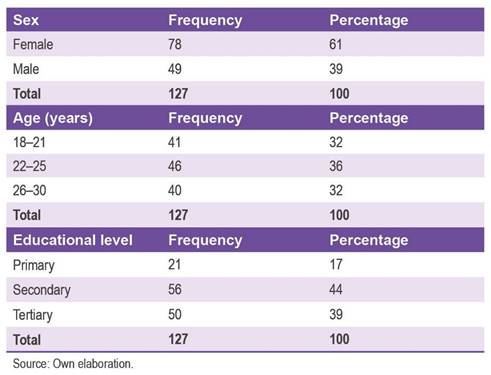
Figure 1 shows the sociodemographic distribution of the sample. A predominance of females (61%) is observed, with the highest concentration in the 22 to 25 age group (36%), and a predominance of secondary education level (44%), followed by tertiary (39%) and primary (17%). The figure summarizes the composition of the 127 participants in terms of sex, age, and educational level based on the data in Table 1.
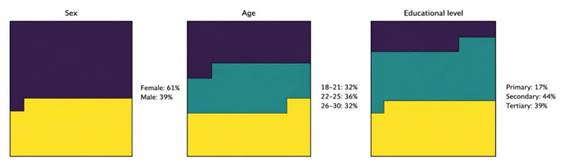
Figure 1: Sociodemographic distribution of the sample according to sex, age group, and educational level
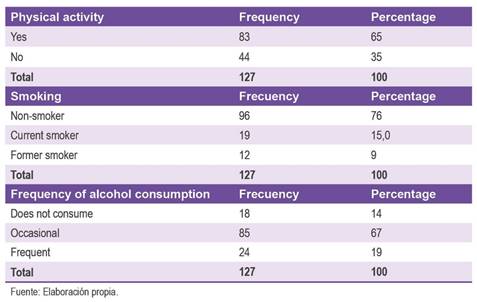
Figure 2 presents the distribution of the sample according to physical activity, smoking status, and frequency of alcohol consumption, based on data extracted from Table 2. It was observed that 65% of participants engaged in physical activity. Regarding smoking, the non-smoker category predominated (76%), while 15% were current smokers and 9% were former smokers. In terms of alcohol consumption, occasional use predominated, reported by 67% of participants (n=85), followed by frequent consumption (19%) and no consumption (14%).
Table 2 Frequency and percentage in relation to physical activity, tobacco use, and alcohol consumption
Source: Own elaboration.
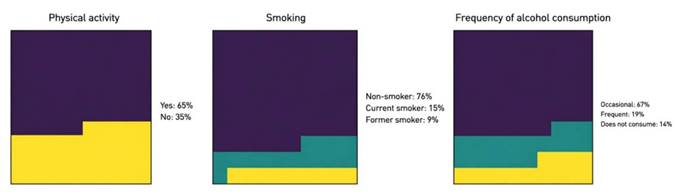
Figure 2: Distribution of the sample according to physical activity, smoking status, and frequency of alcohol consumption. Source: own elaboration.
Figure 3 presents the distribution of sleep quality and the main causes of sleep interruption reported by the study population, based on data extracted from Table 3. Poor sleep quality predominated, reported by 65% of participants, while 35% had good sleep quality. Regarding the causes of sleep interruption, nocturnal awakenings were the most frequent, at 69% (n=87), followed by nightmares (42%), heat or discomfort (38%), the need to use the bathroom (36%), environmental noise (22%), and other causes (13%).
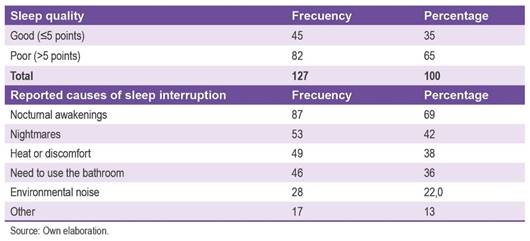
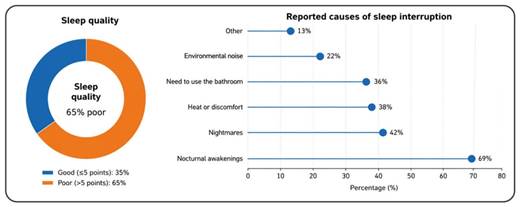
Figure 3: Distribution of sleep quality and the causes of sleep interruption in the study population, based on data extracted from Table 3. Source: own elaboration
Figure 4 shows the daily frequency of consumption of natural foods, processed foods, and water, based on data extracted from Table 4. Among natural foods, the highest consumption corresponded to red meat (47%; n=60), followed by dairy products (32%), fruits (31%), eggs (27%), and vegetables (22%). Regarding processed foods, cookies and sweets were the most frequently consumed (62%; n=79), followed by snacks or potato chips (39%) and soft drinks or sugary beverages (33%). Additionally, 85% of participants (n=108) reported consuming water daily.
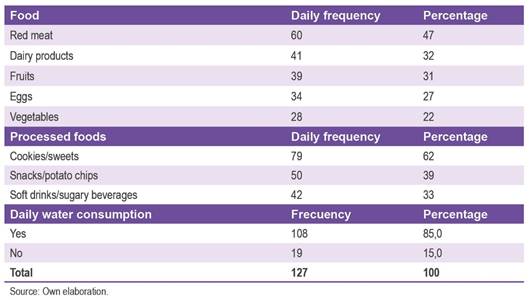
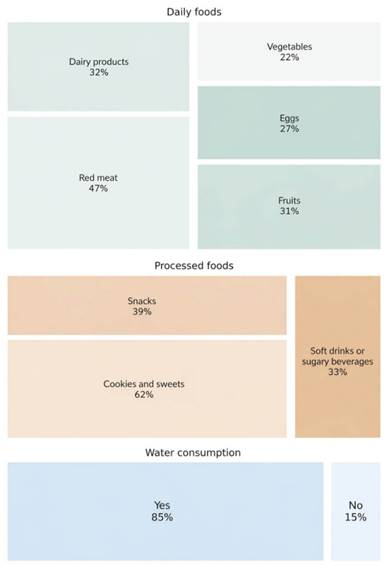
Figure 4: Daily frequency of consumption of natural foods, processed foods, and water in the study population, based on data extracted from Table 4. Source: own elaboration.
Figure 5 presents the correlation between the consumption of certain foods and sleep quality, based on data extracted from Table 5. Statistically significant associations were observed between sleep quality and several dietary variables. In particular, the consumption of cookies and sweets showed the highest positive correlation with poor sleep quality (ρ=0.46; p<0.001), followed by the consumption of snacks (ρ=0.33; p=0.005) and soft drinks (ρ=0.29; p=0.011). These results indicate that a higher frequency of consumption of ultra-processed foods was associated with poorer sleep quality.
On the other hand, the consumption of fruits (ρ=-0.38; p=0.002) and vegetables (ρ=-0.30; p=0.008) showed significant negative correlations, suggesting that higher intake of these foods was associated with better sleep quality. Overall, the figure shows a differentiated pattern among food groups: while ultra-processed foods were associated with poorer sleep quality, fresh foods such as fruits and vegetables showed a favorable relationship.
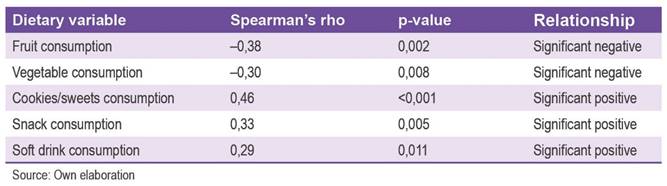
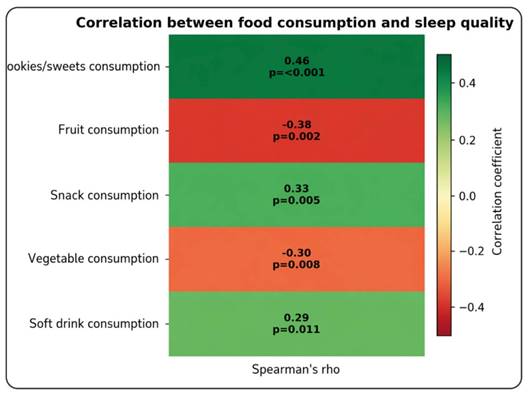
Figure 5: Correlation between food consumption and sleep quality according to Spearman’s rho coefficient, based on data extracted from Table 5. Source: own elaboration.
In Figure 5, each row represents a dietary variable, and the color of the cell indicates the direction and intensity of the correlation with sleep quality. Green tones correspond to positive correlations, meaning that higher consumption of the food is associated with poorer sleep quality, while reddish tones indicate negative correlations, associated with better sleep quality. The numerical values within each cell correspond to Spearman’s rho coefficient and the p-value, allowing identification of both the magnitude and statistical significance of each association.
DISCUSSION
The results of this study confirm what was presented in the theoretical framework regarding the influence of diet on sleep quality. As noted by García González and Mediavilla Aguado (2016), diet plays a key role in the regulation of sleep cycles, and its disruption can lead to insomnia and daytime sleepiness, findings that were observed in 65% of the participants in this study 14. The high prevalence of poor sleep quality is consistent with the findings of Ochoa and Muñoz (2014), who explain that the imbalance between hunger, appetite, and satiety, combined with disorganized eating schedules, affects homeostasis and, consequently, nocturnal rest 15.
The significant association between higher intake of fruits and vegetables and better sleep quality is consistent with what has been described in the reviewed literature regarding the role of micronutrients and tryptophan in the synthesis of serotonin and melatonin 16,17. These results reinforce what was established in the theoretical framework about the positive impact of balanced diets on the sleep-wake cycle. Likewise, the high frequency of consumption of ultra-processed foods and sugary beverages found in this population is consistent with what was reported in the review on orexins 18, which indicates that hypercaloric foods with low nutritional density disrupt appetite regulation mechanisms and energy metabolism, affecting sleep quality.
Another relevant finding was the irregularity in dinner schedules, which confirms what is mentioned in the Dietary Guidelines of Paraguay and in the chrononutrition section of the theoretical framework, emphasizing the importance of synchronizing meal timing with the circadian rhythm to avoid metabolic disorders and sleep disturbances 19,20. The pattern of late dinners observed could explain the increase in daytime sleepiness and difficulty falling asleep in the studied sample. The results of this study provide local evidence that complements the background presented, demonstrating that the theoretical risk factors described in the literature are also manifested in the population of young adults at the Hospital General de Luque. This reinforces the need to implement nutritional education programs and sleep hygiene strategies in this hospital context, in line with the recommendations of INAN and WHO mentioned in the conceptual framework.
Regarding the first objective, it was observed that most young adults at the Hospital General de Luque presented poor sleep quality, characterized by prolonged latency, nocturnal awakenings, and daytime sleepiness, reflecting insufficient rest.
With respect to the second objective, an inadequate dietary pattern was identified, with high consumption of ultra-processed foods and sugary beverages, and low intake of fruits, vegetables, and natural sources of tryptophan. Regarding the third objective, a significant association between sleep quality and diet was confirmed: those who consumed more fruits and vegetables showed better rest, while frequent consumption of ultra-processed products was associated with poorer sleep quality. For the fourth objective, slight differences were found between groups, with women and participants with lower educational levels showing a higher prevalence of poor sleep and less healthy dietary habits. Finally, according to the fifth objective, factors such as insufficient physical activity, alcohol consumption, and irregular meal schedules negatively influenced both sleep and diet.
LIMITATIONS
Among the limitations of the study, the cross-sectional design is acknowledged, as it does not allow for establishing direct causality, and the use of the 24-hour recall, which may be subject to recall bias. However, the results obtained are consistent with theory and previous studies, which strengthens the validity of the conclusions and provides a basis for future longitudinal studies in the same population.
CONCLUSIONS
It was observed that 82 of the 127 participants (65%) presented poor sleep quality. Likewise, a higher daily frequency of consumption of ultra-processed foods, especially cookies/sweets, was recorded compared to fruits and vegetables.
The correlations found showed that higher consumption of fruits and vegetables was associated with better sleep quality, while higher consumption of cookies/sweets, snacks, and soft drinks was associated with poorer sleep quality. The observed associations were statistically significant.
Therefore, the results support the existence of a relationship between sleep quality and certain dietary intake patterns in the studied young adults. However, as this is a cross-sectional study, causality cannot be established.
RECOMMENDATIONS
At the institutional level, it is proposed to implement nutritional education and sleep hygiene programs aimed at young adults attending the hospital, as well as to promote intersectoral talks and workshops on the importance of nocturnal rest and its relationship with healthy eating. It is also important to incorporate routine assessment of sleep quality as part of primary health care.
At the research level, it would be useful to increase the sample size in future studies to strengthen the external validity of the results, and to include additional variables such as stress level, use of electronic devices before bedtime, and caffeine consumption. Conducting longitudinal studies would allow for a deeper analysis of causality between sleep quality and changes in nutritional status.
REFERENCES
1. Organización Mundial de la Salud. Constitución de la Organización Mundial de la Salud. OMS. 1948. [ Links ]
2. Chaput JP, Dutil C. Lack of sleep as a contributor to obesity in adolescents: impacts on eating and activity behaviors. Int J Behav Nutr Phys Act. 2016;13(1):103. doi: 10.1186/s12966-016-0428-0. [ Links ]
3. Medic G, Wille M, Hemels ME. Short- and long-term health consequences of sleep disruption. Nat Sci Sleep. 2017; 9:151-61. doi: 10.2147/NSS.S134864. [ Links ]
4. Irwin MR. Sleep and inflammation: partners in sickness and in health. Nat Rev Immunol. 2019; 19(11):702-15. doi: 10.1038/s41577-019-0190-z. [ Links ]
5. Spiegel K, Tasali E, Leproult R, Van Cauter E. Effects of poor and short sleep on glucose metabolism and obesity risk. Nat Rev Endocrinol. 2009; 5(5):253-61. doi: 10.1038/nrendo.2009.23. [ Links ]
6. St-Onge MP. Sleep-obesity relation: underlying mechanisms and consequences for treatment. Obes Rev. 2017;18 (Suppl 1): 34-9. doi: 10.1111/obr.12499. [ Links ]
7. Arnett JJ. Emerging adulthood: a theory of development from the late teens through the twenties. Am Psychol. 2000; 55(5):469-80. [ Links ]
8. Organización Mundial de la Salud. Pautas sobre salud integral. OMS. 2021. [ Links ]
9. Carskadon MA, Dement WC. Normal human sleep: an overview. In: Kryger MH, Roth T, Dement WC, eds. Principles and practice of sleep medicine. 6th ed. Philadelphia: Elsevier; 2017: 15-24. [ Links ]
10. Gibson RS. Principles of nutritional assessment. 2nd ed. New York: Oxford University Press; 2005. [ Links ]
11. Owens J, Adolescent Sleep Working Group, Committee on Adolescence. Insufficient sleep-in adolescents and young adults: an update on causes and consequences. Pediatrics. 2014;134(3):921-32. doi: 10.1542/peds.2014-1696. [ Links ]
12. Benedict C, Brooks SJ, O’Daly OG, Almèn MS, Morell A, Åberg K, et al. Acute sleep deprivation enhances the brain’s response to hedonic food stimuli: an fMRI study. J Clin Endocrinol Metab. 2012; 97(3): E443-7. doi: 10.1210/jc.2011-2759. [ Links ]
13. Hulley SB, Cummings SM, Browner WS, Grady DG, Neuman TB. Diseño de investigaciones clinicas.4° ed. Barcelona: Wolters Kluwer Health, Lippincott Williams & Wilkins. 2014. [ Links ]
14. García González A, Mediavilla Aguado M. Efectos de la alimentación en los trastornos del sueño;Tesis de Grado;. Santander: Universidad de Cantabria, Facultad de Medicina. 2016. [ Links ]
15. Ochoa C, Muñoz MG. Hambre, apetito y saciedad. RCAN. 2014;24(2):268-279. [ Links ]
16. Zambudio Barros A. Calidad de sueño y relación del antojo de azúcares con los hábitos de desayuno en estudiantes universitarios (tesis de grado). Palma: Universitat de les Illes Balears, Facultad de Ciencias; 2023. [ Links ]
17. Silva García AT. Influencia del cronotipo, horario y calidad nutricional de la merienda en la composición corporal de adultos jóvenes del Club Juvenil Tililag de la ciudad de Guaranda. Tesis de Grado. Riobamba: Escuela Superior Politécnica de Chimborazo. 2023. [ Links ]
18. Jahrami H, BaHammam AS, Bragazzi NL, Saif Z, Faris M, Vitiello MV, et al. The association between micronutrient status and sleep quality in patients with depression: a case-control study. Sleep Breath. 2021; 25(3):1571-1579. doi: 10.1007/s11325-020-02228-5. [ Links ]
19. Jimenez Nogues DE, Guerra-Ramírez M, García Campos ML, Beltrán-Campos V, Castillo Sierra DM, Sánchez-Rodríguez JM. Revisión de la acción de las orexinas en la regulación del apetito, metabolismo y balance energético. Nutr Clin Diet Hosp. 2025;45(2). doi: 10.12873/452jimenez. [ Links ]
20. Silva García, AT. Influencia del cronotipo, horario y calidad nutricional de la merienda en la composición corporal de adultos jóvenes del Club Juvenil Tililag de la ciudad de Guaranda. Tesis de grado. Riobamba: Escuela Superior Politécnica de Chimborazo; 2023. [ Links ]
Received: March 12, 2026; Accepted: March 26, 2026
 Este es un artículo publicado en acceso abierto bajo una licencia Creative Commons
