




Services on Demand
Journal

Article
 text in
  English (pdf)
 Article in xml format
 Article references
 Automatic translation
 Send this article by e-mail
Indicators
-
 Cited by SciELO
Related links
-
 Similars in
SciELO
Similars in
SciELO
Share

 Permalink
Investigación Agraria
On-line version ISSN 2305-0683
Investig. Agrar. vol.27 no.1 San Lorenzo 2025 Epub June 27, 2025
https://doi.org/10.18004/investig.agrar.2025.2701825
Review article
Advancing towards climate-smart agriculture: the role of soil organic carbon in soil functions, ecosystem services, and agroecosystem sustainability

1 Instituto Paraguayo de Tecnología Agraria, Centro de Investigación Capitán Miranda, Departamento de Suelos. Capitán Miranda, Itapúa, Paraguay.
Current challenges, such as climate change and increasing pressure on primary food production, demand a transition toward more resilient and environmentally responsible agricultural models. In this context, the preservation of soil organic carbon (SOC) emerges as a key strategy to enhance soil functions, support essential ecosystem services, and strengthen the resilience of agroecosystems. This review article aims to analyze and synthesize the role of SOC in soil functioning, its contribution to ecosystem service provision, its importance for achieving the Sustainable Development Goals, and to identify the most promising management strategies for its increase and stabilization in soils. The research was based on a comprehensive and descriptive bibliographic review of 43 review articles published between 2019 and 2024 in the Scopus database. The results demonstrate that maintaining and enhancing SOC is crucial for preserving the functional integrity of soils, supporting key ecosystem services, safeguarding food security, and mitigating the effects of climate change. Collectively, the findings underscore the need to promote management strategies focused on SOC regeneration as a central axis for building more resilient agroecosystems and advancing towards climate-smart agriculture.
Keywords: Human well-being; soil carbonization; sustainable production; planet health; soil health
Los desafíos actuales, como el cambio climático y la creciente presión sobre la producción de alimentos primarios, exigen la transición hacia modelos agrícolas más resilientes y ambientalmente responsables. En este contexto, preservar el carbono orgánico del suelo (COS) se consolida como una estrategia clave para potenciar las funciones edáficas, sustentar servicios ecosistémicos esenciales y fortalecer la resiliencia de los agroecosistemas. Este artículo de revisión tiene como objetivo analizar y sintetizar el papel del COS en las funciones del suelo, su contribución a la provisión de servicios ecosistémicos, su importancia para el cumplimiento de los Objetivos de Desarrollo Sostenible, e identificar las estrategias de manejo más promisoras para su aumento y estabilización en el suelo. La investigación se fundamentó en una revisión bibliográfica exhaustiva con enfoque descriptivo, basada en 43 artículos de revisión publicados entre 2019 y 2024 en la base de datos Scopus. Los resultados evidencian que el mantenimiento y la valorización del COS son determinantes para preservar la integridad funcional del suelo, respaldar servicios ecosistémicos clave, proteger la seguridad alimentaria y mitigar los efectos del cambio climático. En conjunto, los hallazgos destacan la necesidad de promover estrategias de manejo orientadas a la regeneración del COS como eje central en la construcción de agroecosistemas más resilientes y en el avance hacia una agricultura climáticamente inteligente.
Palabras clave: Bienestar humano; carbonización del suelo; producción sustentable; salud del planeta; salud del suelo
INTRODUCTION
Addressing the global climate crisis and meeting the growing demand for food represents one of humanity's most urgent challenges (Fróna et al., 2019). In this context, soil emerges as a key resource for both ecological sustainability and global food security (Taylor et al., 2021). Beyond its role in agricultural production, it constitutes the largest terrestrial carbon reservoir (Gonçalves et al., 2025; Song et al., 2024). Soil carbon is a cornerstone for the soil-plant-atmosphere equilibrium (Adhikari & Hartemink, 2016; Wiesmeier et al., 2019). Its content and proper management optimize soil functional properties and strengthen its capacity to provide important ecosystem services (Andrea et al., 2018; Q. Yang et al., 2024).
Soil organic carbon contributes to the restoration and maintenance of physical properties that sustain soil stability, favoring aggregate formation and persistence (Dai et al., 2024; Nascimento et al., 2024), which improves the soil's capacity to retain water and facilitate aeration (Pang et al., 2025). Additionally, it represents a source of energy and nutrients for soil microbiota, stimulating biological interactions that strengthen soil ecosystem dynamics (Ahmad et al., 2024; Zong et al., 2024). Carbon accumulation also contributes to mitigating contaminants that threaten water quality and optimizing the availability of essential nutrients for plant development (Wiesmeier et al., 2019). These multiple contributions are determinant factors for sustaining more stable agroecosystems (dos Santos et al., 2024).
Based on the benefits promoted by SOC, the provision of ecosystem services is reinforced, positively impacting not only food production but also human, animal, and environmental health (Drobnik et al., 2018; Wiesmeier et al., 2019). SOC also plays a crucial role in climate regulation through atmospheric carbon capture, contributing to erosion reduction, more efficient water use, and preservation of soil biodiversity (Cherubin et al., 2021; LAL, 2023). These services are fundamental for sustaining agriculture capable of meeting growing global demand without compromising ecological stability (Zhao et al., 2020). Particularly in the face of extreme climate events, SOC strengthens agroecosystem resilience, improving their adaptation capacity and long-term sustainability (Fagodiya et al., 2024; Sarkar & McLawrence, 2023).
Given these scenarios and considering the importance of SOC in soil ecosystem health, it is essential to identify and implement management practices that favor its stable sequestration in soil (Villalba Algarin et al., 2024). In this regard, climate-smart agriculture represents an integrative strategy that combines productive sustainability, climate change resilience, and greenhouse gas mitigation through validated practices. This approach is based on three fundamental pillars: sustainable productivity, which involves resource optimization, genetic improvement, and agronomic management; adaptation, through agroecological systems, efficient water management, and crop diversification; and mitigation, through carbon sequestration in soils, reduction of emissions from fertilizer use, and proper waste management (Du et al., 2023; Siddique et al., 2024; J. Zhao et al., 2023).
In light of the above, this review article aimed to analyze and synthesize the role of SOC in soil functions, its contribution to ecosystem service provision, its importance for achieving Sustainable Development Goals, and to identify the most promising management strategies for its conservation and enhancement. By bringing together the most recent scientific information in accessible language, we seek to offer the Paraguayan community a clear technical foundation to guide agronomic decisions that promote soil carbon accumulation. This aims to contribute to the development of more efficient, sustainable agricultural systems aligned with current challenges of climate change and food security.
MATERIALS AND METHODS
This work was based on a descriptive bibliographic review aimed at analyzing the influence of SOC on soil functions, ecosystem service provision, its relevance in meeting international commitments, and the identification of agricultural practices that favor its accumulation and stabilization. For this purpose, an exhaustive search was conducted in the Scopus database during September 2024, using the descriptors ("soil organic carbon" OR "soil organic matter") AND ("soil function" OR "ecosystem services"), applied to titles, abstracts, and keywords through the Boolean operators "AND" and "OR".
To ensure the quality and currency of selected publications, the following inclusion criteria were applied: (i) document type: peer-reviewed review articles; (ii) publication period: between 2019 and 2024; and (iii) language: English. The application of these filters yielded a total of 43 articles, which were refined to eliminate duplicates and critically evaluated for their relevance. The selected documents were exported in PDF format and subjected to detailed reading and interpretive analysis. From this rigorous synthesis, the conceptual foundation supporting the development of this study was constructed.
RESULTS AND DISCUSSION
Carbon dynamics in the ecosystem
Carbon dynamics in ecosystems are highly complex and depend on interconnected processes (Figure 1). Plants play a fundamental role in soil carbonization (Bhattacharyya et al., 2022; Hoffland et al., 2020), capturing atmospheric CO₂ through photosynthesis and transforming it into biomass that stores carbon in leaves, stems, and roots (Zhang et al., 2021). This carbon is subsequently transferred to soil through root exudates and organic residues, which are decomposed by soil biota (Bhattacharyya et al., 2022; Wiesmeier et al., 2019; Zhang et al., 2021). A fraction of this carbon is stabilized as organic matter, making soil a carbon sink that improves its structure, fertility, and contributes to ecosystem resilience (Kopittke et al., 2022; Ndour et al., 2023).
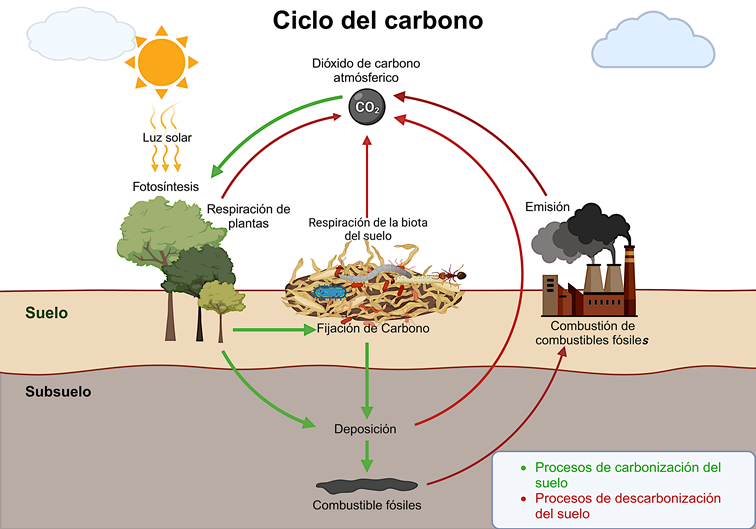
Data source: Scopus (2024). Created with Biorender.com.
Figure 1 Schematic representation of carbon dynamics in the ecosystem, including soil carbonization and decarbonization processes. Designed based on review articles published in the last five years (2019-2024).
Decarbonization processes represent the opposite phase to carbonization, in which plant and soil organism respiration releases CO₂ to the atmosphere, maintaining a constant carbon flow under equilibrated conditions (Zhang et al., 2021). However, human activities such as fossil fuel burning, deforestation, and intensive soil disturbance alter this balance, releasing large quantities of carbon previously stored in soil (Kopittke et al., 2022; Wiesmeier et al., 2019). This massive release exceeds ecosystems' capacity to absorb CO₂, which disrupts the carbon cycle and contributes significantly to global warming (Hassan et al., 2022; J. Yang et al., 2020).
The role of organic carbon in soil functionality
Organic carbon is fundamental for soil to maintain its full capacity to function as a living ecosystem, capable of sustaining sustainable agricultural production (Figure 2). This carbon favors the formation of stable aggregates, structures that increase soil porosity and make it less susceptible to extreme conditions (Ghimire et al., 2023; Hoffland et al., 2020; Sullivan et al., 2022). The resulting structural stability reinforces the soil's capacity to support machinery and animal traffic, while simultaneously favoring plant root growth, thus optimizing the utilization of available resources at greater depths (Han et al., 2020; Karasawa, 2024; Matisic et al., 2024).
Improved soil aeration is another direct benefit of SOC, which, by favoring optimal structure, facilitates adequate air circulation in pores (Ghorbani & Amirahmadi, 2024; Hoffland et al., 2020). This oxygenation is essential for soil biota metabolism and root development, creating a favorable environment for aerobic microorganisms responsible for decomposing organic matter and releasing nutrients (Ghimire et al., 2023; Karasawa, 2024).
SOC also increases the soil's capacity to retain water by increasing the amount of moisture stored in micropores (Davis et al., 2023; Hoffland et al., 2020; Karasawa, 2024). This effect ensures a constant water supply for plants, even during drought periods (Karasawa, 2024; Widyati et al., 2022). Thus, soils rich in SOC not only improve crop resistance to water stress but also stabilize agricultural production and strengthen resilience against extreme climate events (Taylor et al., 2021).
Another significant benefit of SOC is the increase in cation exchange capacity (CEC), a property that allows soil to retain and supply essential nutrients such as calcium, magnesium, and potassium (Hoffland et al., 2020; Matisic et al., 2024; Widyati et al., 2022). This increase in CEC minimizes leaching losses, ensuring efficient nutrient supply for plants and reducing the need for synthetic fertilizers, which promotes cleaner and lower-cost agriculture (Garrett et al., 2021; Tang et al., 2022).
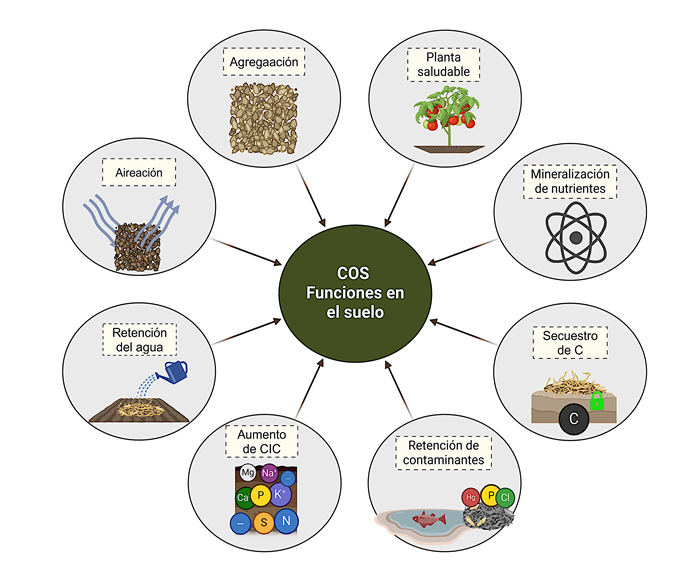
Data source: Scopus (2024). Created with Biorender.com.
Figure 2 Functions of soil organic carbon (SOC). Designed based on review articles published in the last five years (2019-2024).
SOC plays an important role in nutrient mineralization, stimulating soil biota activity that transforms organic compounds into available inorganic forms (Hassan et al., 2022; Karasawa, 2024). This process ensures a continuous nutrient flow, favoring plant growth (Hoffland et al., 2020; Imran, 2022; Karasawa, 2024). Another essential function of SOC is carbon sequestration in soil, contributing to climate change mitigation through the reduction of atmospheric CO₂ concentrations (Alavi-Murillo et al., 2022; Hoffland et al., 2020). This storage converts soil into a precious treasury for achieving global sustainability objectives (Kopittke et al., 2022).
SOC also acts as a protective agent by immobilizing heavy metals and toxic substances, preventing their leaching into groundwater and surface waters (Hassan et al., 2022; Koutika, 2022; O'Brien et al., 2024). This mechanism preserves water quality and reduces contamination risks, protecting both ecosystem health and communities that depend on these resources (Hassan et al., 2022; O'Brien et al., 2024). Additionally, it favors the production of healthy plants by providing a balanced environment; soil with optimal SOC levels supplies environmental resources continuously, increasing productivity and improving crop resistance to stress conditions (Imran, 2022).
These benefits highlight the importance of SOC as a fundamental component for ecological balance, with direct effects on key agricultural processes and in promoting agroecosystem sustainability (Gmach et al., 2020; Kopittke et al., 2022).
From functions to SOC ecosystem services: key connections
Ecosystem services are benefits derived from natural processes and functions that ecosystems provide for human well-being (Davis et al., 2023; Hassan et al., 2022). In the case of soil, ecosystem services are intrinsically linked to SOC, as this organic compound sustains soil functions that result in essential services for life (Alavi-Murillo et al., 2022; Hoffland et al., 2020), as illustrated in Figure 3.
SOC significantly reduces erosion, one of the most critical challenges in modern agriculture (Hassan et al., 2022; Hoffland et al., 2020). The stable aggregates generated by SOC prevent compaction and favor water infiltration, reducing runoff and the risk of surface erosion (Hoffland et al., 2020; Widyati et al., 2022). This not only prevents the loss of soil quality and essential nutrients but also protects the soil's capacity to sustain crops in the long term (Tang et al., 2022; Widyati et al., 2022). Additionally, it mitigates sedimentation in water bodies, contributing to the preservation of aquatic ecosystems (Mishra et al., 2022; O'Brien et al., 2024).
Soil rich in SOC favors robust biodiversity, from microorganisms to key ecosystem organisms such as earthworms, which improve both soil fertility and stability (Song et al., 2024; Vogel et al., 2024). This biological diversity improves soil health by stabilizing nutrient cycles and strengthening physical structure (Bhattacharjya et al., 2024; Pot et al., 2022). Furthermore, it contributes to reducing disease incidence by promoting beneficial organisms that compete with pathogens (Hoffland et al., 2020; Mishra et al., 2022; Song et al., 2024).
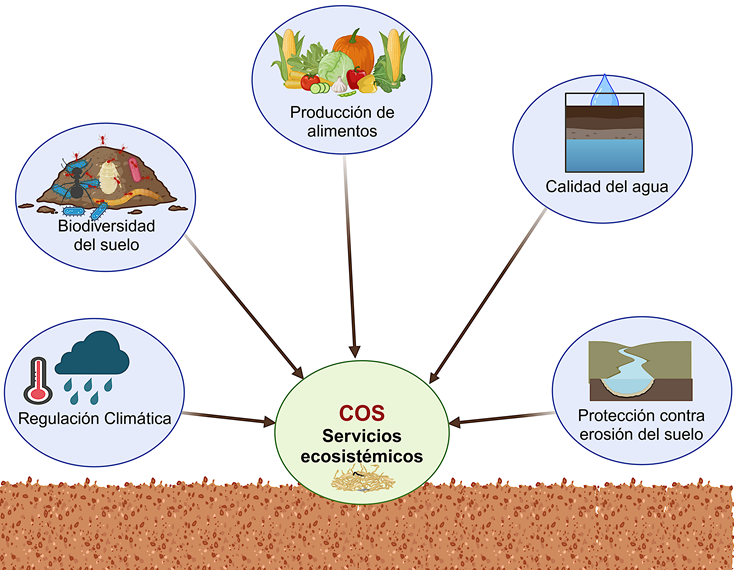
Data source: Scopus (2024). Created with Biorender.com.
Figure 3 Main ecosystem services of soil organic carbon (SOC). Designed based on review articles published in the last five years (2019-2024).
SOC directly influences food production by regulating the availability of environmental resources (Das et al., 2022; Hassan et al., 2022). Soils with high SOC content support more vigorous crops and offer stable food production, even under adverse conditions (Kopittke et al., 2022). This relationship strengthens agricultural sustainability, reducing dependence on chemical inputs and their environmental impact (Das et al., 2022; Hoffland et al., 2020).
Furthermore, SOC contributes significantly to climate change mitigation by capturing and storing carbon in soil, preventing its release as CO₂ to the atmosphere (Hassan et al., 2022; Kopittke et al., 2022). This process transforms soil into a key resource for reducing greenhouse gas emissions (Alavi-Murillo et al., 2022; Hassan et al., 2022).
SOC and its importance for the Sustainable Development Goals (SDGs)
Soil organic carbon represents a key piece in the global sustainability agenda, particularly in achieving the Sustainable Development Goals (Bhattacharjya et al., 2024; Kopittke et al., 2022). Figure 4 illustrates this connection, highlighting how SOC functions transcend the agricultural sphere and directly impact various objectives of the Paris Agreement 2030. In the context of SDG 13, SOC positions itself as a strategic ally in climate change mitigation through atmospheric decarbonization (Eze et al., 2023; Kopittke et al., 2022), an effort that not only combats global warming but also strengthens adaptation to disrupted climate (Hassan et al., 2022; Koutika, 2022).
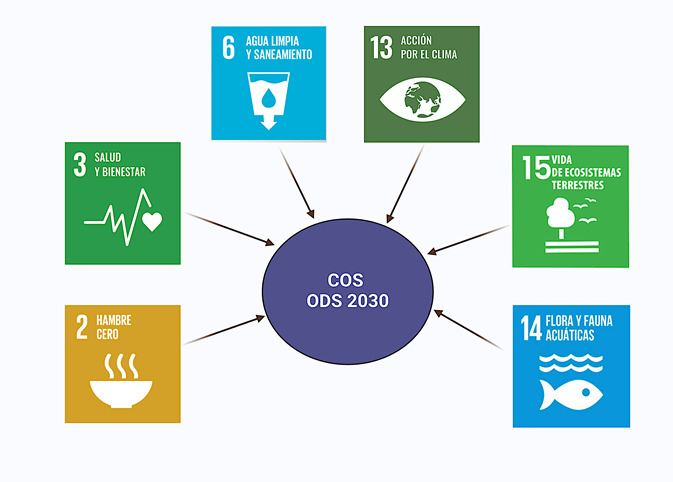
Data source: Scopus (2024). Created with Biorender.com.
Figure 4 Connection of soil organic carbon (SOC) with the Sustainable Development Goals (SDGs). Designed based on review articles published in the last five years (2019-2024).
Furthermore, SOC is extremely important for advancing toward SDG 2, by providing a solid foundation for sustainable food production (Alavi-Murillo et al., 2022; Kopittke et al., 2022). By improving soil capacity to sustain diversified and resilient crops, SOC becomes a central element for reducing world hunger, especially in highly vulnerable contexts (Das et al., 2022; Hassan et al., 2022). Its impact also encompasses SDG 6, as SOC contributes significantly to water resource conservation through natural filtration processes, protecting water sources from potential contaminants and ensuring their quality (Hassan et al., 2022; Kopittke et al., 2022; Mishra et al., 2022).
Regarding SDG 15, SOC favors the regeneration and sustainability of terrestrial ecosystems, stabilizing soil and creating a favorable environment for biodiversity (Kopittke et al., 2022). This terrestrial balance has direct implications for SDG 14, as soil protection prevents water body contamination, indirectly benefiting underwater life (Hassan et al., 2022). Likewise, SOC supports SDG 3 by fostering a healthier agricultural environment, improving the quality of life in rural communities (Das et al., 2022; Sharma et al., 2024; Taylor et al., 2021). Collectively, SOC not only drives sustainable agricultural practices but also reinforces the fundamental pillars for maintaining soil multifunctionality and ecosystem balance (Kopittke et al., 2022).
Challenges and alternatives for SOC conservation and improvement
SOC conservation is extremely complex, dynamic, and dependent on multiple intrinsic factors of each region, such as climate, soil type, and topography (Cherubin et al., 2021). Among the greatest challenges is erosion promoted by conventional agricultural practices (Matisic et al., 2024; Thiengo et al., 2024; Wiesmeier et al., 2019). Erosion, by removing carbon-rich layers, not only diminishes the physical, chemical, and biological health of soil but also causes substantial losses of carbon sequestered over years (Rehschuh et al., 2021).
Conventional practices, based on constant soil disturbance and monoculture, prioritize immediate increases in grain production but generate profound negative impacts on soil carbonization (Assunção et al., 2023). Aggressive soil tillage causes compaction and degrades macroaggregates, essential structures for physical carbon protection (Sekaran et al., 2021). By destroying these macroaggregates, stored carbon becomes exposed, increasing its vulnerability to mineralization and release to the atmosphere (Chellappa et al., 2021; Sekaran et al., 2021). On the other hand, monoculture reduces the quantity and diversity of roots, limiting the input of organic residues to soil (Rosset et al., 2022; Teixeira et al., 2023). This negatively impacts soil biodiversity, restricting enzymatic activities responsible for carbon stabilization, compromising full functionality and support for ecosystem services in the long term (Eze et al., 2023; Sekaran et al., 2021).
Faced with these problems, in recent years the scientific community has documented and proposed alternatives based on conservation agricultural systems (Bonetti et al., 2023; Mathers et al., 2023), also known as climate-smart agricultural systems (Figure 5) (Tyagi & Haritash, 2024), as a viable solution to improve soil health, increase productivity, and above all, protect and optimize SOC (Eze et al., 2023; Moraes et al., 2024; Sharma et al., 2024). These practices are based on the three pillars of no-till systems: zero soil disturbance, crop rotation with inclusion of green manures, and permanent soil cover (Babu et al., 2023).
Along with the three fundamental pillars mentioned, the most recent research highlights system intensification through the combination of agriculture and livestock in the same areas as a promising strategy to foster agricultural sustainability (Rodríguez-Hernández et al., 2023; Venkatesh et al., 2024). This approach allows leveraging key synergies between both activities, optimizing resource use and promoting more efficient soil management (Venkatesh et al., 2024). The integration of agriculture and livestock contributes to enriching soil with organic matter from animal residues, while plant cover protects against erosion and strengthens soil structure (Ambus et al., 2024). It also fosters an efficient nutrient cycle and enhances biodiversity, creating a dynamic ecosystem that improves soil biological activity and its resilience to adverse climate conditions (Palsaniya et al., 2024; Paramesh et al., 2022).
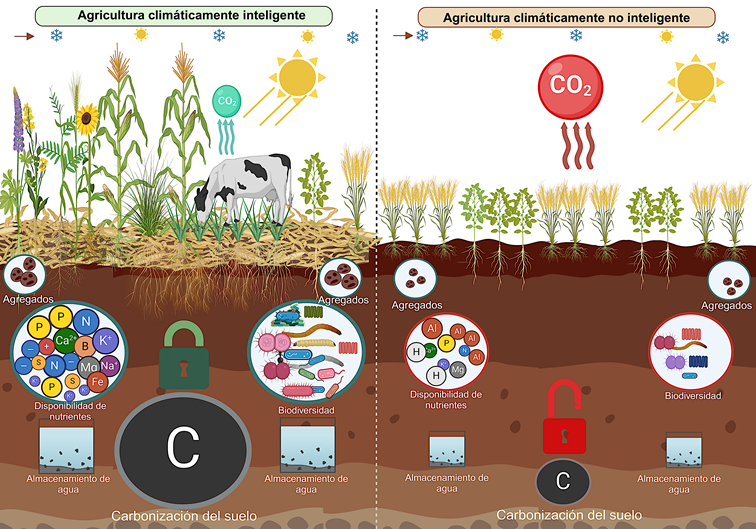
Data source: Scopus (2024). Created with Biorender.com.
Figure 5 Schematization of agriculture types and their effects on soil-plant-atmosphere health. Designed based on review articles published in the last five years (2019-2024).
The implementation of these alternatives faces significant challenges but offers a promising pathway to reconcile agricultural and livestock productivity with soil conservation, quality food production, and ecosystem contamination reduction through efficient carbon sequestration (Davis et al., 2023; Hassan et al., 2022). Ultimately, these practices represent a necessary shift toward agriculture that not only ensures food security but also promotes the long-term health and resilience of global ecosystems (Alavi-Murillo et al., 2022; Sharma et al., 2024).
CONCLUSION
Based on the careful review of the most recent literature, soil organic carbon has emerged as a key component globally, recognized as the most important pillar for addressing challenges that threaten the sustainability of current agroecosystems and, even more so, of future generations. Carbon-rich soil not only ensures the fulfillment of its essential functions and ecosystem services but also drives a healthy balance between soil, plant, and atmosphere. This approach makes SOC a strategic tool for achieving international commitments oriented toward protecting planetary health.
However, to materialize this potential, a coordinated effort by land managers is required, oriented toward implementing climate-smart production systems. These strategies must promote a sustainable balance between soil components, agricultural productivity, and environmental preservation, thus consolidating agriculture as a driver of resilience against climate challenges and an essential pillar for global food security.
REFERENCES
Adhikari, K., & Hartemink, A. E. (2016). Linking soils to ecosystem services - A global review. Geoderma, 262, 101-111. https://doi.org/10.1016/j.geoderma.2015.08.009 [ Links ]
Ahmad, A., Arif, M. S., Shahzad, S. M., Yasmeen, T., Shakoor, A., Iqbal, S., Riaz, A., Zahid, A., & Chapman, S. J. (2024). Long-term raw crop residue but not burned residue incorporation improved soil multifunctionality in semi-arid agroecosystems. Soil and Tillage Research, 240(February), 106073. https://doi.org/10.1016/j.still.2024.106073 [ Links ]
Alavi-Murillo, G., Diels, J., Gilles, J., & Willems, P. (2022). Soil organic carbon in Andean high-mountain ecosystems: importance, challenges, and opportunities for carbon sequestration. Regional Environmental Change, 22(4). https://doi.org/10.1007/s10113-022-01980-6 [ Links ]
Ambus, J. V., Alves, A. R., Scheid, D. L., Antonino, A. C. D., & Reichert, J. M. (2024). Lowland Integrated Crop-Livestock Systems with Grass Crops Increases Pore Connectivity and Permeability, Without Requiring Soil Tillage. Soil Systems, 8(4), 1-17. https://doi.org/10.3390/soilsystems8040111 [ Links ]
Andrea, F., Bini, C., & Amaducci, S. (2018). Soil and ecosystem services: Current knowledge and evidences from Italian case studies. Applied Soil Ecology, 123(June 2017), 693-698. https://doi.org/10.1016/j.apsoil.2017.06.031 [ Links ]
Assunção, S. J. R., Pedrotti, A., Gonzaga, M. I. S., Nobrega, J. C. A., & Holanda, F. S. R. (2023). Soil quality index of an ultisol under long-term plots in the coastal tablelands in northeastern Brazil. Revista Caatinga, 36(2), 432-444. https://doi.org/10.1590/1983-21252023v36n220rc [ Links ]
Babu, S., Singh, R., Avasthe, R., Rathore, S. S., Kumar, S., Das, A., Layek, J., Sharma, V., Wani, O. A., & Singh, V. K. (2023). Conservation tillage and diversified cropping enhance system productivity and eco-efficiency and reduce greenhouse gas intensity in organic farming. Frontiers in Sustainable Food Systems, 7. https://doi.org/10.3389/fsufs.2023.1114617 [ Links ]
Bhattacharjya, S., Ghosh, A., Sahu, A., Agnihotri, R., Pal, N., Sharma, P., Manna, M. C., Sharma, M. P., & Singh, A. B. (2024). Utilizing soil metabolomics to investigate the untapped metabolic potential of soil microbial communities and their role in driving soil ecosystem processes: A review. Applied Soil Ecology , 195(August 2023), 105238. https://doi.org/10.1016/j.apsoil.2023.105238 [ Links ]
Bhattacharyya, S. S., Ros, G. H., Furtak, K., Iqbal, H. M. N., & Parra-Saldívar, R. (2022). Soil carbon sequestration - An interplay between soil microbial community and soil organic matter dynamics. Science of the Total Environment, 815. https://doi.org/10.1016/j.scitotenv.2022.152928 [ Links ]
Bonetti, J. de A., Nunes, M. R., Fink, J. R., Tretto, T., & Tormena, C. A. (2023). Agricultural practices to improve near-surface soil health and crop yield in subtropical soils. Soil and Tillage Research , 234(July), 1-10. https://doi.org/10.1016/j.still.2023.105835 [ Links ]
Chellappa, J., Laxmisagara, K., Sekaran, U., & Kumar, S. (2021). Soil organic carbon , aggregate stability and biochemical activity under tilled and no-tilled agroecosystems. Journal of Agriculture and Food Research, 4(March), 100139. https://doi.org/10.1016/j.jafr.2021.100139 [ Links ]
Cherubin, M. R., Bordonal, R. O., Castioni, G. A., Guimarães, E. M., Lisboa, I. P., Moraes, L. A. A., Menandro, L. M. S., Tenelli, S., Cerri, C. E. P., Karlen, D. L., & Carvalho, J. L. N. (2021). Soil health response to sugarcane straw removal in Brazil. Industrial Crops and Products, 163(February). https://doi.org/10.1016/j.indcrop.2021.113315 [ Links ]
Dai, W., Feng, G., Huang, Y., Adeli, A., & Jenkins, J. N. (2024). Influence of cover crops on soil aggregate stability, size distribution and related factors in a no-till field. Soil and Tillage Research , 244(June), 0-2. https://doi.org/10.1016/j.still.2024.106197 [ Links ]
Das, B. S., Wani, S. P., Benbi, D. K., Muddu, S., Bhattacharyya, T., Mandal, B., Santra, P., Chakraborty, D., Bhattacharyya, R., Basak, N., & Reddy, N. N. (2022). Soil health and its relationship with food security and human health to meet the sustainable development goals in India. Soil Security, 8(July), 100071. https://doi.org/10.1016/j.soisec.2022.100071 [ Links ]
Davis, A. G., Huggins, D. R., & Reganold, J. P. (2023). Linking soil health and ecological resilience to achieve agricultural sustainability. Frontiers in Ecology and the Environment, 21(3), 131-139. https://doi.org/10.1002/fee.2594 [ Links ]
dos Santos, J. V., Goranov, A. I., Bento, L. R., Oliveira, P. P. A., Pezzopane, J. R. M., Bernardi, A. C. C., de Sá, Í. P., Nogueira, A. R. A., Martin-Neto, L., & Hatcher, P. G. (2024). Biogeochemistry of dissolved organic matter and inorganic solutes in soil profiles of tropical pasturelands. Soil and Tillage Research , 240(December 2023). https://doi.org/10.1016/j.still.2024.106100 [ Links ]
Drobnik, T., Greiner, L., Keller, A., & Grêt-Regamey, A. (2018). Soil quality indicators - From soil functions to ecosystem services. Ecological Indicators, 94(July), 151-169. https://doi.org/10.1016/j.ecolind.2018.06.052 [ Links ]
Du, C., Li, L., Xie, J., Effah, Z., Luo, Z., & Wang, L. (2023). Long-Term Conservation Tillage Increases Yield and Water Use Efficiency of Spring Wheat (Triticum aestivum L.) by Regulating Substances Related to Stress on the Semi-Arid Loess Plateau of China. Agronomy, 13(5). https://doi.org/10.3390/agronomy13051301 [ Links ]
Eze, S., Magilton, M., Magnone, D., Varga, S., Gould, I., Mercer, T. G., & Goddard, M. R. (2023). Meta-analysis of global soil data identifies robust indicators for short-term changes in soil organic carbon stock following land use change. Science of the Total Environment , 860(November 2022), 160484. https://doi.org/10.1016/j.scitotenv.2022.160484 [ Links ]
Fagodiya, R. K., Singh, A., Prajapat, K., Chandra, P., Malyan, S. K., Verma, K., Verma, V. K., Rai, A. K., Yadav, R. K., & Biswas, A. K. (2024). Conservation agriculture practices for carbon sequestration and greenhouse gas mitigation. In Waste Management for Sustainable and Restored Agricultural Soil (Vol. 2000). Elsevier Inc. https://doi.org/10.1016/B978-0-443-18486-4.00020-8 [ Links ]
Fróna, D., Szenderák, J., & Harangi-Rákos, M. (2019). The challenge of feeding theworld. Sustainability (Switzerland), 11(20). https://doi.org/10.3390/su11205816 [ Links ]
Garrett, L. G., Smaill, S. J., Addison, S. L., & Clinton, P. W. (2021). Globally relevant lessons from a long-term trial series testing universal hypothesis of the impacts of increasing biomass removal on site productivity and nutrient pools. Forest Ecology and Management, 494(December 2020), 119325. https://doi.org/10.1016/j.foreco.2021.119325 [ Links ]
Ghimire, R., Thapa, V. R., Acosta-Martinez, V., Schipanski, M., Slaughter, L. C., Fonte, S. J., Shukla, M. K., Bista, P., Angadi, S. V., Mikha, M. M., Adebayo, O., & Noble Strohm, T. (2023). Soil Health Assessment and Management Framework for Water-Limited Environments: Examples from the Great Plains of the USA. Soil Systems , 7(1). https://doi.org/10.3390/soilsystems7010022 [ Links ]
Ghorbani, M., & Amirahmadi, E. (2024). Insights into soil and biochar variations and their contribution to soil aggregate status - A meta-analysis. Soil and Tillage Research , 244(August). https://doi.org/10.1016/j.still.2024.106282 [ Links ]
Gmach, M. R., Cherubin, M. R., Kaiser, K., & Cerri, C. E. P. (2020). Processes that influence dissolved organic matter in the soil: a review. Scientia Agricola, 77(3). https://doi.org/10.1590/1678-992X-2018-0164 [ Links ]
Gonçalves, D. R. P., Canisares, L. P., Wood, H. A. J., Barth, G., Peper, A., Galvan, J., & Anselmi, A. (2025). Agriculture intensification in subtropical crop systems and its potential to sequester carbon in soils. Soil and Tillage Research , 246(December 2023). https://doi.org/10.1016/j.still.2024.106330 [ Links ]
Han, L., Sun, K., Yang, Y., Xia, X., Li, F., Yang, Z., & Xing, B. (2020). Biochar’s stability and effect on the content, composition and turnover of soil organic carbon. Geoderma , 364(January), 114184. https://doi.org/10.1016/j.geoderma.2020.114184 [ Links ]
Hassan, W., Li, Y., Saba, T., Jabbi, F., Wang, B., Cai, A., & Wu, J. (2022). Improved and sustainable agroecosystem, food security and environmental resilience through zero tillage with emphasis on soils of temperate and subtropical climate regions: A review. International Soil and Water Conservation Research, 10(3), 530-545. https://doi.org/10.1016/j.iswcr.2022.01.005 [ Links ]
Hoffland, E., Kuyper, T. W., Comans, R. N. J., & Creamer, R. E. (2020). Eco-functionality of organic matter in soils. Plant and Soil, 455(1-2), 1-22. https://doi.org/10.1007/s11104-020-04651-9 [ Links ]
Imran. (2022). Phosphorus Availability Enhanced with Combine Application of Organic Amendments and Beneficial Microbes under Soybean-Wheat Cropping System. Communications in Soil Science and Plant Analysis, 53(8), 929-943. https://doi.org/10.1080/00103624.2022.2034848 [ Links ]
Karasawa, T. (2024). Beneficial effects of cover crops on various soil functions and nutrient supply. Soil Science and Plant Nutrition, 70(4), 237-245. https://doi.org/10.1080/00380768.2024.2360022 [ Links ]
Kopittke, P. M., Berhe, A. A., Carrillo, Y., Cavagnaro, T. R., Chen, D., Chen, Q. L., Román Dobarco, M., Dijkstra, F. A., Field, D. J., Grundy, M. J., He, J. Z., Hoyle, F. C., Kögel-Knabner, I., Lam, S. K., Marschner, P., Martinez, C., McBratney, A. B., McDonald-Madden, E., Menzies, N. W., … Minasny, B. (2022). Ensuring planetary survival: the centrality of organic carbon in balancing the multifunctional nature of soils. Critical Reviews in Environmental Science and Technology, 52(23), 4308-4324. https://doi.org/10.1080/10643389.2021.2024484 [ Links ]
Koutika, L. S. (2022). How hydrogen sulfide deposition from oil exploitation may affect bacterial communities and the health of forest soils in Congolese coastal plains? Frontiers in Soil Science, 2(August), 1-9. https://doi.org/10.3389/fsoil.2022.920142 [ Links ]
LAL, R. (2023). Carbon farming by recarbonization of agroecosystems. Pedosphere, 33(5), 676-679. https://doi.org/10.1016/j.pedsph.2023.07.024 [ Links ]
Mathers, C., Heitman, J., Huseth, A., Locke, A., Osmond, D., & Woodley, A. (2023). No-till imparts yield stability and greater cumulative yield under variable weather conditions in the southeastern USA piedmont. Field Crops Research, 292(February 2022), 108811. https://doi.org/10.1016/j.fcr.2023.108811 [ Links ]
Matisic, M., Dugan, I., & Bogunovic, I. (2024). Challenges in Sustainable Agriculture-The Role of Organic Amendments. Agriculture (Switzerland), 14(4). https://doi.org/10.3390/agriculture14040643 [ Links ]
Mishra, C. S. K., Samal, S., & Samal, R. R. (2022). Evaluating earthworms as candidates for remediating pesticide contaminated agricultural soil: A review. Frontiers in Environmental Science, 10(October), 1-12. https://doi.org/10.3389/fenvs.2022.924480 [ Links ]
Moraes, M. T. de, Olbermann, F. J. R., Bonetti, J. de A., Pilegi, L. R., Costa, M. V. R., Pacheco, V., Rogers, C. D., & Guimarães, R. M. L. (2024). The impacts of cover crop mixes on the penetration resistance model of an Oxisol under no-tillage. Soil and Tillage Research , 242(May), 1-8. https://doi.org/10.1016/j.still.2024.106138 [ Links ]
Nascimento, M. dos S., Barreto-Garcia, P. A. B., Monroe, P. H. M., Pereira, M. G., Barros, W. T., & Nunes, M. R. (2024). Carbon in soil macroaggregates under coffee agroforestry systems: Modeling the effect of edaphic fauna and residue input. Applied Soil Ecology , 202(August), 105604. https://doi.org/10.1016/j.apsoil.2024.105604 [ Links ]
Ndour, P. M. S., Bargaz, A., Rchiad, Z., Pawlett, M., Clark, I. M., Mauchline, T. H., Harris, J., & Lyamlouli, K. (2023). Microbial Catabolic Activity: Methods, Pertinence, and Potential Interest for Improving Microbial Inoculant Efficiency. Microbial Ecology, 86(4), 2211-2230. https://doi.org/10.1007/s00248-023-02250-6 [ Links ]
O’Brien, P. L., DeSutter, T. M., Casey, F. X. M., Wick, A., Bartsch, Z. J., Croat, S. J., & Struffert, S. (2024). Oil spill soil remediation using thermal desorption: Project synthesis and outcomes. Agrosystems, Geosciences and Environment, 7(1), 2-7. https://doi.org/10.1002/agg2.20463 [ Links ]
Palsaniya, D. R., Kumar, S., Das, M. M., Kumar, T. K., Chaudhary, M., Chand, K., & Sahay, C. S. (2024). Ecosystem services from rain water harvesting, agroforestry and livestock based smallholder rain-fed integrated farming system.Agroforestry Systems, 1-16. [ Links ]
Pang, L., Tian, C., Yuan, Q., & Deng, W. (2025). Effects of different restoration years on soil carbon sequestration and water retention capacity in bamboo forest: A case study in Southwest China Karst. Ecological Engineering, 210(November 2024), 107434. https://doi.org/10.1016/j.ecoleng.2024.107434 [ Links ]
Paramesh, V., Ravisankar, N., Behera, U. K., Arunachalam, V., Kumar, P., Solomon Rajkumar, R., Dhar Misra, S., Mohan Kumar, R., Prusty, A. K., Jacob, D., Panwar, A. S., Mayenkar, T., Reddy, V. K., & Rajkumar, S. (2022). Integrated farming system approaches to achieve food and nutritional security for enhancing profitability, employment, and climate resilience in India. Food and Energy Security, 11(2), 1-16. https://doi.org/10.1002/fes3.321 [ Links ]
Pot, V., Portell, X., Otten, W., Garnier, P., Monga, O., & Baveye, P. C. (2022). Understanding the joint impacts of soil architecture and microbial dynamics on soil functions: Insights derived from microscale models. European Journal of Soil Science, 73(3), 1-22. https://doi.org/10.1111/ejss.13256 [ Links ]
Rehschuh, S., Jonard, M., Wiesmeier, M., Rennenberg, H., & Dannenmann, M. (2021). Impact of European Beech Forest Diversification on Soil Organic Carbon and Total Nitrogen Stocks-A Meta-Analysis. Frontiers in Forests and Global Change, 4(February). https://doi.org/10.3389/ffgc.2021.606669 [ Links ]
Rodríguez-Hernández, P., Sanz-Fernández, S., Reyes-Palomo, C., Díaz-Gaona, C., Simões, J., & Rodríguez-Estévez, V. (2023). Climate Change Adaptation for Sustainable Extensive Livestock Farming in Southern Europe. Sustainable Food Science - A Comprehensive Approach: Volumes 1-4, 1-4, V4-311-V4-327. https://doi.org/10.1016/B978-0-12-823960-5.00067-6 [ Links ]
Rosset, J. S., do Carmo Lana, M., Schiavo, J. A., de Cássia Piccolo, M., da Silva Rodrigues Pinto, L. A., Ziviani, M. M., & Pereira, M. G. (2022). Organic matter and isotopic composition of soils under different management systems in western Paraná State, Brazil. Environmental Earth Sciences, 81(4), 136. https://doi.org/10.1007/s12665-022-10261-8 [ Links ]
Sarkar, R., & McLawrence, J. (2023). Simulating soil-carbon-water interactions in two profiles to select precision cover for soil-health and drought-resilience. Smart Agricultural Technology, 4(March), 100218. https://doi.org/10.1016/j.atech.2023.100218 [ Links ]
Scopus (2024). https://www.scopus.com/home.uri [ Links ]
Sekaran, U., Sagar, K. L., & Kumar, S. (2021). Soil aggregates, aggregate-associated carbon and nitrogen, and water retention as influenced by short and long-term no-till systems. Soil and Tillage Research , 208(May 2020), 104885. https://doi.org/10.1016/j.still.2020.104885 [ Links ]
Sharma, P., Sharma, P., & Thakur, N. (2024). Sustainable farming practices and soil health: a pathway to achieving SDGs and future prospects. Discover Sustainability, 5(1). https://doi.org/10.1007/s43621-024-00447-4 [ Links ]
Siddique, K. H. M., Bolan, N., Rehman, A., & Farooq, M. (2024). Enhancing crop productivity for recarbonizing soil. In Soil and Tillage Research (Vol. 235). https://doi.org/10.1016/j.still.2023.105863 [ Links ]
Song, Y., Yao, S., Li, X., Wang, T., Jiang, X., Bolan, N., Warren, C. R., Northen, T. R., & Chang, S. X. (2024). Soil metabolomics: Deciphering underground metabolic webs in terrestrial ecosystems. Eco-Environment and Health, 3(2), 227-237. https://doi.org/10.1016/j.eehl.2024.03.001 [ Links ]
Sullivan, P. L., Billings, S. A., Hirmas, D., Li, L., Zhang, X., Ziegler, S., Murenbeeld, K., Ajami, H., Guthrie, A., Singha, K., Giménez, D., Duro, A., Moreno, V., Flores, A., Cueva, A., Koop Aronson, E. L., Barnard, H. R., Banwart, S. A., … Wen, H. (2022). Embracing the dynamic nature of soil structure: A paradigm illuminating the role of life in critical zones of the Anthropocene. Earth-Science Reviews, 225(November 2021). https://doi.org/10.1016/j.earscirev.2021.103873 [ Links ]
Tang, W., Yang, H., Wang, W., Wang, C., Pang, Y., Chen, D., & Hu, X. (2022). Effects of Living Grass Mulch on Soil Properties and Assessment of Soil Quality in Chinese Apple Orchards: A Meta-Analysis. Agronomy, 12(8). https://doi.org/10.3390/agronomy12081974 [ Links ]
Taylor, A., Wynants, M., Munishi, L., Kelly, C., Mtei, K., Mkilema, F., Ndakidemi, P., Nasseri, M., Kalnins, A., Patrick, A., Gilvear, D., & Blake, W. (2021). Building climate change adaptation and resilience through soil organic carbon restoration in sub‐saharan rural communities: Challenges and opportunities. Sustainability (Switzerland), 13(19), 1-21. https://doi.org/10.3390/su131910966 [ Links ]
Teixeira, C. dos S., Malysz, M., Savanciski, S., Gayger, A. L., Artusi, Á. C., Delevatti, H. A. de A., Decian, V. S., Petry, C., Bayer, C., & Sausen, T. L. (2023). Monocultures negatively influence ecosystem services provided by roots, plant litter and soil C stocks in subtropical riparian zones. Environment, Development and Sustainability, 0123456789. https://doi.org/10.1007/s10668-023-03214-z [ Links ]
Thiengo, C., De Souza, G., Villalba Algarin, C. A., da Silva, D., & De Sá, E. (2024). Effects of soil tillage practices on soil conservation in pasture ‑ based integrated management systems : a case study on steep slopes in southeastern Brazil. Discover Soil. https://doi.org/10.1007/s44378-024-00026-z [ Links ]
Tyagi, A., & Haritash, A. K. (2024). Climate-smart agriculture, enhanced agroproduction, and carbon sequestration potential of agroecosystems in India: a meta-analysis. Journal of Environmental Studies and Sciences, 2019(ESI 2020). https://doi.org/10.1007/s13412-024-00917-1 [ Links ]
Venkatesh, G., Gopinath, K. A., Ramana, D. B. V., Kumari, V. V., Srinivas, I., Shanker, A. K., Rao, K. V., Prasad, J. V. N. S., Reddy, K. S., Sridhar, K. B., Sarkar, B., Raju, B. M. K., Rajkumar, B., Chary, G. R., Singh, V. K., & Timsina, J. (2024). Agrosilvopastoral systems for improved crop and fodder productivity and soil health in the rainfed environments of South India. Agricultural Systems, 214(August 2023), 103812. https://doi.org/10.1016/j.agsy.2023.103812 [ Links ]
Villalba Algarin, C. A., González, A. C., Szostak, J. E., Fabian, M., & Franco, S. (2024). Explorando el estado del arte de la labranza y su impacto en la calidad del suelo y la productividad agrícola : una revisión crítica de los últimos 20 años. Investigación Agraria, 26(2), 111-124. [ Links ]
Vogel, H. J., Amelung, W., Baum, C., Bonkowski, M., Blagodatsky, S., Grosch, R., Herbst, M., Kiese, R., Koch, S., Kuhwald, M., König, S., Leinweber, P., Lennartz, B., Müller, C. W., Pagel, H., Rillig, M. C., Rüschhoff, J., Russell, D., Schnepf, A., … Wollschläger, U. (2024). How to adequately represent biological processes in modeling multifunctionality of arable soils. In Biology and Fertility of Soils (Vol. 60, Issue 3). Springer Berlin Heidelberg. https://doi.org/10.1007/s00374-024-01802-3 [ Links ]
Widyati, E., Nuroniah, H. S., Tata, H. L., Mindawati, N., Lisnawati, Y., Darwo, Abdulah, L., Lelana, N. E., Mawazin, Octavia, D., Prameswari, D., Rachmat, H. H., Sutiyono, Darwiati, W., Wardani, M., Kalima, T., Yulianti, & van Noordwijk, M. (2022). Soil Degradation Due to Conversion from Natural to Plantation Forests in Indonesia. Forests, 13(11), 1-21. https://doi.org/10.3390/f13111913 [ Links ]
Wiesmeier, M., Urbanski, L., Hobley, E., Lang, B., von Lützow, M., Marin-Spiotta, E., van Wesemael, B., Rabot, E., Ließ, M., Garcia-Franco, N., Wollschläger, U., Vogel, H. J., & Kögel-Knabner, I. (2019). Soil organic carbon storage as a key function of soils - A review of drivers and indicators at various scales. Geoderma , 333(July 2018), 149-162. https://doi.org/10.1016/j.geoderma.2018.07.026 [ Links ]
Yang, J., Li, A., Yang, Y., Li, G., & Zhang, F. (2020). Soil organic carbon stability under natural and anthropogenic-induced perturbations. Earth-Science Reviews , 205(April), 103199. https://doi.org/10.1016/j.earscirev.2020.103199 [ Links ]
Yang, Q., Peng, J., Ni, S., Zhang, C., Wang, J., & Cai, C. (2024). Soil erosion-induced decline in aggregate stability and soil organic carbon reduces aggregate-associated microbial diversity and multifunctionality of agricultural slope in the Mollisol region. Land Degradation and Development, 35(11), 3714-3726. https://doi.org/10.1002/ldr.5163 [ Links ]
Zhang, K., Maltais-Landry, G., & Liao, H. L. (2021). How soil biota regulate C cycling and soil C pools in diversified crop rotations. Soil Biology and Biochemistry, 156, 108219. https://doi.org/10.1016/j.soilbio.2021.108219 [ Links ]
Zhao, J., Liu, D., & Huang, R. (2023). A Review of Climate-Smart Agriculture: Recent Advancements, Challenges, and Future Directions. Sustainability (Switzerland), 15(4), 1-15. https://doi.org/10.3390/su15043404 [ Links ]
Zhao, X., Liu, B. Y., Liu, S. L., Qi, J. Y., Wang, X., Pu, C., Li, S. S., Zhang, X. Z., Yang, X. G., Lal, R., Chen, F., & Zhang, H. L. (2020). Sustaining crop production in China’s cropland by crop residue retention: A meta-analysis. Land Degradation and Development , 31(6), 694-709. https://doi.org/10.1002/ldr.3492 [ Links ]
Zong, D., Zhou, Y., Zhou, J., Zhao, Y., Hu, X., & Wang, T. (2024). Soil microbial community composition by crop type under rotation diversification. BMC Microbiology, 24(1). https://doi.org/10.1186/s12866-024-03580- [ Links ]
Data availability: The complete dataset supporting the results of this study is available upon request to the corresponding author. The dataset is not publicly available, as the author anticipates its use in future research.
Responsible Editor: Arnaldo Esquivel-Fariña https://orcid.org/0000-0002-7727-5243. Universidad Nacional de Asunción, Facultad de Ciencias Agrarias. San Lorenzo, Paraguay.
Received: November 17, 2024; Accepted: April 24, 2025; Published: June 27, 2025
 Este es un artículo publicado en acceso abierto bajo una licencia Creative Commons
